Lanternfly
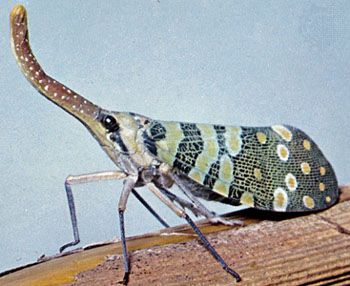
The spotted lanternfly (Lycorma delicatula) is a visually striking plant hopper native to China, India, and Vietnam. While it is kept in check by natural…
What is lanternfly?
The spotted lanternfly (Lycorma delicatula) is a visually striking plant hopper native to China, India, and Vietnam. While it is kept in check by natural predators in its home range, it has become a destructive invasive species in countries like the United States, South Korea, and Japan.12
These insects feed on the sap of over 70 plant species, including grapevines, fruit trees, and ornamental trees. Their feeding weakens plants, and they excrete a sticky substance called honeydew, which encourages the growth of sooty mold that can block photosynthesis and kill vegetation.12
First detected in Pennsylvania in 2014, the pest spreads primarily by “hitching” rides on vehicles and cargo. Because they threaten agriculture and natural resources, residents are often encouraged to destroy the insects and scrape away their egg masses.312
What is the tree of heaven and why is it important to the lanternfly?
The tree of heaven (Ailanthus altissima) is a fast-growing, pollution-resistant tree native to China that has become widely naturalized in urban areas globally. It is characterized by its ability to thrive in diverse soil conditions and its long, many-parted leaves that emit a rank odor when bruised.4
This tree is critically important to the spotted lanternfly because it serves as a preferred host for the insect, particularly during its adult stage. Research suggests that the tree of heaven may be a required host plant for the lanternfly to complete its life cycle.2
The presence of this tree has significantly aided the lanternfly’s survival and spread in non-native regions like the United States. Because of this relationship, land managers sometimes apply systemic insecticides to individual trees of heaven to render their sap toxic to the feeding insects, effectively using the tree as a tool to control the pest population.2
How does honeydew affect the health of plants and trees?
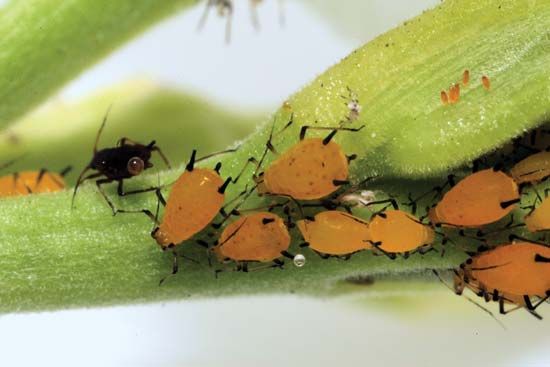
Honeydew is a sweet, sticky substance excreted by sap-sucking insects, such as aphids, scale insects, and the spotted lanternfly. While the substance itself is a byproduct of the insect’s digestion, its presence on plants and trees can have significant negative effects on their health.526
The primary danger posed by honeydew is that it serves as a substrate for the growth of sooty mold, a type of fungus that forms dense, black, splotchy coatings on leaves, stems, and fruit. This mold can impact plant health in several ways:57
- Reduced Photosynthesis: The thick, dark layer of mold blocks sunlight from reaching the leaf surface, which inhibits the plant’s ability to perform photosynthesis, effectively starving the plant of energy.56
- Marketability and Damage: When honeydew and subsequent mold coat fruits, such as apples, they become discolored and unmarketable.6
- Forest Impact: In heavy infestations, the accumulation of mold can kill the understory of a forest and eventually contribute to the death of the trees themselves.5
What are some other examples of invasive insect species in the United States?
In addition to the spotted lanternfly, the United States has been impacted by several other invasive insect species that have caused significant ecological and economic damage. These pests often thrive because they lack the natural predators found in their native habitats.
Notable examples include:
- Emerald Ash Borer (Agrilus planipennis): Native to East Asia, this metallic green beetle is considered one of the most destructive invasive species in North America. Since its introduction in the 1990s, it has killed hundreds of millions of ash trees by tunneling into the bark and disrupting the tree’s vascular system.91011
- European Corn Borer (Ostrinia nubilalis): An accidentally introduced pest that has become a major agricultural concern, specifically for corn crops.12
- Colorado Potato Beetle (Leptinotarsa decemlineata): Originally a native insect of semidesert regions that fed on the buffalo burr plant, it adapted to the introduced potato crop in the 1840s and became a devastating agricultural pest.12
- Woolly Adelgids (Adelges genus): These aphid-like insects include the hemlock woolly adelgid (A. tsugae), which is a serious pest of hemlock trees, and the balsam woolly adelgid (A. piceae), which targets fir trees.13
- Scale Insects: Various species, such as the oystershell scale and the cottony-cushion scale, have caused significant damage to fruit and citrus industries.12
Sources
- spotted lanternfly — Merriam-Webster
- spotted lanternfly — Encyclopædia Britannica
- Why Are Spotted Lanternflies Bad? — Encyclopædia Britannica
- tree of heaven — Encyclopædia Britannica
- honeydew — Merriam-Webster
- homopteran - Honeydew — Encyclopædia Britannica
- homopteran - Importance — Encyclopædia Britannica
- Sooty mold — Encyclopædia Britannica
- Emerald Ash Borer: At a Glance — Encyclopædia Britannica
- emerald ash borer: Top Questions — Encyclopædia Britannica
- insect - Ecological factors — Encyclopædia Britannica
- emerald ash borer — Encyclopædia Britannica
- hemlock woolly adelgid — Merriam-Webster
- woolly adelgid — Merriam-Webster
Published on · 3 min read