Joro Spider
The Joro spider (Trichonephila clavata) is a large, colorful orb weaver native to Asia, including Japan, China, and Korea. Since their introduction to the…
What is Joro spider?
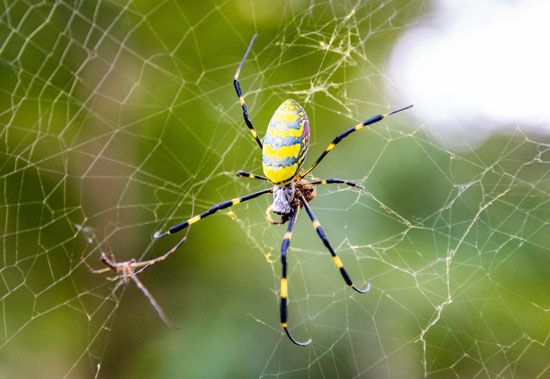
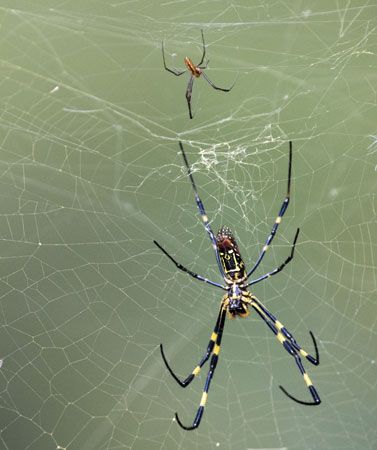
The Joro spider (Trichonephila clavata) is a large, colorful orb weaver native to Asia, including Japan, China, and Korea. Since their introduction to the southeastern United States in the 2010s, they have been classified as an invasive species.
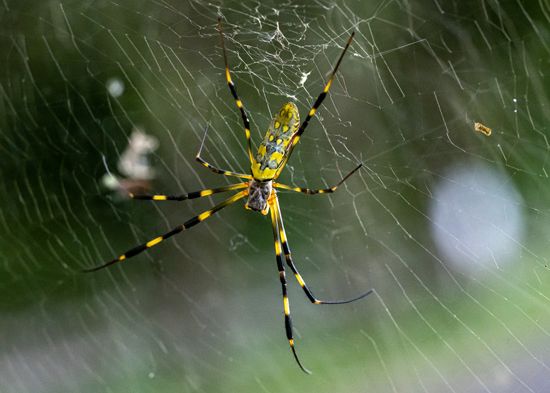
These spiders are sexually dimorphic; females are striking, with yellow, red, and blue-black markings and a leg span reaching up to 10 cm (4 inches), while males are much smaller and drab brown. Despite their intimidating size, Joro spiders are shy, nonaggressive, and possess venom that is not lethal to humans or pets.
While they cannot fly, young spiderlings disperse via “ballooning,” a process where they release silk threads to be carried by the wind. They are highly adaptable, thriving in various habitats and consuming insects like spotted lanternflies. Scientists continue to monitor their spread across North America to understand their potential impact on native ecosystems.
What is the process of ballooning in spiders?
Ballooning is a method of arthropod locomotion used by small spiders and the young of many larger species to travel across vast distances. During this process, the spider secretes long strands of silk that catch the wind, allowing the spider to be lifted into the air and carried away.3
This behavior is a primary mechanism for the distribution of spider species across the globe. Ballooning spiders can drift at varying altitudes, ranging from as low as 3 meters (10 feet) to more than 800 meters (2,600 feet) above the ground. Some species are even transported globally within the currents of the northern jet stream.3
How do invasive species affect local ecosystems?
Invasive species are nonnative organisms that significantly disrupt the ecosystems they colonize. When these species possess a competitive advantage—such as a lack of natural predators—they can establish thriving populations that fundamentally alter their new environment.
The ecological impacts of these invasions include:
- Loss of Biodiversity: Invasive species often outcompete native organisms for food, living space, and other essential resources, which can lead to the localized extinction of native species4.
- Predation Pressure: Invasive predators can be so efficient at capturing prey that native prey populations decline or are entirely eliminated.4
- Disease Transmission: Many invasive species act as disease vectors, introducing new parasites and pathogens that further destabilize the ecosystem.4
- Economic Harm: These disruptions often cause significant economic damage to human communities that rely on the biological resources of the affected ecosystem.4
Addressing these threats requires proactive measures, such as stricter port controls to prevent new introductions and habitat restoration efforts that focus on removing invaders while reintroducing native species.5
What are the differences between Joro spiders and golden silk spiders?
The Joro spider (Trichonephila clavata) and the golden silk spider (Trichonephila clavipes), also known as the banana spider, are closely related orb weavers that share similar physical traits but differ in their environmental tolerances and specific markings.
Key Differences
- Climate Tolerance: The Joro spider is highly adaptable and can tolerate a range of climates, allowing it to thrive in temperate regions. In contrast, the golden silk spider has a low tolerance for freezing temperatures, limiting its distribution to warm, temperate, and tropical climates in the Western Hemisphere. to warm, temperate, and tropical climates in the Western Hemisphere.2
- Physical Appearance: While both species are sexually dimorphic, they can be distinguished by their markings. The Joro spider features a distinct red mark on the underside of its abdomen, whereas the golden silk spider lacks this feature. Additionally, golden silk spiders typically possess tufts of dense, black hairs on several of their legs.1
- Origin: The Joro spider is an invasive species native to Asia that was introduced to the southeastern United States in the 2010s. The golden silk spider is native to the Americas and has long been established in the southeastern United States and regions of Central and South America.216
Sources
- Joro spider: Top Questions — Encyclopædia Britannica
- Joro spider — Encyclopædia Britannica
- spider - Distribution — Encyclopædia Britannica
- invasive species — Encyclopædia Britannica
- invasive species - Solutions — Encyclopædia Britannica
- silk spider — Encyclopædia Britannica
Published on · 3 min read