Standardbred
Several Standardbred horses have achieved legendary status in the history of harness racing, largely due to their record-breaking speed and dominance on the…
What are some notable Standardbred horses in racing history?
Several Standardbred horses have achieved legendary status in the history of harness racing, largely due to their record-breaking speed and dominance on the track. Notable examples include:
- Dan Patch: A nearly legendary pacer who remained undefeated in his racing career (1900–02). He set a world pacing record of 1:55 1/4 in 1905 and became famous for his exhibition races against the clock, which drew massive crowds across the United States.1
- Greyhound: A gray gelding often considered the greatest trotter in history. He won the Hambletonian Stake in 1935 and set multiple world records for trotting, both in harness and under saddle.2
- Bret Hanover: Named the outstanding pacer of the 20th century, he was the Harness Horse of the Year for three consecutive seasons (1964–66). He won 62 of his 68 starts and captured the Triple Crown for three-year-old pacers in 1965.3
- Hambletonian: While he raced little, he is the most influential sire in the breed’s history. Foaled in 1849, he founded a bloodline that dominates modern Standardbreds.45
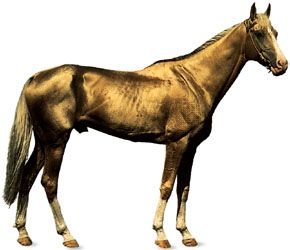
What are the distinguishing physical characteristics of Standardbred horses?
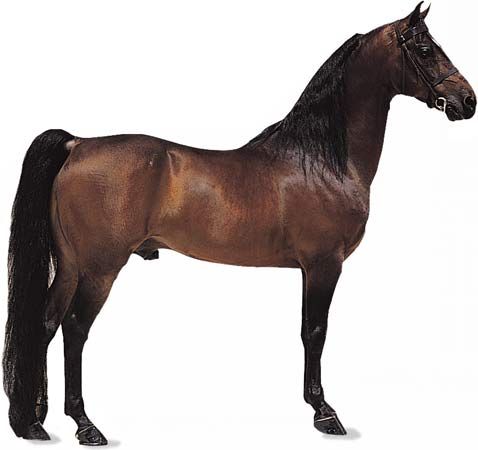
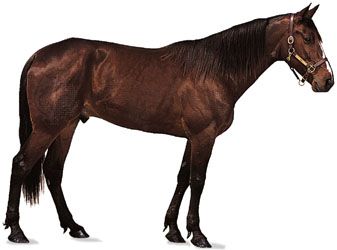
The Standardbred is a breed primarily developed for harness racing, characterized by a powerful, long-bodied frame. While they share a close resemblance to Thoroughbreds, Standardbreds are typically smaller, featuring longer and lower bodies, flatter ribs, and heavier bones.47
Key physical characteristics include:
- Height and Weight: They average 15 to 16 hands (60 to 64 inches, or 152 to 163 cm) in height and weigh between 900 and 1,000 pounds (410 to 450 kg).4
- Musculature: The breed is noted for having long, sloping, and muscular hindquarters.4
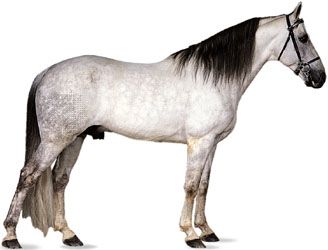
- Coat and Features: Bay is the most common color, though brown, black, chestnut, and gray also occur. They are also distinguished by a long, thick mane and tail.4
Possessing significant stamina and endurance, the breed’s physical traits were refined through the influence of its foundation sire, the Thoroughbred Messenger, and subsequent crosses with other breeds such as the Morgan.4
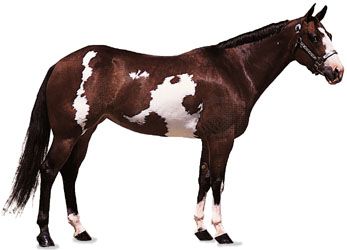
What role do Standardbred horses play in non-racing equestrian activities?
While the Standardbred is primarily developed and utilized for harness racing, the breed is also used for general riding. Beyond the racetrack, their stamina, endurance, and generally calm temperament make them suitable companions for various equestrian activities.
The provided information does not detail specific non-racing disciplines—such as dressage, jumping, or trail riding—in which they might participate, noting only that they are used for riding in addition to their primary aptitude for harness racing.
What are the origins and history of the Standardbred horse breed?
The Standardbred breed was developed in the United States during the 19th century, primarily for the sport of harness racing. The breed’s foundation is rooted in the prepotency of the English Thoroughbred stallion Messenger, who was imported to Philadelphia in 1788. While Messenger sired many flat racers, his descendants became renowned for their trotting ability. His great-grandson, Hambletonian, foaled in 1849, became the most influential sire in the breed’s history, establishing a dominant bloodline from which nearly all modern American Standardbreds descend.
The breed’s name originated from the registration requirements established in the 19th century. To be included in the official studbook, known as Wallace’s American Trotting Register (first published in 1871), horses had to meet a “standard” of time performance, such as trotting a mile in 2 minutes and 30 seconds.
While the trotter originated in the East, the pacer developed separately in the Midwest and South, blending the blood of the Narragansett pacer and the Canadian Canuck. By the late 19th century, American Standardbreds had gained international prominence, with thousands exported globally to influence trotting stock worldwide.
Sources
- Dan Patch — Encyclopædia Britannica
- harness racing - Early history. — Encyclopædia Britannica
- Greyhound — Encyclopædia Britannica
- Standardbred — Encyclopædia Britannica
- Hambletonian — Encyclopædia Britannica
- Bret Hanover — Encyclopædia Britannica
- horse - American breeds — Encyclopædia Britannica
- Messenger — Encyclopædia Britannica
- standardbred — Merriam-Webster
- harness racing - Worldwide development. — Encyclopædia Britannica
Published on · 3 min read