Stilt
A stilt is a versatile term referring to both physical structures and a type of bird:

What is Stilt?
A stilt is a versatile term referring to both physical structures and a type of bird:
- Walking Poles: A stilt is one of a pair of poles equipped with footrests, used to elevate a person above the ground. Historically, they were designed for traversing rivers and marshes, though they have long served as a form of amusement. In some designs, such as those used by children, the poles are held under the arms rather than strapped to the legs.12
- Structural Supports: The term also refers to a pile or post used to support a structure above the ground or water level.1
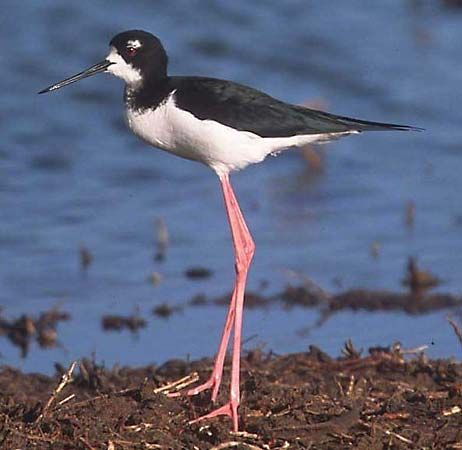
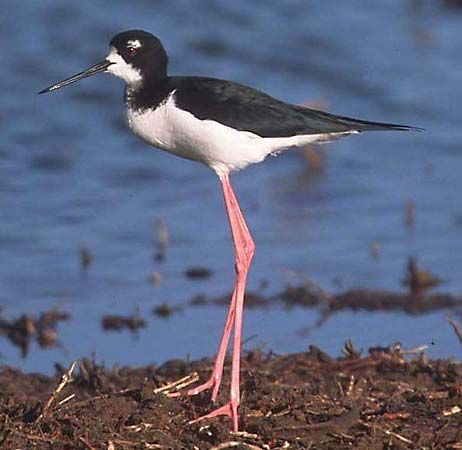
- Shorebirds: In biology, a stilt refers to any of several long-legged, three-toed shorebirds (genera Himantopus and Cladorhynchus) that frequent inland ponds and marshes.1
How do stilt-walking birds adapt to marshy environments?
Stilts (family Recurvirostridae) possess several specialized adaptations that allow them to thrive in marshy environments:
- Physical Morphology: Their most distinctive features are their long, thin legs and slender bills. These legs allow them to wade through shallow water and weedy shallows, providing stability and reach in muddy terrain.3
- Feeding Techniques: Stilts are well-adapted to foraging in aquatic habitats. They feed by pecking and probing in the mud or by sweeping their opened bills from side to side near the water’s surface to capture small aquatic animals and crustaceans.34
- Nesting and Social Behavior: Stilts often nest in colonies, sometimes sharing marshy areas with avocets. During the breeding season, they engage in group displays to coordinate social interactions within their habitat.5
- Protective Strategies: Like many shorebirds, stilts utilize specific behaviors to protect their young. When threatened, they may perform injury-feigning displays to divert predators away from their nests or chicks.5
What are some traditional cultural festivals that feature stilt walkers?
Stilt walking has been a significant part of cultural traditions for centuries, often evolving from practical necessity into celebrated displays of skill.
- Namur, Belgium: The city of Namur is perhaps the most famous example of a community with a deep-rooted stilt-walking tradition. Historically, residents used stilts to navigate the flooded districts caused by the overflowing Sambre and Meuse rivers. This necessity transformed into a cultural hallmark; the city is so renowned for its stilt walkers that they have been a point of civic pride for centuries. A notable historical anecdote involves the Governor of Namur, who sent a detachment of soldiers on stilts to Archduke Albert around 1600. The performance was so well-received that the Archduke granted the city a perpetual exemption from the beer tax.2
While the provided information highlights the historical significance of stilt walking in Namur, these practices are also found in various other global cultures, often integrated into parades, religious ceremonies, and folk festivals.
How are stilt houses constructed to protect against flooding?
Stilt houses, historically known as lake dwellings or pile structures, are engineered to elevate living spaces above water or swampy, flood-prone terrain. Their construction relies on several key techniques:
- Foundation and Piles: The structure is supported by piles—sturdy wooden posts or stone foundations—driven deep into the mud or soil to ensure stability. In historical examples, the ends of these wooden piles were often burned to a point to facilitate driving them into the ground, and they were further secured by surrounding them with heavy stones.6
- Platform Construction: A framework of tree trunks and smaller branches is laid across the piles to create a solid, elevated platform. This platform serves as the base for the living quarters, effectively separating the home from the ground level where water or moisture would otherwise accumulate.6
- Superstructure: Rectangular huts are built atop these platforms. Historically, these structures featured beaten clay floors, which served as a protective measure against fire, a common hazard for such dwellings.6
Today, this architectural approach remains a practical solution for managing flood risks in humid subtropical and tropical regions, such as Malaysia.6
Sources
- stilt — Merriam-Webster
- stilt — Encyclopædia Britannica
- Stilt — Encyclopædia Britannica
- Charadriiform - Shorebirds (suborder Charadrii) — Encyclopædia Britannica
- Charadriiform - Locomotion and feeding behaviour — Encyclopædia Britannica
- Lake Dwellings — Encyclopædia Britannica
Published on · 3 min read