Stonefish
Stonefish are primarily found in the shallow waters of the tropical Indo-Pacific region.
Where are stonefish typically found in the world?
Stonefish are primarily found in the shallow waters of the tropical Indo-Pacific region.123
These venomous, bottom-dwelling fish are typically located in specific marine environments, including:
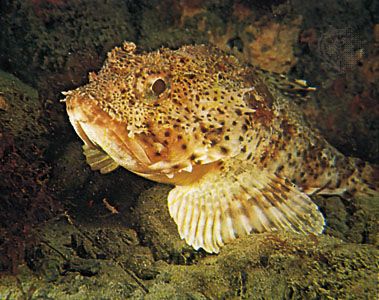
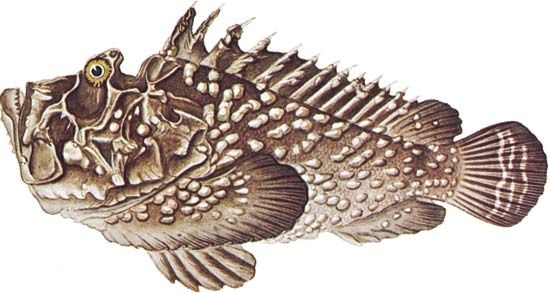
Because they are sluggish and possess a bumpy, wartlike appearance that mimics their surroundings, they are often difficult to detect when resting on the ocean floor. This camouflage makes them particularly dangerous, as they can inject potent venom through their dorsal fin spines if accidentally stepped on.12
How venomous are stonefish, and what makes their venom so dangerous?
Stonefish are considered highly dangerous marine animals due to their potent venom, which they deliver through specialized grooves in their dorsal fin spines.12
The danger of their venom stems from several factors:
- Potency and Pain: Wounds inflicted by stonefish are described as intensely painful and can be fatal to humans.12
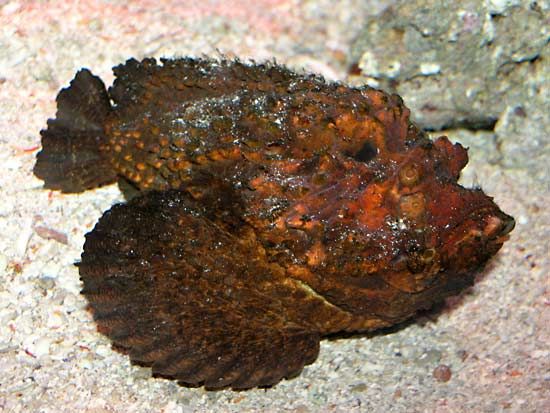
- Delivery Mechanism: Because stonefish are sluggish, bottom-dwelling creatures that blend perfectly with their environment—often resembling rocks or coral—they are difficult to detect. Most human injuries occur when a person accidentally steps on the fish, triggering the injection of venom.12
- Physiological Impact: While venom generally consists of complex mixtures of proteins and enzymes that can cause severe tissue damage, inflammation, or systemic effects like cardiovascular interference, the specific severity of a stonefish sting depends on the amount of venom injected and the location of the wound.4
It is essential to treat any suspected encounter with a venomous marine animal as a medical emergency.
What species are included in the genus Synanceia?
The genus Synanceia (sometimes spelled Synanceja) comprises the stonefishes, which are venomous, bottom-dwelling marine fish belonging to the family Synanceiidae.15
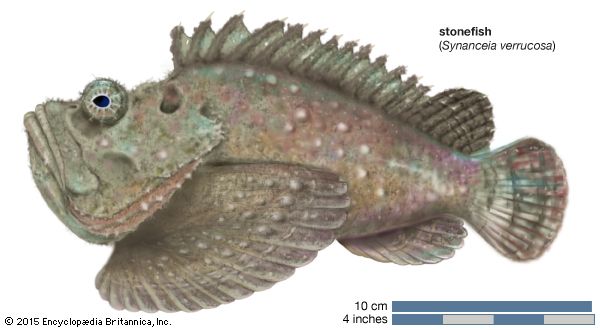
While the genus is defined by these robust, warty fish, the provided information specifically highlights Synanceia verrucosa as a representative species. This species is known for its ability to blend into its environment among coral or rocky substrates, reaching lengths of approximately 33 cm (13 inches).1
It is important to note that the term “stonefish” is sometimes applied more broadly to certain scorpionfish within the family Scorpaenidae, though these are distinct from the true stonefish of the genus Synanceia.1
How does the stonefish use camouflage to hunt?
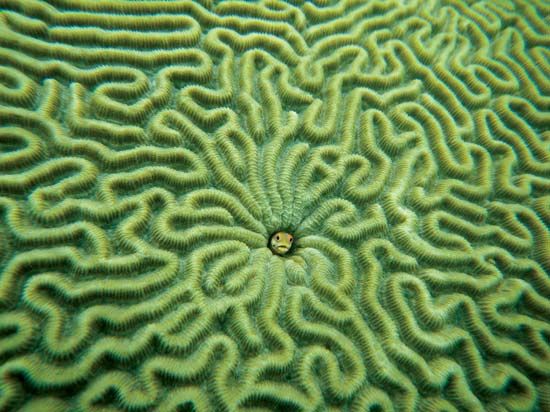
The stonefish is a master of camouflage, utilizing its physical appearance to remain undetected while waiting for prey. As a sluggish, bottom-dwelling predator, it rests unmoving on the seafloor among rocks or coral in shallow tropical waters.12
Its ability to blend into its surroundings is achieved through a combination of form and color:
- Physical Texture: The stonefish has a thickset body covered in wartlike lumps and sometimes fleshy flaps, which mimic the irregular, textured surfaces of its environment.12
- Coloration: Its skin coloration matches the rocks and coral where it resides, allowing it to disappear almost entirely from view.12
- Behavior: By remaining perfectly still, the stonefish avoids detection by both potential prey and predators. This strategy of background matching is highly effective, as the fish essentially becomes indistinguishable from the substrate.126
Because they are so difficult to see, these fish are dangerous to humans, who may accidentally step on them and trigger the release of venom from their dorsal fin spines trigger the release of venom from their dorsal fin spines.12
Sources
- stonefish — Encyclopædia Britannica
- 10 of the World’s Most Dangerous Fish - Stonefish — Encyclopædia Britannica
- stonefish — Merriam-Webster
- Venom — Encyclopædia Britannica
- Synanceja — Merriam-Webster
- coloration - Disruptive coloration — Encyclopædia Britannica
- coloration - Background matching — Encyclopædia Britannica
Published on · 3 min read