Scorpionfish
The provided search results do not contain information regarding the conservation status of specific species within the family Scorpaenidae. While these…
Are there any species of scorpionfish that are considered endangered or threatened?
The provided search results do not contain information regarding the conservation status of specific species within the family Scorpaenidae. While these scorpionfish are widely distributed in temperate and tropical waters, the available data does not specify which, if any, are currently considered endangered or threatened.
How do scorpionfish hunt and what do they primarily feed on?
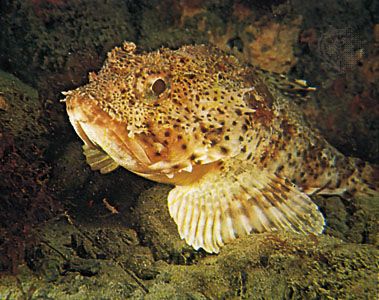
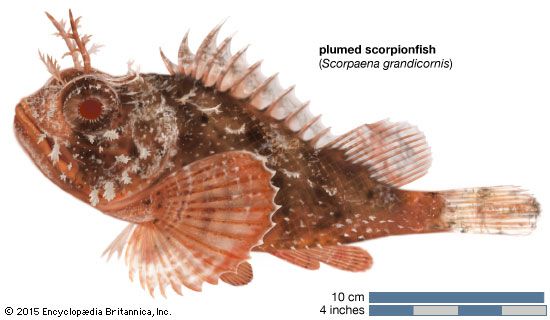
Scorpionfish are primarily carnivorous, sedentary predators that rely on cryptic coloration and camouflage to hunt effectively. By blending into their surroundings—often resembling rocks or coral through their body shape and the presence of fleshy flaps and projections—they remain virtually invisible to their prey.145
Rather than being fast or powerful swimmers, scorpionfish typically lie quietly on the bottom, waiting for an opportunity to strike. When prey approaches, they capture it by executing a swift pounce, often utilizing their large pectoral fins as auxiliary power units to facilitate the movement. Their diet consists of various smaller, more active organisms, including:14
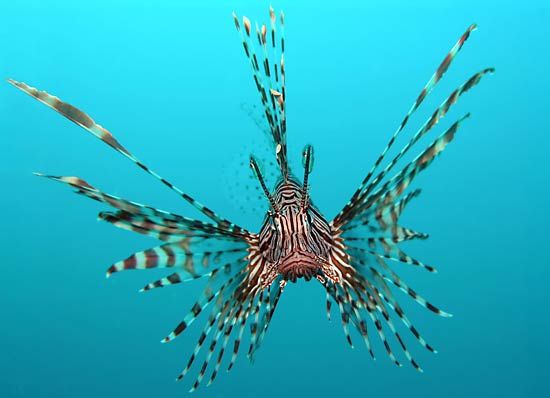
While many species remain hidden, some, such as the lionfish, employ different strategies, using bold, warning coloration to signal their presence rather than relying on concealment.14
Where are scorpionfish typically found in the world’s oceans?
Scorpionfish of the family Scorpaenidae are widely distributed throughout the world’s oceans, primarily inhabiting temperate and tropical waters.1
Their specific distribution and habitat preferences include:
- Tropical Seas: This region hosts the greatest diversity of these fish.4
- Continental Shelves: They are particularly well-represented in the shallow waters of the continental shelf.4
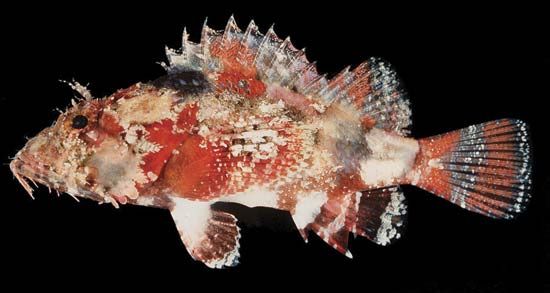
- Bottom Environments: As bottom-living fish, they are typically found on rocky or rough bottoms, where they use their cryptic coloration to blend into the environment.14
- Coral Associations: In tropical areas, many species are found in close association with coral reefs.4
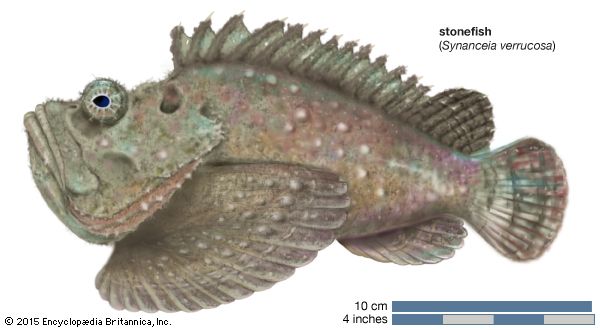
- Specific Habitats: Certain species, such as the stonefish, are found in shallow waters including estuaries, mud flats, and coral sand pools, particularly across the tropical Indo-Pacific.4
While most scorpionfish are sedentary and prefer to remain hidden on the seafloor, some species, such as the lionfish, are found swimming in open water around coral heads in the tropical Indo-Pacific.4
What are the different species of scorpionfish and how do they vary?
The family Scorpaenidae encompasses a diverse group of bottom-living marine fish that vary significantly in appearance, behavior, and reproductive strategy. While they share common traits such as perchlike bodies, large spiny heads, and strong fin spines, they are categorized into distinct groups based on their evolutionary and biological characteristics.
Key Variations Among Species
- Appearance and Camouflage: Many species are sedentary and rely on cryptic coloration to blend into rocky or coral-rich environments. They often possess fleshy flaps and projections on their heads and bodies to enhance this disguise. In contrast, others like the lionfish are showy, featuring bold, zebralike stripes and enlarged pectoral fins, using warning coloration rather than concealment.1678
- Venomous Capabilities: Most members of the family possess fin spines that can inflict painful wounds, sometimes delivering venom through specialized glands. The stonefish, for instance, is particularly notorious for its potent venom and ability to remain nearly invisible on the seafloor.1910
- Reproductive Strategies: The family is divided into three primary evolutionary stem groups with different reproductive methods:5
- Scorpaeninae: These fish typically extrude their eggs in gelatinous, balloon-shaped masses.5
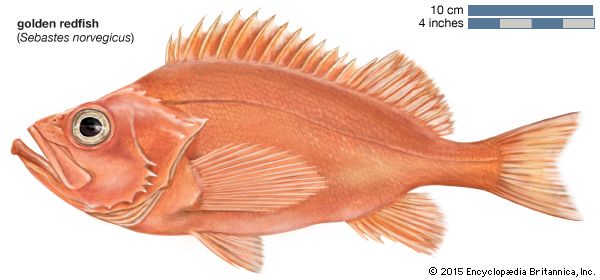
- Sebastinae: Members of this subfamily, such as the redfish, are viviparous, meaning they practice internal fertilization and give birth to live young.5
- Aploactinidae: These species generally shed their eggs directly into the open sea.5
Sources
- scorpionfish — Encyclopædia Britannica
- scorpaeniform — Encyclopædia Britannica
- Scorpaenidae — Merriam-Webster
- scorpaeniform - Ecology — Encyclopædia Britannica
- scorpaeniform - Camouflage and coloration — Encyclopædia Britannica
- scorpaeniform - Reproduction — Encyclopædia Britannica
- lionfish — Encyclopædia Britannica
- 10 of the World’s Most Dangerous Fish - Red Lionfish — Encyclopædia Britannica
- stonefish — Encyclopædia Britannica
- scorpion - Ecology and habitats — Encyclopædia Britannica
- Venom — Encyclopædia Britannica
Published on · 3 min read