Shrimpfish
A shrimpfish is any of four species of small, tropical marine fish belonging to the family Centriscidae (order Gasterosteiformes), found in the Indo-Pacific…
What is shrimpfish?
A shrimpfish is any of four species of small, tropical marine fish belonging to the family Centriscidae (order Gasterosteiformes), found in the Indo-Pacific region.12
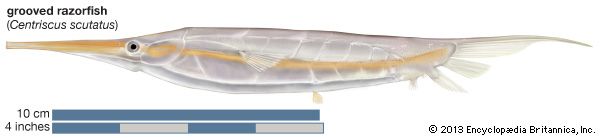
These fish are characterized by a long, tubular snout and a body that is flattened from side to side, earning them the name “razorfish” due to their sharp-edged belly. Their bodies are covered in a cuirass of transparent, fused bony plates that extend beyond the dorsal and caudal fins, terminating in a long spine.13
Shrimpfish are notable for their unique swimming behavior: they typically swim in a vertical, head-down position, though they may orient themselves head-up when inside caves or enclosures. Depending on the species, they range in length from approximately 14 cm to 30 cm.1
Why do shrimpfish swim in a vertical position?
Shrimpfish characteristically swim in a vertical, head-down position as a form of camouflage and protection. By orienting themselves vertically, they mimic the appearance of sea urchin spines or blades of seagrass, which helps them blend into their environment and avoid predators.1
Interestingly, this behavior is flexible; when shrimpfish enter a cave or a similar enclosed space, they will swim in a head-up position, orienting themselves toward the roof of the enclosure. This unique adaptation is supported by their specialized body structure, which features a long, tubular snout and a body encased in a protective cuirass of transparent, fused bony plates.1
What are some other unique fish found in the Indo-Pacific?
The Indo-Pacific region is home to an incredibly diverse array of marine life, particularly within its extensive coral reefs. Here are some notable and unique fish species found in these waters:5
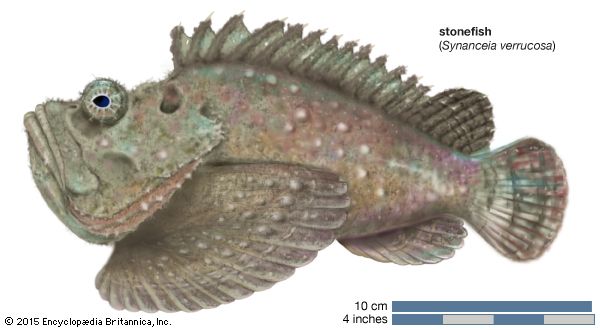
- Stonefish: These sluggish, bottom-dwelling fish are masters of camouflage, blending perfectly with rocks and coral. They are highly venomous, capable of injecting toxins through their dorsal fin spines if stepped on.6
- Frogfish: Members of the anglerfish group, these lumpy, small fish use a specialized “fishing pole” lure derived from their first dorsal fin spine to entice prey. They are often patterned to match their surroundings and can even change color.7
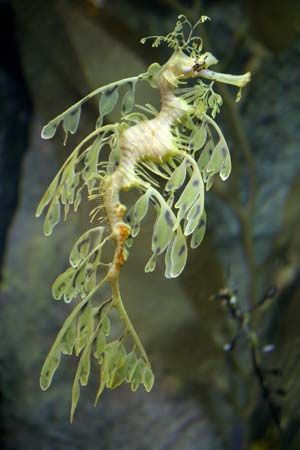
- Sea Dragons: Related to seahorses, these fish are famous for their ornate camouflage. Species like the leafy sea dragon possess elaborate, leaflike appendages that allow them to blend in with surrounding vegetation, while the ruby sea dragon relies on its red coloration to hide in deeper waters.8
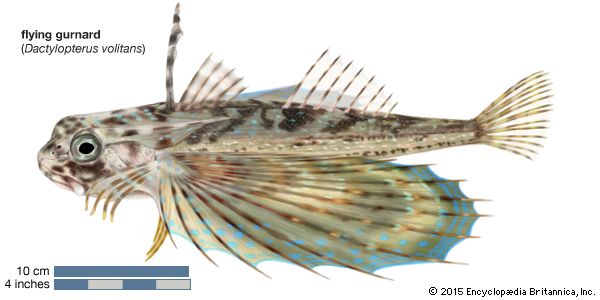
- Flying Gurnard: Often found off the coasts of Sulawesi, this unusual fish is known for its oversized, strikingly colored pectoral fins, which it can spread to startle potential predators.910
- Anemone Fish: Also known as clownfish, these popular ornamental fish are well-known for their symbiotic relationship with sea anemones.9
How does the armor of a shrimpfish protect it from predators?
The shrimpfish is protected by a specialized external structure known as a cuirass, which consists of fused, transparent bony plates that encase its body. These plates are extensions of the vertebral column and provide a rigid, armored framework for the fish.12
This armor extends posteriorly beyond the fish’s displaced dorsal, caudal, and anal fins, terminating in a long, sharp spine. By swimming in a vertical, head-down position, the shrimpfish uses this unique morphology to mimic the appearance of sea urchin spines or seagrass, effectively camouflaging itself from predators within its environment.1112
Sources
- shrimpfish — Encyclopædia Britannica
- shrimpfish — Merriam-Webster
- scorpion - Distinguishing taxonomic features — Encyclopædia Britannica
- Centriscidae — Merriam-Webster
- sea dragon — Encyclopædia Britannica
- stonefish — Encyclopædia Britannica
- frogfish — Encyclopædia Britannica
- Indonesia - Plant and animal life — Encyclopædia Britannica
- scorpaeniform - Camouflage and coloration — Encyclopædia Britannica
- Pacific Ocean - Biological resources — Encyclopædia Britannica
- clupeiform - Distinguishing characteristics — Encyclopædia Britannica
- gasterosteiform - Form and function — Encyclopædia Britannica
Published on · 2 min read