Strawberry
The strawberry (Fragaria) is a low-growing herbaceous plant belonging to the rose family. Its botanical characteristics include:
What are the botanical characteristics of the strawberry plant?
The strawberry (Fragaria) is a low-growing herbaceous plant belonging to the rose family. Its botanical characteristics include:
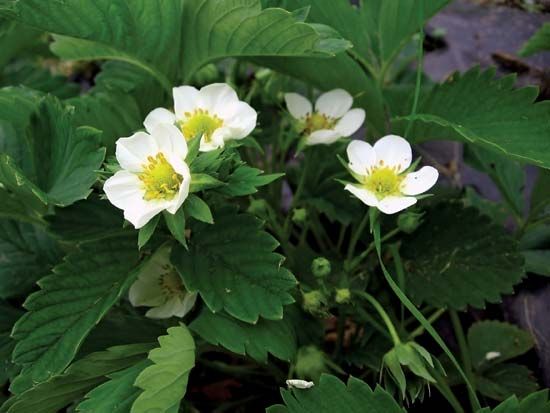
- Structure: It features a fibrous root system and a central crown from which basal, compound leaves arise. These leaves typically consist of three sawtooth-edged, often hairy leaflets.1
- Reproduction: The plant spreads vegetatively through stolons, or runners, which are surface-creeping stems that root when they contact moist soil.12
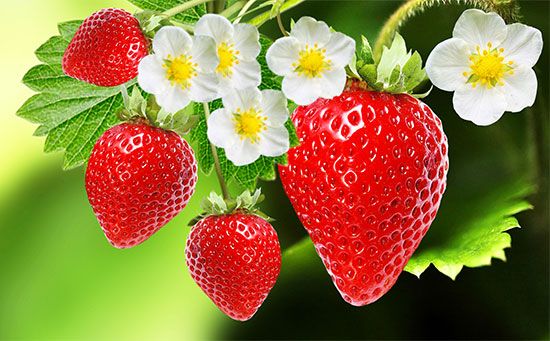
- Flowers: Generally white, the flowers are borne in small clusters on slender stalks that emerge from the leaf axils.1
- Fruit: Botanically, the strawberry is an accessory fruit and not a true berry. The edible, fleshy portion is a greatly enlarged flower receptacle. Embedded on its surface are the many true fruits, known as achenes, which are commonly mistaken for seeds.13
Because the strawberry develops from a single flower with many pistils, it is also classified as an aggregate fruit.3
How are strawberries cultivated and what are the ideal growing conditions?
Strawberries are cultivated globally, primarily using the large-fruited variety Fragaria × ananassa. Because the fruit is highly perishable and difficult to harvest mechanically, commercial production is typically located near processing centers or markets where labor is available for handpicking.1
Ideal Growing Conditions
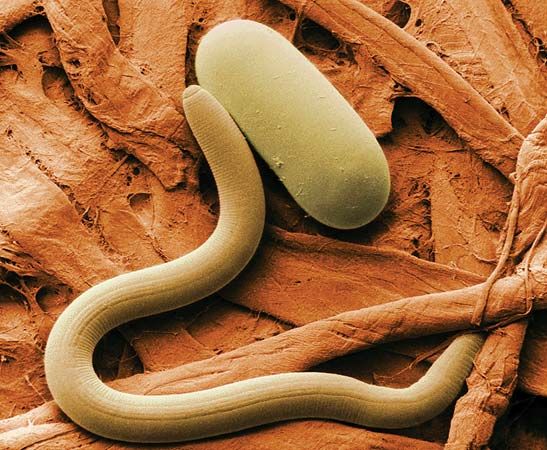
Strawberries are adaptable to a wide range of soils and environments. While they have relatively low fertilizer requirements compared to other horticultural crops, they are sensitive to drought and require consistent moisture, often provided by furrow or sprinkler irrigation. Growers must also manage risks from nematodes and pathogenic soil fungi, sometimes using chemical sterilization prior to planting.1
Cultivation Practices
- Planting: Runner plants are typically set in early autumn for a harvest the following year. If planted in winter or spring, plants are deblossomed during the first year to prevent weakening. In regions with severe winters, rows are protected with straw or other mulches.1
- Spacing: Plants are managed in beds or “matted rows,” where a specific number of runners are allowed to root alongside the parent plants.14
- Duration: Plants are generally retained for one to four years.1
How are strawberries used in various cuisines and food products around the world?
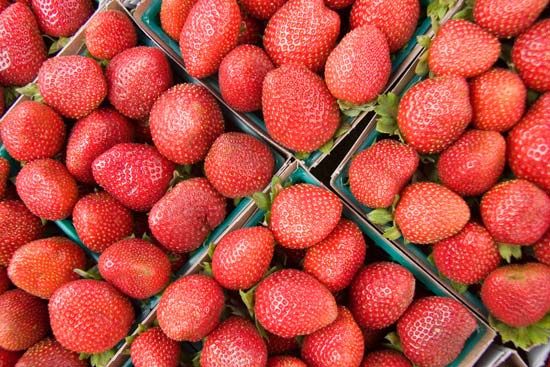
Strawberries are highly versatile in global cuisines, valued for their flavor and nutritional content. They are most commonly consumed fresh as a dessert fruit, but their culinary applications extend to a wide variety of prepared foods and preservation methods.1
Culinary Uses
- Fresh Consumption: Strawberries are frequently eaten raw, often served as a standalone dessert or as a topping for various dishes.1
- Baking and Pastry: They are a staple ingredient in baked goods, serving as a primary component for pie and pastry fillings. A notable example is the traditional American strawberry shortcake, which combines fresh berries with sponge cake and whipped cream.1
- Preservation: Because strawberries are highly perishable, they are frequently processed into jams, jellies, and preserves. These products allow the fruit to be enjoyed out of season and serve as popular spreads for breads and sandwiches.16
- Commercial Processing: Beyond home use, strawberries are processed commercially into frozen products, canned goods, and juices.1
When used in preserves, the choice of product—jam, jelly, or preserves—depends on the desired texture and fruit content, with preserves often preferred in baking for their concentrated fruit flavor.6
How are strawberries harvested and processed for commercial use?
Strawberries are highly perishable, which dictates both their harvesting methods and their subsequent processing for commercial use.
Harvesting
Because strawberries are delicate and difficult to pick mechanically, they are almost exclusively handpicked. Workers harvest the berries directly into small baskets for the fresh market or into trays for processing. To maintain quality, the fruit is often grown near centers of consumption or processing facilities. For long-distance distribution, air shipment is increasingly used to transport “vine-ripe” strawberries to distant markets within a day.81
Commercial Processing
Once harvested, strawberries are processed to extend their shelf life through several methods:
- Freezing: Strawberries are commonly frozen to inhibit microbial growth and slow metabolic processes. They are typically packed in syrup or dry sugar to exclude air, which prevents oxidation and desiccation. Rapid freezing is preferred to maintain better texture upon thawing.69
- Preservation: Strawberries are transformed into jams, jellies, and preserves by cooking the fruit with sugar, acid, and pectin. This process binds water and lowers the pH to create a shelf-stable product.107
- Canning: Strawberries may also be canned for commercial distribution.1
Sources
- Strawberry — Encyclopædia Britannica
- Fruit - Types of fruits — Encyclopædia Britannica
- Vegetative reproduction — Encyclopædia Britannica
- horticulture - Vegetative structures — Encyclopædia Britannica
- Fruit farming - Planting and spacing systems — Encyclopædia Britannica
- fruit processing - Fruit preserves , jams, and jellies — Encyclopædia Britannica
- What’s the Difference Between Jam, Jelly, and Preserves? — Encyclopædia Britannica
- Fruit farming - Harvesting and packing — Encyclopædia Britannica
- freezing — Encyclopædia Britannica
- fruit processing - Freezing — Encyclopædia Britannica
Published on · 4 min read