Nematode
Scientists classify nematodes (phylum Nematoda) primarily based on their ecological roles and biological characteristics. Rather than a rigid hierarchical…
How do scientists classify different types of nematodes?
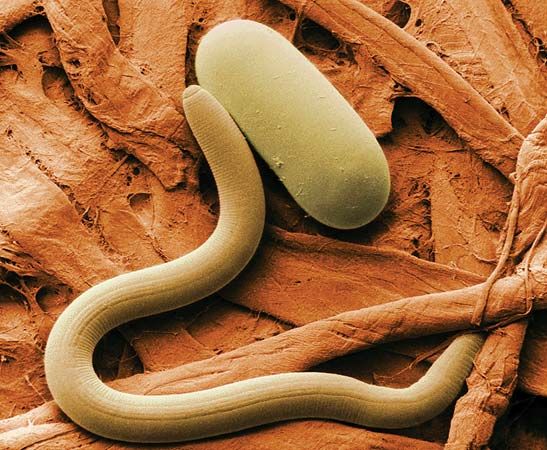
Scientists classify nematodes (phylum Nematoda) primarily based on their ecological roles and biological characteristics. Rather than a rigid hierarchical classification system like that provided for annelids, nematodes are often distinguished by their lifestyle:
- Parasitic forms: These are extensively studied due to their significant medical, veterinary, and economic impact. They are often categorized by the hosts they infect, including humans, domesticated animals, and crop plants. Common examples include hookworm, lungworm, pinworm, threadworm, whipworm, and eelworm.
- Free-living forms: These inhabit diverse environments such as soil, fresh water, marine ecosystems, and even extreme habitats like deep subterranean water seeps.
At a broader taxonomic level, nematodes are provisionally grouped within the Ecdysozoa, a category defined by their shared trait of secreting an external cuticle that is periodically shed through molting. This classification is supported by gene sequence data suggesting that the process of molting evolved only once among these organisms.
What are some examples of parasitic nematodes that affect humans or animals?
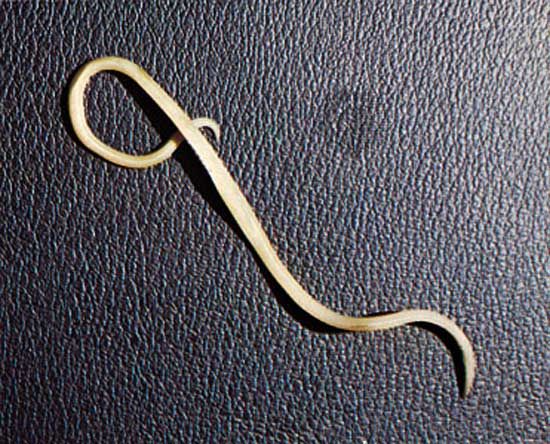
Parasitic nematodes, commonly known as roundworms, are responsible for a variety of infections in humans and animals. These helminths are often categorized by their location within the host, such as the intestinal tract or internal tissues like the blood and lymphatics.3
Intestinal Nematodes
Several species of roundworms primarily inhabit the human or animal intestinal tract:
- Ascaris lumbricoides: This species causes ascariasis, an infection acquired by ingesting fertilized eggs from contaminated food or soil. Adult worms can grow up to 35 cm in length and reside in the small intestine.4
- Hookworms: Species such as Necator americanus and Ancylostoma duodenale attach to the intestinal mucosa and feed on blood, which can lead to secondary anemia. Larvae typically enter the host by penetrating the skin.56
- Whipworms: These are intestinal parasites often treated with anthelmintic drugs like mebendazole.3
- Pinworms: These are common intestinal parasites, particularly in children, that can be treated with medications such as pyrantel pamoate.3
Tissue and Filarial Nematodes
Some nematodes migrate through or reside in specific tissues, blood, or lymph vessels:
- Wuchereria bancrofti: A filarial nematode transmitted by mosquitoes. It resides in lymph ducts, where it can cause filariasis by blocking the flow of lymphatic fluid.7
- Dirofilaria immitis: Known as the heartworm, this parasite primarily affects dogs and cats. It migrates to the right side of the heart, where adult worms can grow up to 27 cm and compromise blood flow.8
How do nematodes differ from other types of worms?
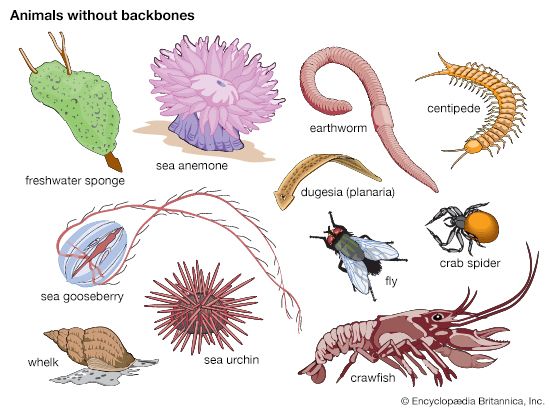
The term “worm” is a broad, informal classification for various unrelated invertebrate animals with soft, elongated bodies. Nematodes (phylum Nematoda) are distinct from other worm groups, such as flatworms (Platyhelminthes) and segmented worms (Annelida), due to several unique biological features:
- Body Structure and Cavity: Nematodes are bilaterally symmetrical and typically tapered at both ends. Unlike annelids, which possess a true coelom (a fluid-filled body cavity), many nematodes have a pseudocoel, a different type of body cavity located between the digestive tract and the body wall.
- Cuticle and Molting: Nematodes are members of the Ecdysozoa group, characterized by the secretion of a thick, external cuticle that must be periodically shed through molting.
- Musculature and Movement: Nematodes possess only longitudinal muscles and lack circular muscles. Their movement is unique; because the cuticle prevents swelling, the contraction of longitudinal muscles causes the body to bend dorsally or ventrally rather than side-to-side. Furthermore, their muscle cells are distinct because they feature projections that extend to contact nerves, rather than having nerves travel to the muscle cells as seen in other animals.
What is the typical life cycle of a nematode?
The life cycle of a nematode generally involves a progression through several developmental stages, typically starting from an egg and advancing through multiple larval phases before reaching maturity.1213
Life Cycle Patterns
Nematode life cycles are categorized based on their transmission and host requirements:
- Direct (Monoxenous) Life Cycles: Many nematodes, such as those causing ascariasis, have direct life cycles. These parasites spend their adult lives in a single host. Their progeny are transmitted to a new host through a free-living stage, often by surviving in the environment outside the original host until they can establish themselves in a new one.12
- Indirect (Heteroxenous) Life Cycles: Some species, including certain filarial nematodes, require two host stages: a definitive host for reproduction and an adult life phase, and an intermediate host for development. Intermediate hosts, such as mosquitoes, often act as vectors that transmit immature parasites directly into the bloodstream of the definitive host.12
Development and Molting
Regardless of the specific cycle, nematodes are characterized by their growth through periodic molting. As members of the Ecdysozoa, they secrete a thick, external cuticle that must be shed to allow the organism to grow and transition between developmental stages.13
Sources
- nematode — Encyclopædia Britannica
- annelid - Annotated classification — Encyclopædia Britannica
- parasitic disease - Major disease-causing parasites — Encyclopædia Britannica
- ascariasis — Encyclopædia Britannica
- anthelmintic — Encyclopædia Britannica
- hookworm disease — Encyclopædia Britannica
- hookworm — Encyclopædia Britannica
- heartworm disease — Encyclopædia Britannica
- Endocrine system - Phylum Nemertea — Encyclopædia Britannica
- worm — Encyclopædia Britannica
- muscle - Worms — Encyclopædia Britannica
- Larva — Encyclopædia Britannica
- parasitic disease - Parasite life cycles — Encyclopædia Britannica
- Protozoan - Parasitic protozoan life cycles — Encyclopædia Britannica
- Animal development - The larval stage — Encyclopædia Britannica
- acarid - Reproduction and life cycle — Encyclopædia Britannica
- flatworm - Development — Encyclopædia Britannica
- Metamorphosis — Encyclopædia Britannica
- Diptera - Molts and larval stages — Encyclopædia Britannica
Published on · 4 min read