Sunfish
The term "sunfish" refers to two distinct groups of fish with vastly different sizes.
How large can sunfish grow, and what is their typical size range?
The term “sunfish” refers to two distinct groups of fish with vastly different sizes.
Ocean Sunfish (Family Molidae)
These are the largest bony fishes in the world. Sizes vary by species:1
- Common Mola (M. mola): Reaches a maximum length of about 3.3 meters (10.9 feet) and weighs up to 1,900 kg (4,000 pounds), with an average weight of 1,000 kg (2,204 pounds).1
- Giant Sunfish (M. alexandrini): The most massive bony fish, reaching lengths of 3.32 meters (10.9 feet) and weights of 2,300 kg (roughly 2.5 tons).1
- Sharptail Mola (Masturus lanceolatus): Can grow up to 3.37 meters (11.1 feet) in length.1
- Hoodwinker Sunfish (M. tecta): Smaller, growing to a maximum of 2.42 meters (7.9 feet).1
- Slender Mola (Ranzania laevis): Significantly smaller, measuring no more than 1 meter (39.3 inches).1
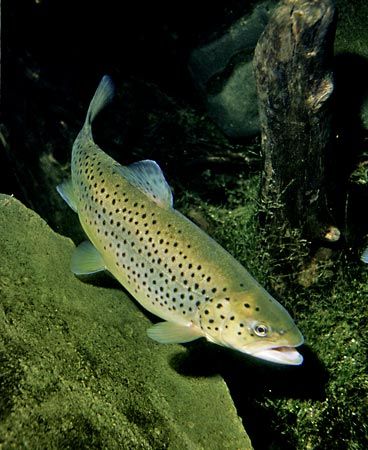
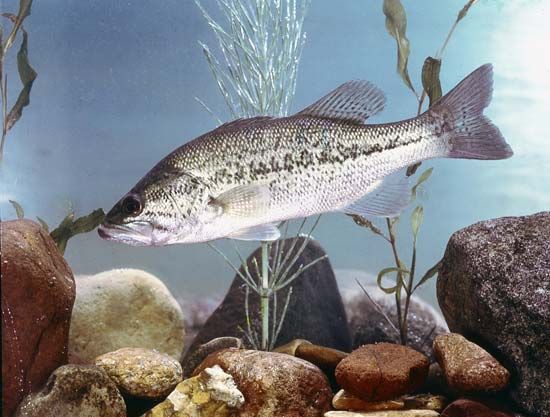
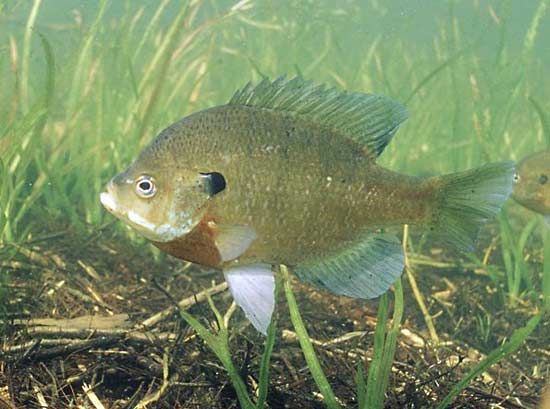
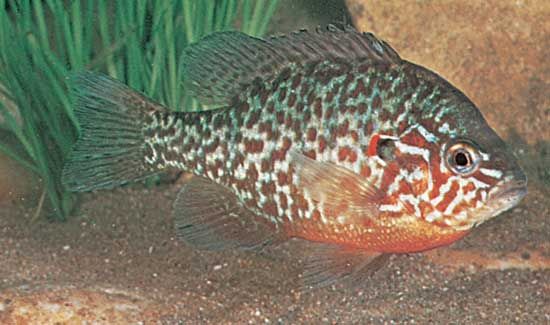
North American Freshwater Sunfish (Family Centrarchidae)
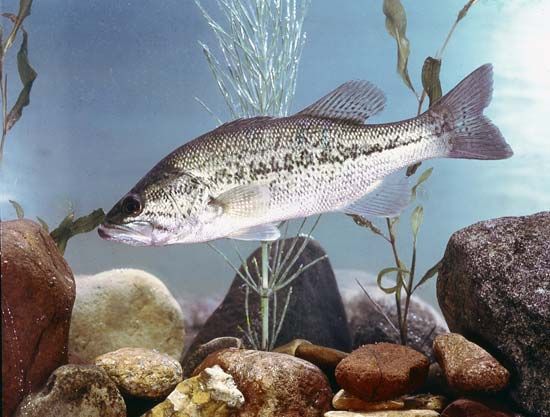
These are much smaller freshwater fishes. They range from tiny species like Elassoma, which mature at 2.5 cm (1 inch), to the largemouth black bass, which can reach 80 cm and 10 kg (22 pounds). Most other species are typically less than 20 cm long.2
What are the different species of sunfish, and how do they differ from one another?
The term “sunfish” refers to two biologically distinct groups of fish that differ significantly in habitat, anatomy, and size.
Ocean Sunfish (Family Molidae)
These are massive, oceanic bony fishes characterized by a bullet-shaped, flattened body that ends abruptly in a rudder-like structure called a clavus. They possess tough skin, small mouths, and fused, beak-like teeth. There are five primary species, including:2
- Common Mola (M. mola): An enormous, circular fish reaching up to 3.3 meters (10.9 feet) and 1,900 kg.2
- Giant Sunfish (M. alexandrini): The most massive bony fish, weighing up to 2,300 kg.2
- Sharptail Mola (Masturus lanceolatus): Can reach lengths of 3.37 meters.2
- Hoodwinker Sunfish (M. tecta): A smaller species reaching 2.42 meters.2
- Slender Mola (Ranzania laevis): The smallest of the group, measuring no more than 1 meter.2
North American Freshwater Sunfish (Family Centrarchidae)
These are smaller, deep-bodied freshwater fishes native to North America. Unlike the oceanic molas, these fish are often brightly colored and possess a single, continuous dorsal fin. They range from tiny species like Elassoma (2.5 cm) to the largemouth black bass, which can reach 80 cm. Well-known species include the bluegill, the pumpkinseed, and the rock bass.3
What do sunfish primarily eat, and how do they hunt for their food?
The feeding habits of sunfish vary significantly depending on whether they belong to the North American freshwater family or the oceanic family.
North American Freshwater Sunfish (Family Centrarchidae)
These freshwater fishes are carnivorous predators. They primarily feed on a diet consisting of other fishes and various aquatic invertebrates. They are typical of quiet ponds and lakes, where they actively hunt their prey within these environments.3
Ocean Sunfish (Family Molidae)
Despite their massive size and powerful, beak-like fused teeth, ocean sunfish have specialized diets that differ from many of their relatives in the order Tetraodontiformes. While many related species consume hard-shelled organisms like crustaceans and mollusks, ocean sunfish feed extensively on soft-bodied invertebrates, particularly jellyfishes (medusae). As opportunistic predators, they utilize their unique anatomy to consume prey that is often unavailable to less-specialized species.5
What is the habitat and distribution of sunfish species around the world?
The distribution and habitat of “sunfish” depend entirely on which of the two distinct families is being referenced.
North American Freshwater Sunfish (Family Centrarchidae)
These fishes are native exclusively to North America. With the exception of the Sacramento perch, all species are naturally found in waters east of the Rocky Mountains. They are primarily inhabitants of quiet ponds and lakes, though they have been introduced to various other countries as game and food fish.3
Ocean Sunfish (Family Molidae)
Unlike their freshwater namesakes, these are oceanic bony fishes distributed throughout temperate and tropical regions of the world’s oceans.1
- Habitat: They are typically found in the open sea, often swimming near the surface.1
- Distribution: While the common mola (M. mola) is found globally in temperate and tropical waters, other species have more specific ranges. For example, the hoodwinker sunfish is thought to be widely distributed in the temperate oceans of the Southern Hemisphere, and the southern sunfish is native to the southwestern Pacific Ocean native to the southwestern Pacific Ocean.1
Sources
- mola — Encyclopædia Britannica
- ocean sunfish — Merriam-Webster
- sunfish — Encyclopædia Britannica
- sunfish — Merriam-Webster
- tetraodontiform - Feeding habits — Encyclopædia Britannica
- Centrarchidae — Merriam-Webster
Published on · 3 min read