Mola
The mola fish family, known scientifically as Molidae, derives its name from the Latin word mola, which means "millstone."
How did the mola fish family get its name, and what does it mean?
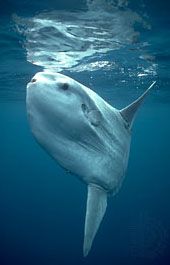
The mola fish family, known scientifically as Molidae, derives its name from the Latin word mola, which means “millstone.”12
The Swedish botanist and taxonomist Carolus Linnaeus gave the fish this name because its circular or oval shape and tough, rough skin reminded him of a heavy stone used in a mill. The family name Molidae is formed from the type genus Mola combined with the suffix -idae, which is standard in biological taxonomy to denote a family. These oceanic fishes are characterized by their unique, compact, and bullet-shaped bodies that appear to end abruptly behind their dorsal and anal fins.123
How large can mola fish grow, and what is their typical lifespan?
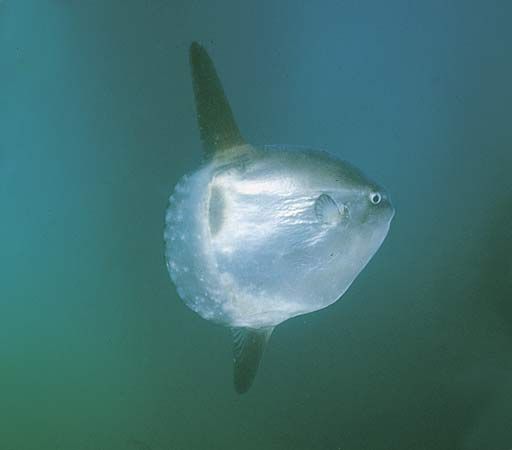
Mola fish, which are the largest of all bony fishes, exhibit significant variation in size depending on the species.1
- Ocean sunfish (M. mola): Reaches a maximum length of about 3.3 meters (10.9 feet) and can weigh up to 1,900 kg (4,000 pounds).1
- M. alexandrini: The most massive bony fish known, with specimens reaching up to 3.32 meters (10.9 feet) in length and weighing as much as 2,300 kg (roughly 2.5 tons).1
- Sharptail mola (Masturus lanceolatus): Can grow to a maximum length of 3.37 meters (11.1 feet).1
- Hoodwinker sunfish (M. tecta): Grows to a maximum length of 2.42 meters (7.9 feet).1
- Slender mola (Ranzania laevis): A smaller species, measuring no more than 1 meter (39.3 inches) in length.1
Regarding their typical lifespan, the provided information does not contain data on the longevity of these fish.
What are the different species within the mola fish family?
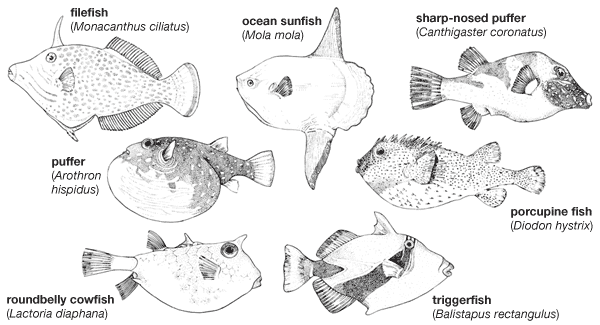
The Molidae family, commonly known as ocean sunfishes, consists of five recognized species categorized into three distinct genera.1
Genus Mola
- Ocean sunfish (M. mola): An enormous, circular or oval-shaped fish found in temperate and tropical regions worldwide.1
- M. alexandrini: The largest member of the genus and the most massive bony fish known, capable of reaching weights of 2,300 kg.1
- Hoodwinker sunfish (M. tecta): Discovered in 2017, this species is primarily distributed in the temperate oceans of the Southern Hemisphere.1
- Southern sunfish (M. ramsayi): A species native to the southwestern Pacific Ocean that is slightly smaller than the common ocean sunfish.1
Genus Masturus
- Sharptail mola (Masturus lanceolatus): A very large species that can reach a maximum length of 3.37 meters.1
Genus Ranzania
- Slender mola (Ranzania laevis): The smallest member of the family, measuring no more than 1 meter in length.1
What is the habitat and distribution of mola fish in the world’s oceans?
Mola fish, or ocean sunfishes, are widely distributed across the world’s oceans, primarily inhabiting temperate and tropical regions. These fish are typically found in the open sea, where they are often observed swimming near the surface.1
The distribution varies by specific species:
- Ocean sunfish (M. mola): This species is found in temperate and tropical waters throughout the world.1
- Hoodwinker sunfish (M. tecta): This species is believed to be widely distributed across the temperate oceans of the Southern Hemisphere.1
- Southern sunfish (M. ramsayi): This species is native to the southwestern Pacific Ocean.1
While these fish are generally associated with open-ocean environments, their presence is a testament to their ability to thrive in diverse marine climates across the globe.1
Sources
- mola — Encyclopædia Britannica
- mola — Merriam-Webster
- Molidae — Merriam-Webster
- mole — Merriam-Webster
- molid — Merriam-Webster
- ocean sunfish — Merriam-Webster
- tetraodontiform - Annotated classification — Encyclopædia Britannica
- Marine ecosystem - Migrations of marine organisms — Encyclopædia Britannica
Published on · 3 min read