Perch
Perch, specifically the common and yellow species (Perca fluviatilis and P. flavescens), are freshwater fish belonging to the family Percidae. They are…
What are the main characteristics that distinguish perch from other fish species?
Perch, specifically the common and yellow species (Perca fluviatilis and P. flavescens), are freshwater fish belonging to the family Percidae. They are distinguished by several key physical and behavioral characteristics:
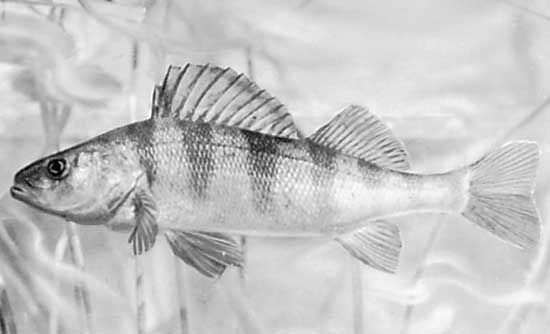
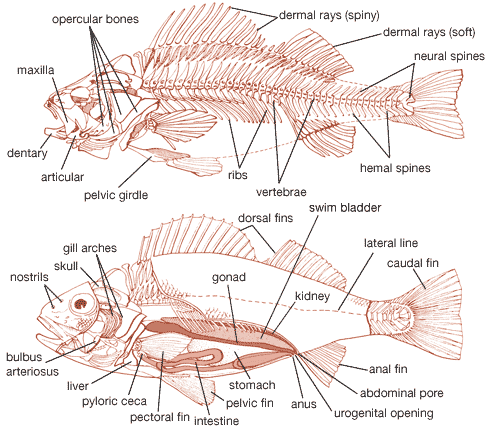
- Dorsal Fins: A primary identifying feature is the presence of two distinct dorsal fins: the first is spiny, while the second is soft-rayed.1
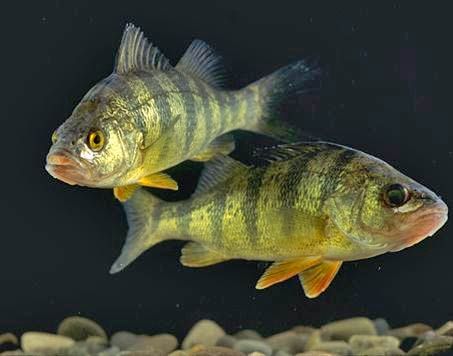
- Appearance: The European perch is typically greenish with dark, vertical bars on its sides and reddish or orange coloring on its lower fins. The yellow perch is similar in form but exhibits a yellower coloration.1
- Feeding Habits: As carnivores, perches possess numerous short, fine, and pointed teeth adapted for their piscivorous diet.12
- Habitat and Spawning: They inhabit quiet freshwater environments such as ponds, lakes, and rivers. During the spring, they spawn by laying strings of eggs in shallow areas among vegetation or branches.1
While the name “perch” is sometimes applied broadly to various other species, true perches are members of the order Perciformes, a diverse group characterized by spiny rays in their fins and specialized jaw structures.12
Where are perch commonly found, and what types of habitats do they prefer?
Common and yellow perches are found in the fresh waters of Eurasia and North America, respectively. These fish prefer quiet, still environments, specifically inhabiting ponds, lakes, streams, and rivers.1
During the spring spawning season, they seek out shallow areas containing vegetation, branches, or similar structures to deposit their eggs. While the term “perch” is sometimes used for other species, such as the pirate perch—which is found in the weedy or muddy creeks, rivers, and lakes of eastern North America—these are distinct from the common and yellow perch of the family Percidae.15
What are the different species of perch, and how do they vary?
The term “perch” is used to describe a variety of fish, but it most accurately refers to two specific species within the family Percidae: the common perch and the yellow perch. Because the name is applied broadly, it often leads to confusion with other unrelated or distantly related species.1
True Perches
The true perches are freshwater fish characterized by two distinct dorsal fins—the first is spiny, and the second is soft-rayed.1
- Common Perch (Perca fluviatilis): Native to the fresh waters of Eurasia, this species is greenish with dark vertical bars on its sides and reddish or orange coloring on its lower fins. It can reach a weight of about 3 kg (6 pounds).1
- Yellow Perch (Perca flavescens): Native to eastern North America, this fish is similar in form to the common perch but exhibits a yellower coloration. It is generally smaller, typically growing to about 40 cm (15 inches) and 1 kg (2.2 pounds).1
Other Perchlike and Perch-Named Fish
Many other species are called “perch” due to their appearance or classification within the order Perciformes, though they vary significantly in biology:
- Pikeperch: Also members of the family Percidae, these are more elongated and slender than true perches. Notable examples include the European zander and the North American walleye and sauger.7
- Other Varieties: The surfperch and the white perch (a relative of the sea bass) are often grouped under the name despite having different evolutionary lineages.1
How do anglers typically fish for perch, and what bait or lures are most effective?
Anglers typically target perch using several common angling methods, most notably bait fishing and ice fishing. Because perch are carnivores that often congregate near natural cover like sunken weed beds, logs, and rock formations, these methods are highly effective for locating them.112
Common Fishing Methods
- Bait Fishing: Often called still or bottom fishing, this involves using a rod and reel to suspend bait at a specific depth using a float (or bobber) or by weighting the line with a sinker. Anglers wait for the fish to take the bait, which is signaled by a tug on the line.12
- Ice Fishing: Popular in the Great Lakes–St. Lawrence region, this method involves fishing through holes cut in frozen lakes using short rods and specialized equipment like tip-ups to signal a strike.12
- Spinning and Casting: Anglers also use spinning or bait-casting tackle to retrieve artificial lures that mimic the swimming action of natural prey.12
Effective Baits and Lures
Perch are opportunistic feeders, and the most effective natural baits include:
- Worms and maggots
- Minnows
- Crayfish and leeches
- Grubs and cut-up fish12
Sources
- perch — Encyclopædia Britannica
- perciform - Form and function — Encyclopædia Britannica
- perch — Merriam-Webster
- perciform - Feeding behaviour — Encyclopædia Britannica
- pirate perch — Encyclopædia Britannica
- Biosphere - Water currents — Encyclopædia Britannica
- perciform — Encyclopædia Britannica
- perciform - Annotated classification — Encyclopædia Britannica
- Perca — Merriam-Webster
- Percidae — Merriam-Webster
- pike perch — Encyclopædia Britannica
- fishing - Methods — Encyclopædia Britannica
- surfperch — Encyclopædia Britannica
Published on · 4 min read