Sungari River
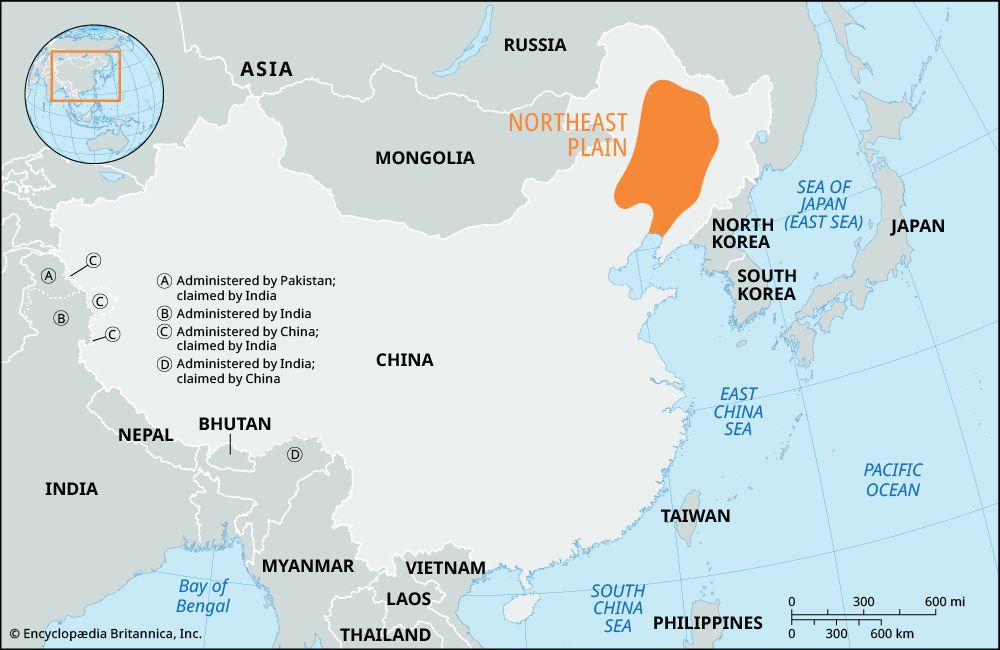
The Sungari River (also known as the Songhua) serves as a vital artery for Northeast China, shaping the region's economic development and historical…
What is the historical and cultural significance of the Sungari River to the people of Northeast China?
The Sungari River (also known as the Songhua) serves as a vital artery for Northeast China, shaping the region’s economic development and historical settlement patterns.
Economic and Cultural Significance
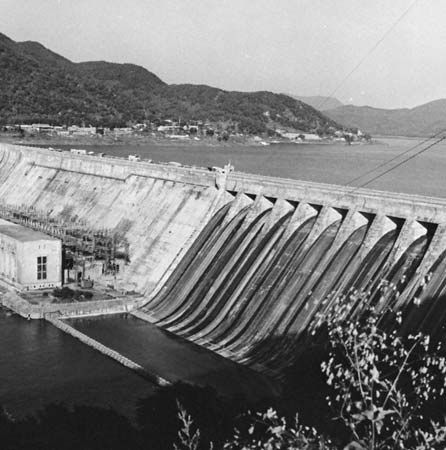
Historically, the river was essential for transport and communication, particularly during the 19th-century expansion into Heilongjiang when waterways provided the primary means of moving people and goods. Today, it remains a critical freshwater fishery, renowned for its salmon and sturgeon, which are distributed throughout China. The river also supports large-scale agriculture in the Northeast Plain, where reclaimed alluvial lands produce sugar beets, soybeans, and grains. Furthermore, the Fengman Dam project, initiated in the mid-20th century, transformed the river into a key source of hydroelectric power for the region’s industrial centers6.12
Historical Context
The river valleys were central to the history of the Manchu people and other Tungusic tribes. While the region remained a tribal preserve for centuries, the Qing government eventually encouraged Chinese immigration to the Sungari and Amur valleys to bolster defenses against Russian expansion. This migration inexorably transformed the region, integrating it into the broader Chinese economy and culture.3
How has the Sungari River influenced transportation and trade in Northeast China throughout history?
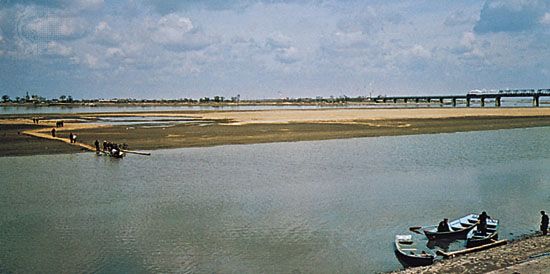
The Sungari River has historically functioned as a vital transportation artery for Northeast China, facilitating the movement of goods and people across the Northeast (Manchurian) Plain.
Its role in trade and navigation is defined by the following:
- Navigability: The river is a significant waterway for regional commerce. Steamships of up to 1,000 tons can navigate the river as far upstream as Harbin. Smaller river steamers extend this reach to the city of Jilin, while smaller craft utilize the upper waters and tributaries, such as the Nen River, to reach inland areas like Qiqihar.1
- Economic Integration: The river supports the transport of agricultural products grown on reclaimed alluvial lands, including soybeans, sugar beets, and grains. Additionally, it serves as a major freshwater fishery, allowing for the distribution of renowned salmon and sturgeon to markets throughout China.2
- Operational Constraints: Trade is seasonally influenced, as the river remains frozen from late November until March, limiting year-round transport.1
What types of wildlife and plant species are found in and around the Sungari River basin?
The Sungari River basin supports a diverse range of aquatic life and agricultural vegetation, though the region’s intensive land use has significantly altered its natural landscape.
Aquatic Species
The Sungari River is a major freshwater fishery of national significance. It is particularly well-known for its populations of:
- Salmon: Highly regarded and distributed throughout China.
- Sturgeon: Including the beluga sturgeon (Huso huso).
Aquaculture is also highly developed in the basin’s associated water bodies, such as Jingpo Lake, Lake Khanka, and the “Five Lotus Lakes” (Wu Da Lianchi), which contribute to the region’s biological and economic output.
Flora and Agriculture
While the basin’s natural vegetation has been largely replaced by human activity, the region is a powerhouse for cultivated plant species. Large-scale state farms in the alluvial lands between the Sungari and Ussuri rivers produce:
- Grains: Including corn, wheat, rice, millet, and sorghum.
- Industrial Crops: Such as sugar beets, flax, soybeans, and sunflowers.
What are some of the major cities located along the Sungari River, and how have they developed?
The Sungari River has been a central factor in the development of major urban centers in Northeast China, serving as a vital artery for defense, commerce, and industrialization.
Major Cities Along the Sungari
- Jilin (Kirin): One of the most ancient cities in the region, Jilin’s development is deeply tied to the river. In 1651, the Manchus established a shipyard there to construct vessels for defense against Russian incursions. It later became a military headquarters and a collection center for timber and agricultural products. Following the Japanese occupation in 1931, the city underwent large-scale industrialization, highlighted by the construction of the Fengman Dam, which transformed the city into a major hub for chemical, petrochemical, and power-generation industries.1
- Harbin: Originally a small fishing village, Harbin’s rapid growth was spurred by the construction of the Chinese Eastern Railway at the turn of the 20th century. Its strategic location on the river and its role as a railway junction made it a center for international trade and a refuge for diverse populations. Post-1950, it evolved into a significant industrial base, producing heavy machinery, turbines, and agricultural equipment, while maintaining its status as a regional shipping center for forest and agricultural goods.8
- Jiamusi: Situated where the river emerges from the mountains into the Amur River valley, Jiamusi serves as a critical geographic transition point, facilitating the movement of goods from the interior plains toward the broader river network.9
Sources
- Sungari River — Encyclopædia Britannica
- Heilongjiang - Agriculture, forestry, and fishing — Encyclopædia Britannica
- Songhua — Merriam-Webster
- Manchuria - Manchuria to about 1900 — Encyclopædia Britannica
- Nen River — Encyclopædia Britannica
- Fengman Dam — Encyclopædia Britannica
- Jiangsu - Plant and animal life — Encyclopædia Britannica
- Harbin — Encyclopædia Britannica
- Jilin — Encyclopædia Britannica
- Jilin - Transportation — Encyclopædia Britannica
Published on · 4 min read