Sweet Birch
Sweet birch (Betula lenta), also known as black birch, is an aromatic tree in the Betulaceae family native to eastern North America. Typically reaching about…
What is sweet birch?
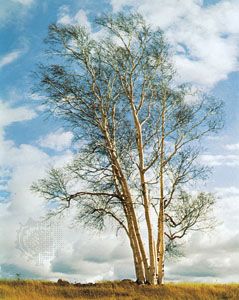
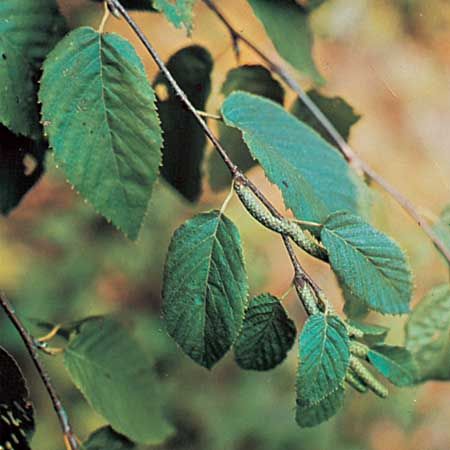
Sweet birch (Betula lenta), also known as black birch, is an aromatic tree in the Betulaceae family native to eastern North America. Typically reaching about 18 meters (60 feet) in height, it features smooth, nonpeeling bark that transitions from red-brown on young stems to a nearly black, deeply furrowed appearance on older trunks.12
The tree is notable for its twigs and inner bark, which possess a distinct scent and taste reminiscent of wintergreen. Its hard, dense wood is valued for applications such as furniture, flooring, and veneer. Additionally, sweet birch serves as a source of birch oil, used in aromatherapy, and its sap is used to produce birch beer. Unlike many other birch species, its bark does not peel in thin, horizontal sheets.23
How is birch beer made from the sap of a tree?
Birch beer is a sweetened, effervescent beverage traditionally flavored with extracts derived from birch trees, such as birch bark or birch oil, and sometimes wintergreen. While it is noted that birch beer is made from the sap of the tree, the production process generally follows methods similar to those used for traditional root-based beverages.4562
Historically, these drinks were prepared by combining aromatic plant extracts and a sweetener—often molasses—with water. This mixture was typically cooked down into a syrup, after which additional water and a small amount of yeast were added to allow the beverage to ferment, resulting in a slightly alcoholic drink. Modern versions of birch beer are typically produced by carbonating the sweetened, flavored liquid rather than relying on fermentation.54
What are the main differences between sweet birch and paper birch?
Sweet birch (Betula lenta) and paper birch (Betula papyrifera) are distinct species within the Betulaceae family, primarily differentiated by their bark characteristics and aromatic properties.
Key Differences
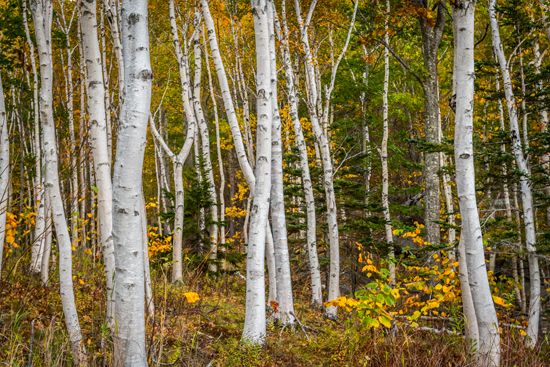
- Bark Appearance: The most notable difference is the bark. Paper birch is famous for its white, paper-thin layers that peel horizontally. In contrast, sweet birch features smooth, nonpeeling bark that is red-brown on young stems and turns nearly black and deeply furrowed on older trunks.72
- Aromatic Qualities: Sweet birch twigs and inner bark possess a distinct scent and taste of wintergreen, a trait not found in paper birch. This aromatic quality makes sweet birch a source of birch oil and a traditional ingredient for birch beer2.3
- Uses: While both provide valuable timber for furniture and flooring, paper birch bark was historically prized by Indigenous peoples for its water-impervious nature, making it ideal for canoes and roofing. Sweet birch is specifically utilized for its oil in aromatherapy and its sap for beverages.723
Why do some birch trees have bark that peels while others do not?
The peeling characteristic of birch bark is primarily determined by the specific pattern of cork development within the tree’s bark.
In species where the bark peels, such as the paper birch, the cork cambium produces alternating layers of thick-walled and thin-walled cork cells. This structural variation causes the outer layers to separate and exfoliate in thin, horizontal sheets. This process is a continuous pattern of growth that allows the tree to shed its outer covering as it increases in diameter.78
Conversely, not all birch trees exhibit this peeling behavior. For example, the water birch (Betula occidentalis) is characterized by nonpeeling, dark red bark. In many older birch trees, the bark may also change as the tree matures; while young trees often display the characteristic peeling, the bark on older trunks can become thick, deeply furrowed, and break into irregular plates rather than thin sheets. The pattern of cork development is the fundamental factor that dictates whether a tree’s bark remains smooth, becomes scaly, or exfoliates in sheets.87
Sources
- sweet birch — Merriam-Webster
- sweet birch — Encyclopædia Britannica
- birch — Encyclopædia Britannica
- birch beer — Merriam-Webster
- root beer — Encyclopædia Britannica
- beer — Merriam-Webster
- paper birch — Encyclopædia Britannica
- Tree - Tree bark — Encyclopædia Britannica
Published on · 3 min read