Sweet Cherry
The sweet cherry (Prunus avium) is a species of cherry tree in the Rosaceae family, widely cultivated for its edible, fleshy drupes (stone fruits).
What is Sweet cherry?
The sweet cherry (Prunus avium) is a species of cherry tree in the Rosaceae family, widely cultivated for its edible, fleshy drupes (stone fruits).12
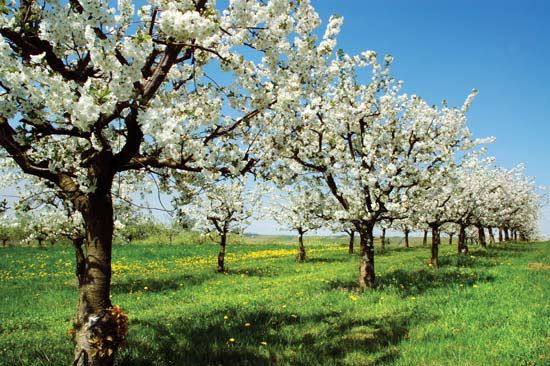
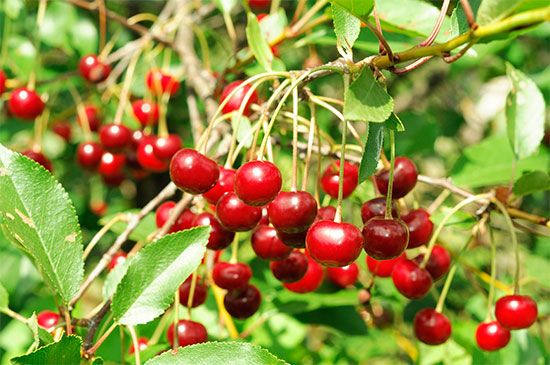
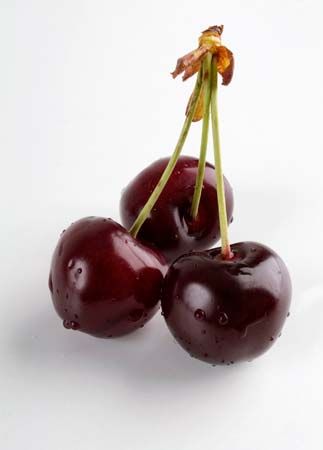
These trees are deciduous, reaching heights of up to 11 meters, and produce showy white flowers in the spring. The fruits, which measure about 2 cm in diameter, are typically heart-shaped or globular and range in color from yellow to nearly black. Unlike tart cherries, sweet cherries have a low acid content, making them popular for fresh consumption and as the primary fruit used in maraschino liqueur.21
Nutritionally, they provide vitamin A, dietary fiber, and antioxidants. It is important to note that the pits contain amygdalin, a compound that releases hydrogen cyanide if crushed or chewed, posing a risk of cyanide poisoning if ingested in sufficient quantities. Consequently, pits should always be removed before blending or juicing the fruit.2
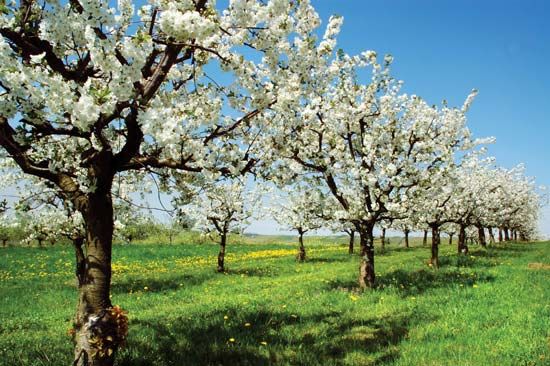
How do tart cherries differ from sweet cherries in their culinary uses?
The culinary uses of sweet cherries and tart cherries are primarily determined by their distinct acid levels and flavor profiles.1
Sweet Cherries
Because they have a low acid content, sweet cherries are typically consumed fresh as a popular summer fruit. Beyond fresh eating, they are the primary variety used in the production of true or imitation maraschino liqueur.14
Tart Cherries
Due to their high acid content, which creates a characteristic piquant or sour flavor, tart cherries are generally considered unappealing for eating fresh. Instead, they are commercially processed through freezing or canning. They are a staple ingredient in:13
- Sauces: Used to balance savory or sweet dishes.13
- Pastries: Their acidity holds up well during baking.13
- Beverages: They are frequently manufactured into juice or juice concentrate.3
Regardless of the variety, it is essential to remove the pits before processing, as they contain amygdalin, which can release poisonous hydrogen cyanide if the seeds are crushed or chewed.34
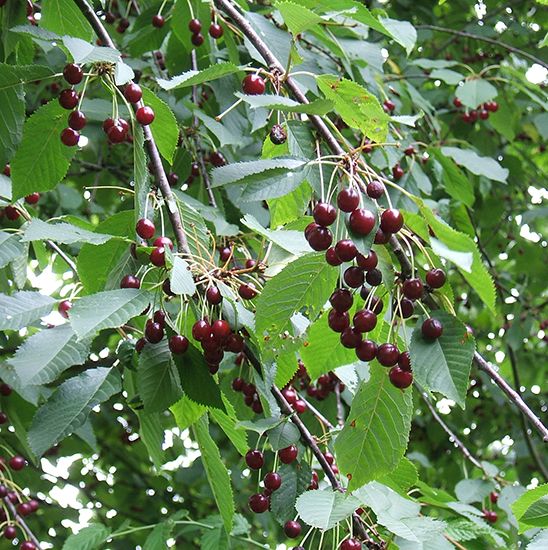
What are some common ornamental cherry trees that do not produce fruit?
It is a common misconception that ornamental cherry trees produce no fruit at all; while many varieties are specifically selected for their aesthetic appeal rather than harvest, most do set fruit, though it is often small, sparse, or inedible.51
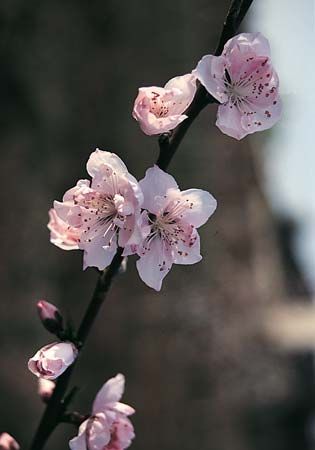
In Asia, particularly in Japan, many cherry varieties have been developed for the beauty of their pink or white flowers, often featuring double blooms with numerous petals rather than the standard five. These ornamental trees are widely cultivated in moderate climates across North America and Europe.15
Popular ornamental species and cultivars include:
- Yoshino cherry (Prunus ×yedoensis): Famous for the display around the Tidal Basin in Washington, D.C.1
- Weeping cherry (P. subhirtella, variety pendula)1
- Autumn-flowering cherry (P. subhirtella, variety autumnalis)1
- Kwanzan cherry (P. serrulata ‘Kwanzan’)1
- Sargent cherry (P. sargentii)1
- Takesimensis cherry (P. takesimensis)1
Why do cherry trees require a period of winter cold to bloom?
Cherry trees require a period of winter cold to bloom because they undergo a process known as vernalization. This physiological requirement ensures that the trees remain in a state of dormancy during the winter and only initiate flowering when conditions are favorable in the spring.6
By requiring a specific amount of seasonal chilling, cherry trees prevent themselves from blooming too early during temporary warm spells in winter, which would expose delicate flowers to frost damage. This cold exposure triggers internal changes, such as an increase in growth-promoting gibberellins and a decrease in growth-inhibiting substances like abscisic acid, effectively “resetting” the tree’s biological clock for the upcoming growing season. Once the chilling requirement is met, the tree is prepared to transition from vegetative growth to the reproductive stage, leading to the prolific spring blossoms characteristic of the genus Prunus.671
Sources
- Cherry — Encyclopædia Britannica
- sweet cherry — Merriam-Webster
- Sweet cherry — Encyclopædia Britannica
- Tart cherry — Encyclopædia Britannica
- Japanese flowering cherry — Merriam-Webster
- vernalization — Encyclopædia Britannica
- Plant development - Seasonal adaptations — Encyclopædia Britannica
Published on · 3 min read