Syr Darya
The Syr Darya is a vital waterway in Central Asia, flowing through Uzbekistan, Tajikistan, and Kazakhstan. While the river supports significant human…
What are some of the major cities located along the Syr Darya river and how do they depend on it?
The Syr Darya is a vital waterway in Central Asia, flowing through Uzbekistan, Tajikistan, and Kazakhstan. While the river supports significant human activity, the provided information does not explicitly list specific major cities located along its banks.
However, the river is essential to the regional economy and infrastructure through several key functions:
- Agriculture: The river and its tributaries irrigate approximately 5,000,000 acres of land. Cotton is the primary crop in the Fergana Valley and the river’s middle course, while rice is cultivated in the lower reaches.1
- Energy: The river supports multiple hydroelectric power stations, including Farhod in Uzbekistan, Qayroqqum in Tajikistan, and Shardara in Kazakhstan. The Toktogul hydroelectric station on the Naryn River is critical for regulating the flow of the Syr Darya.1
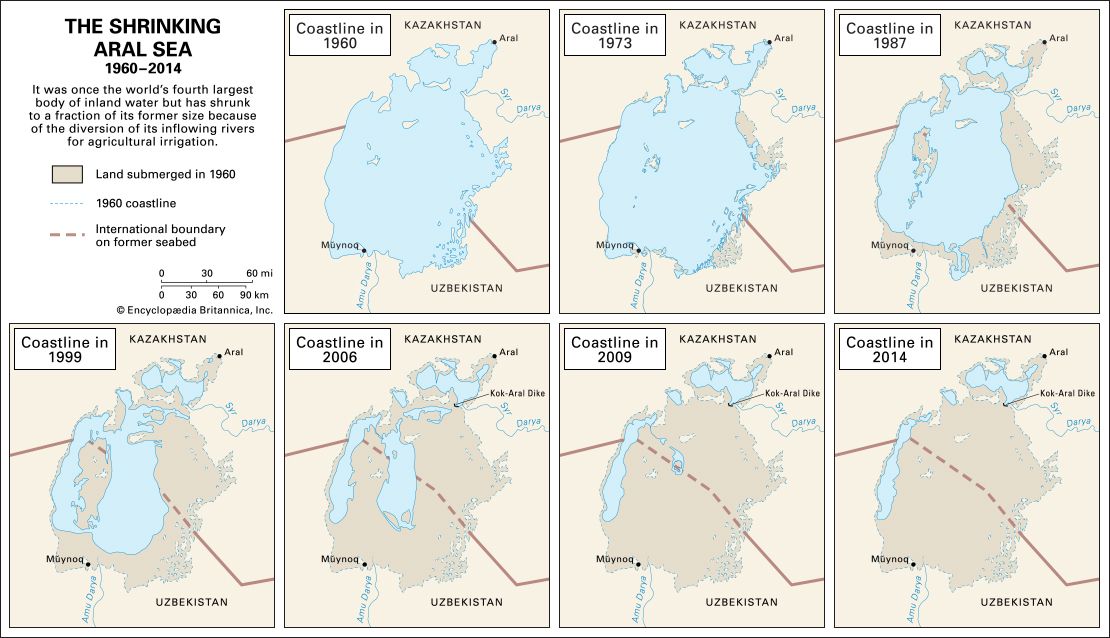
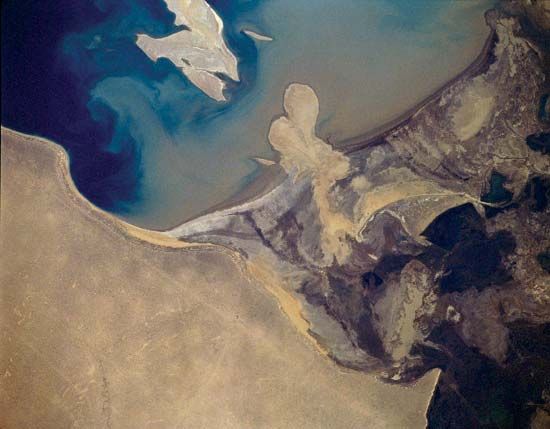
- Water Management: Dams at Qyzylorda and Qazaly in Kazakhstan help manage water levels, though heavy diversion for irrigation has historically led to the severe shrinkage of the Aral Sea and environmental degradation, including toxic dust and water contamination.12
Where does the Syr Darya river originate, and through which countries does it flow?
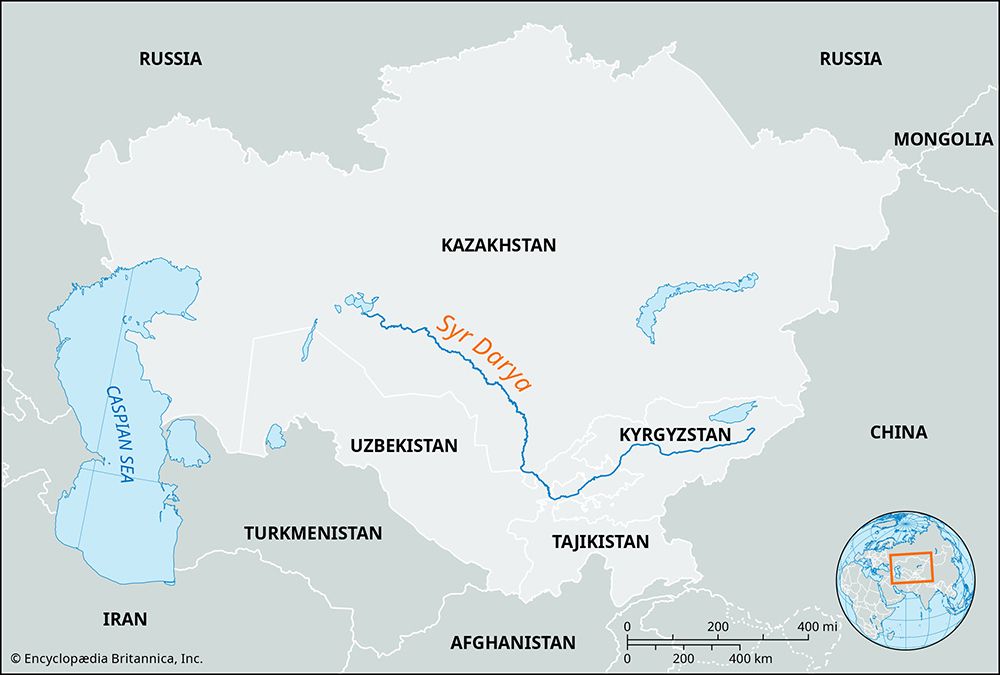
The Syr Darya originates in the eastern Fergana Valley, where it is formed by the confluence of the Naryn and Qoradaryo rivers.
The river flows through three Central Asian countries:
- Tajikistan
- Uzbekistan
- Kazakhstan
From its origin, the river travels generally northwest for 1,374 miles (2,212 km) before emptying into the Aral Sea.
How has the role of the Syr Darya in transportation and trade changed over time?
The role of the Syr Darya in transportation and trade has shifted significantly over time, primarily transitioning from a potential waterway to a critical resource for agricultural and industrial infrastructure.
Historically, the river served as a major geographic feature of Central Asia, but it has never been a primary artery for large-scale commercial shipping. Similar to the Amu Darya, the Syr Darya’s utility for navigation has always been limited by its unstable riverbed, frequent changes in course, and the presence of shoals.
In the modern era, the river’s role has been redefined by intensive water management:
- Agricultural Trade: The river is now the backbone of a massive irrigation network, supporting approximately 5,000,000 acres of land. This has facilitated the large-scale production and trade of commodities like cotton in the Fergana Valley and rice in the lower reaches.
- Energy Infrastructure: The river has become a vital source of hydroelectric power, with stations like Farhod, Qayroqqum, and Shardara supporting regional industrial development.
- Environmental Decline: The heavy diversion of water for these economic activities caused the Aral Sea to shrink drastically. This collapse destroyed the local fishing industry and grounded ships that once operated along the sea’s shores, effectively ending any maritime trade that relied on the Aral as a terminus.
What is the total length of the Syr Darya river and how does it compare to other major rivers in Central Asia?
The Syr Darya has a length of 1,374 miles (2,212 km), which extends to 1,876 miles (3,019 km) when including its headstream, the Naryn River. This makes it the longest river in Central Asia.1
In comparison, the Amu Darya—the other major river in the region—has a length of 879 miles (1,415 km), or 1,578 miles (2,540 km) when measured from the source of its headstream, the Panj River. While the Syr Darya holds the title for the greatest length, the Amu Darya carries a larger volume of water. Both rivers have been significantly impacted by 20th-century irrigation projects, which have diverted their flows and contributed to the dramatic shrinkage of the Aral Sea1.31
Sources
- Syr Darya — Encyclopædia Britannica
- Uzbekistan - Drainage — Encyclopædia Britannica
- Amu Darya — Encyclopædia Britannica
Published on · 3 min read