Tahr
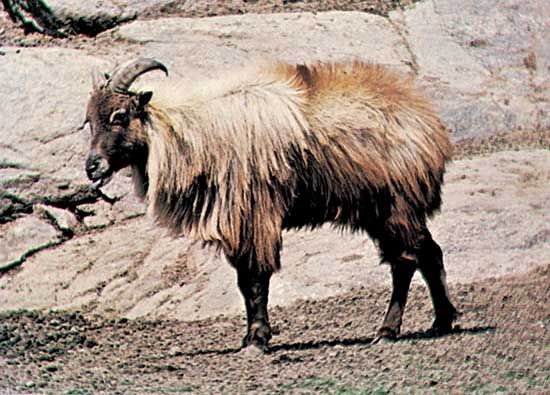
A tahr is a wary, sure-footed, wild goatlike mammal native to the mountains of Asia. These animals belong to the family Bovidae and the order Artiodactyla.
What is a tahr and which family of animals does it belong to?
A tahr is a wary, sure-footed, wild goatlike mammal native to the mountains of Asia. These animals belong to the family Bovidae and the order Artiodactyla.1
There are three primary species of tahr:
- Himalayan tahr (Hemitragus jemlahicus): Found from Kashmir to Sikkim, these are known for their reddish-brown to dark brown coats and the male’s distinctive shaggy mane.12
- Nilgiri tahr (Nilgiritragus hylocrius): Located in southern India, this species is dark brown and features a grizzled, saddle-shaped patch on its back.1
- Arabian tahr (Arabitragus jayakari): The smallest of the three, this species is found in northern Oman and the United Arab Emirates.12
While the Himalayan tahr has been introduced to regions like New Zealand and South Africa, the Nilgiri and Arabian species are currently threatened by extinction due to habitat competition and overhunting.1
Where are tahrs typically found in the wild?
Tahrs are native to the mountains of Asia, where they typically inhabit steep, often wooded mountainsides in herds. Their specific wild ranges vary by species:1
- Himalayan tahr: Found across the Himalayas, ranging from Kashmir to Sikkim.1
- Nilgiri tahr: Native to the mountains of southern India.1
- Arabian tahr: Found in small, scattered populations across a 600-km crescent in northern Oman and a limited area of the United Arab Emirates.1
While these are their native habitats, Himalayan tahrs have also been introduced to non-native environments, including New Zealand, Table Mountain in South Africa, and parts of Argentina.1
How do tahrs differ from other goat-like species in their habitat?
Tahrs are distinguished from many other goat-like species by their preference for steep, often wooded mountainsides rather than strictly open, rocky alpine terrain. While many related caprines—such as certain ibex or mountain goats—are primarily associated with high-altitude, barren cliffs, tahrs frequently utilize the cover provided by mountain forests.1
Their habitat requirements vary significantly by species:
- Himalayan tahr: Occupies rugged, high-altitude slopes ranging from Kashmir to Sikkim, often navigating terrain that includes both rocky outcrops and forested areas.1
- Nilgiri tahr: Restricted to the montane grasslands and rocky cliffs of southern India, showing a specific adaptation to the unique environment of the Western Ghats.1
- Arabian tahr: Inhabits the arid, rugged mountain ranges of northern Oman and the United Arab Emirates, where they rely on steep, rocky terrain for protection.1
Unlike some other mountain ungulates that thrive in extreme, exposed alpine zones, tahrs are highly specialized to navigate these vertical, often vegetated landscapes.1
How do tahrs adapt to living on steep mountain cliffs?
Tahrs are well-adapted to life on steep, rugged mountain terrain, primarily due to their nature as sure-footed bovids. While specific physiological mechanisms for climbing are not detailed in the provided text, their survival in these vertical environments is supported by their physical agility and their ability to navigate steep, often wooded mountainsides in herds.1
These animals are characterized as wary and sure-footed, traits that are essential for traversing the precipitous slopes they inhabit across Asia. Their physical build, ranging from 60 to 106 cm in shoulder height, allows them to maneuver through the varied landscapes of the Himalayas, the Western Ghats, and the arid ranges of the Arabian Peninsula. By living in herds, they likely benefit from collective vigilance, which helps them remain safe in environments where they are exposed to predators or environmental hazards.1
Sources
- tahr — Encyclopædia Britannica
- tahr — Merriam-Webster
Published on · 3 min read