Tamiahua Lagoon
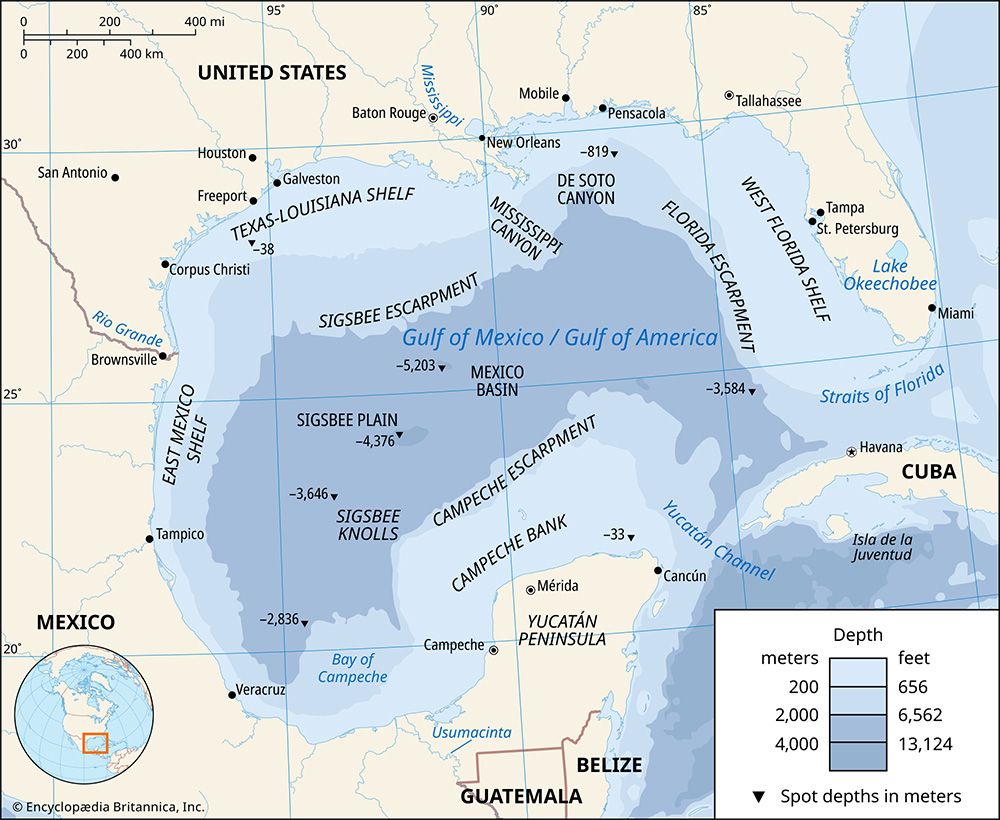
Tamiahua Lagoon is a long coastal lagoon located in the state of Veracruz, Mexico. Situated as an inlet of the Gulf of Mexico, it stretches about 65 miles…
What is Tamiahua Lagoon?
Tamiahua Lagoon is a long coastal lagoon located in the state of Veracruz, Mexico. Situated as an inlet of the Gulf of Mexico, it stretches about 65 miles (105 km) south of Tampico. The lagoon is sheltered from the Gulf by a narrow, sandy peninsula that features Cape Rojo.
The lagoon reaches a width of 12 miles (19 km) and contains several islands, most notably Idolo and Juana Ramírez. It is navigable for shallow-draft vessels and connects to the Gulf of Mexico at its southern end through an opening called the Corazones. The town of Tamiahua, known as an agricultural hub for sugarcane and fruit, is located on the southwestern mainland, while the settlement of San Jerónimo sits on the western shore.
What kind of wildlife lives in the Tamiahua Lagoon ecosystem?
Sorry, the Britannica knowledge base does not contain specific information regarding the wildlife that inhabits the Tamiahua Lagoon ecosystem. While the provided search results describe the lagoon’s geography and general characteristics of the Gulf of Mexico region, they do not list the specific species found within the lagoon itself.
How do coastal lagoons like this one form?
Coastal lagoons form primarily through the interaction of waves, sediment supply, and sea level changes along low-lying coasts.456
Key Formation Processes
- Barrier Development: Lagoons require an abundant supply of sand or other material to build protective barrier islands. These barriers form where the coastal slope is flatter than the equilibrium profile required by constructive waves.46
- Sea Level Rise: Many modern lagoons formed as sea levels rose over the past 20,000 years, flooding low-lying land behind these protective barriers.67
- Spit Formation: In some areas, material transported along the shore creates a spit that eventually develops into a bay-mouth barrier, enclosing a body of water.6
- Environmental Conditions: Lagoons thrive in low-to-moderate energy environments where swells are less violent. They are characterized by quiet water, fine-grained sedimentation, and often feature brackish marshes.5
While these features are dynamic, they can be significantly altered by storms and hurricanes, which may breach barriers or create new inlets.8
What are the main differences between a lagoon and a bay?
The primary difference between a lagoon and a bay lies in their physical structure and the presence of a protective barrier.
- Lagoons: A lagoon is a body of relatively shallow, quiet water that is physically separated from the open sea by a barrier. This barrier is typically a wave-built feature, such as a sandbar or barrier island, or an organic structure like a coral reef. Because they are enclosed, lagoons often have distinct salinity levels—ranging from brackish to hypersaline—and are characterized by fine-grained sedimentation.910511
- Bays: In contrast, a bay is generally defined as a broad inlet of the sea or a part of a body of water that extends beyond the general shoreline. Unlike lagoons, which are defined by their isolation behind a barrier, bays are typically open to the larger body of water they are connected to, serving as a recessed area along the coast.4
While both are coastal features, a lagoon is essentially a “trapped” environment, whereas a bay is an indentation of the coastline.
Sources
- Tamiahua Lagoon — Encyclopædia Britannica
- Laguna Madre — Encyclopædia Britannica
- Gulf of Mexico / Gulf of America - Plants and animals — Encyclopædia Britannica
- lagoon - Barrier bars and sediment sources — Encyclopædia Britannica
- lagoon - Barrier island lagoons — Encyclopædia Britannica
- lagoon - Waves , tides, and surf — Encyclopædia Britannica
- lagoon - Storms and catastrophic events — Encyclopædia Britannica
- lagoon - The effect of time — Encyclopædia Britannica
- bay — Merriam-Webster
- lagoon — Encyclopædia Britannica
- lagoon - Water temperature and salinity — Encyclopædia Britannica
Published on · 2 min read