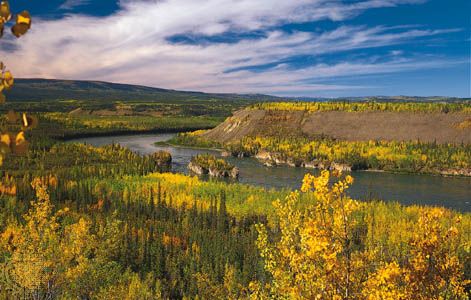
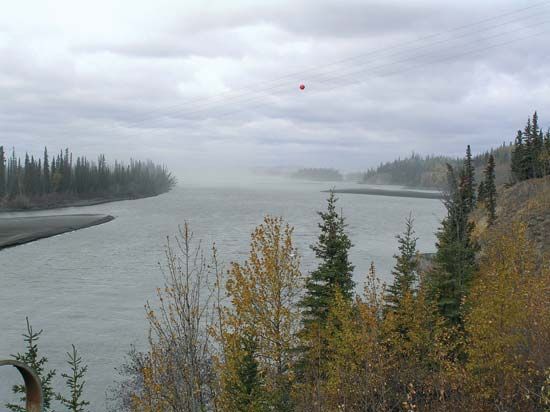
Tanana River
The name "Tanana River" originates from an Athabascan word that translates to "river trail."
What is the origin of the name ‘Tanana River’ and its significance?
The name “Tanana River” originates from an Athabascan word that translates to “river trail.”1
The river holds significant importance as a major tributary of the Yukon River, draining approximately 44,000 square miles of interior Alaska. Its valley is a vital economic region, historically famous for the 1904 gold rush and currently serving as a key area for lumbering and agriculture, including the production of potatoes and grains. Fairbanks, the commercial and distribution hub of the valley, is located along the river, which also supports the Tetlin National Wildlife Refuge and the Tanana Valley State Forest. Additionally, the river is culturally significant as the ancestral home of the Tanana, an Athabaskan-speaking group who traditionally relied on the region’s resources for their nomadic lifestyle.12
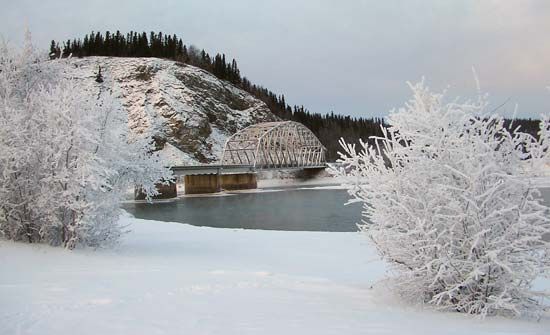
What role does the Tanana River play in Alaska’s ecosystem and wildlife?
The Tanana River plays a vital role in the ecosystem of interior Alaska by draining approximately 44,000 square miles of land along the north slopes of the Alaska Range. Fed by numerous glaciers, the river is a significant tributary of the Yukon River, contributing nearly 30 percent of its total water flow. The river is characterized as sediment-laden and mineral-rich, with flow levels that peak in July before receding into a shallow stream by late summer.1
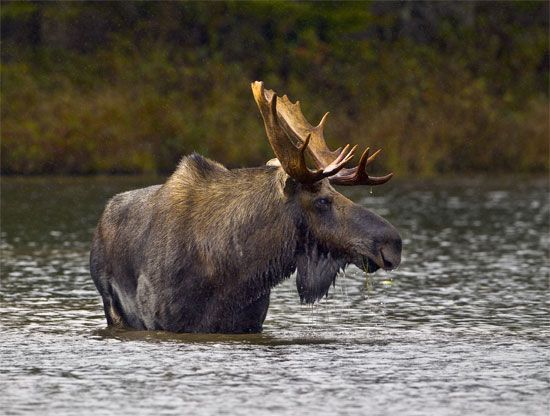
Regarding wildlife and conservation, the river corridor supports diverse habitats, most notably protected by the Tetlin National Wildlife Refuge and the Tanana Valley State Forest. Historically, the region’s ecosystem provided the essential resources for the Tanana people, who were nomadic hunters reliant on caribou, moose, and mountain sheep for their subsistence.12
How long is the Tanana River and what are its major tributaries?
The Tanana River flows for approximately 570 miles (915 km) from the head of the Chisana River to its confluence with the Yukon River near the village of Tanana.1
The river is formed by two primary headstreams:
- Chisana River
- Nabesna River
These headstreams rise on the north side of the Alaska Range and merge to create the Tanana, which then flows northwestward along the base of the mountains.1
How has the Tanana River been historically important for indigenous Alaskan communities?
The Tanana River has been historically significant to the Tanana people, an Athabaskan-speaking group whose name for the river translates to “river trail.” This waterway served as a vital corridor for these nomadic hunters, who relied on the surrounding environment for their subsistence.
The river and its valley provided essential resources, including:
- Food and Materials: The Tanana people depended on caribou, moose, and mountain sheep to provide both food and clothing.
- Social Structure: The groups were organized into matrilineal clans and practiced the potlatch, a ceremony used to distribute wealth and enhance social prestige within the community.
- Cultural Life: Their spiritual practices were highly individualized, centered on the role of the shaman and personal taboos.
The river’s role as a “trail” facilitated movement through the interior of Alaska, supporting the traditional lifestyle of these communities long before the region became a hub for gold mining and modern agriculture.
Sources
- Tanana River — Encyclopædia Britannica
- Tanana — Encyclopædia Britannica
- Tanana — Merriam-Webster
- Alaska - Agriculture, forestry, and fishing — Encyclopædia Britannica
- Yukon River - Physiography and hydrology — Encyclopædia Britannica
Published on · 2 min read