Yukon River
The Yukon River is a major North American waterway that flows through the central Yukon territory of northwestern Canada and the central region of the U.S.…
Where is the Yukon River located and how long is it?
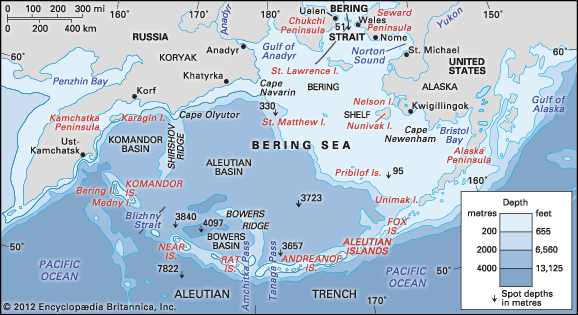
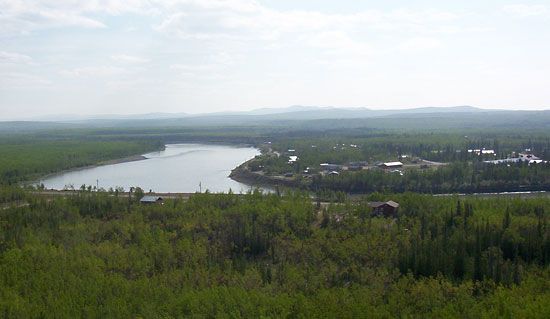
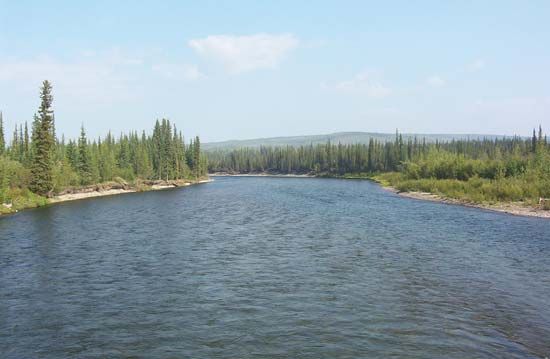
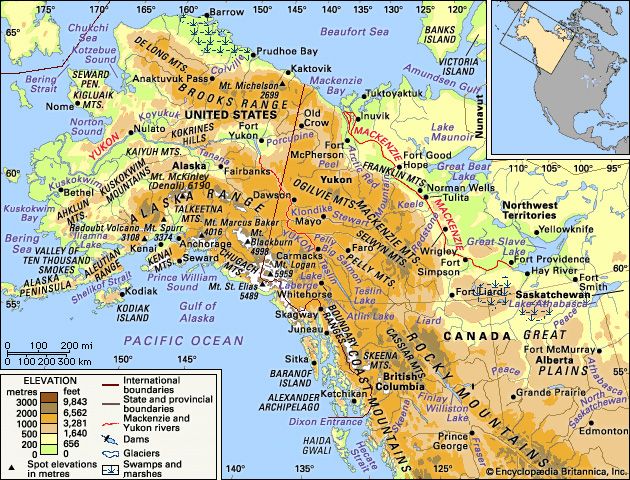
The Yukon River is a major North American waterway that flows through the central Yukon territory of northwestern Canada and the central region of the U.S. state of Alaska the U.S. state of Alaska. It measures 1,980 miles (3,190 km) in length, extending from its headwaters to its mouth at the Bering Sea its mouth at the Bering Sea.1
The river’s journey begins in the vicinity of the border between British Columbia and the Yukon territory, where its main headwaters flow from Atlin and Tagish lakes. From there, it travels northwestward and then generally southwestward through a low plateau across Alaska before discharging into the sea. Throughout its course, the river is fed by numerous tributaries, including the Pelly, Klondike, Porcupine, Koyukuk, and Tanana rivers.12
What are the major tributaries of the Yukon River?
The Yukon River is fed by a vast network of tributaries that drain the surrounding mountainous regions. These rivers are categorized by their position relative to the main channel:
East- and North-Bank Tributaries
- Teslin River: Flows from the south-central Yukon territory.21
- Big Salmon River: A notable tributary in the Yukon territory.1
- Pelly River: A significant contributor that drains the western slopes of the Mackenzie Mountains.21
- Stewart River: Originates in the mining region near Mayo.21
- Klondike River: Historically significant for the gold rush, it joins the Yukon at Dawson.21
- Porcupine River: Drains the northern Yukon and the Brooks Range in Alaska. the Brooks Range in Alaska.21
- Koyukuk River: The last major tributary, draining the south-central slopes of the Brooks Range.21
West- and South-Bank Tributaries
- Takhini River: A tributary located in the Yukon territory.1
- White River: Known for adding significant glacial silt to the Yukon.21
- Tanana River: The primary southern tributary in Alaska, which flows through Fairbanks and drains the Alaska Range.21
What kinds of wildlife can be found in and around the Yukon River?
The Yukon River basin supports a diverse array of wildlife, thriving within its forested valleys, wetlands, and river systems.
Mammals
The region is home to several large mammal species, including:
- Predators: Black and brown (grizzly) bears, as well as timber wolves.34
- Ungulates: Moose, caribou, deer, and at higher elevations, mountain goats and Dall sheep.34
- Furbearers: Common species include lynx, fox, marten, mink, muskrat, weasel, fisher, and squirrel.34
Birds
The area’s wetlands and forests host a variety of avian life:
- Game Birds: Grouse and ptarmigan are frequently found in the region.3
- Waterfowl: The basin serves as a habitat for many species of geese, swans, and ducks, along with other migratory birds.345
Fish
The river and its associated lakes contain a variety of fish species, including:
- Arctic grayling, burbot, northern pike, whitefish, and salmon.34
- Lake trout are also commonly found in the tributary lakes.4
These species are protected in part by designated areas such as the Yukon–Charley Rivers National Preserve, which helps maintain the natural environment for these populations.6
What are some of the major cities or settlements located along the Yukon River?
The Yukon River basin is sparsely populated, with most settlements historically established due to the lure of mineral wealth or the need for transportation hubs. Key cities and settlements along or near the river include:
- Whitehorse: The capital of the Yukon territory and the largest city in the region. It serves as a vital administrative and service center, having replaced Dawson as the capital in the 1950s due to its accessibility via the Alaska Highway.47
- Dawson: Once the booming heart of the Klondike gold rush, this historic town remains a significant landmark, though its population is now a fraction of its former size.42
- Fairbanks: Located upstream on the Tanana River, a major tributary, it is the largest city in the entire Yukon River basin and functions as a primary transportation and administrative hub for east-central Alaska.47
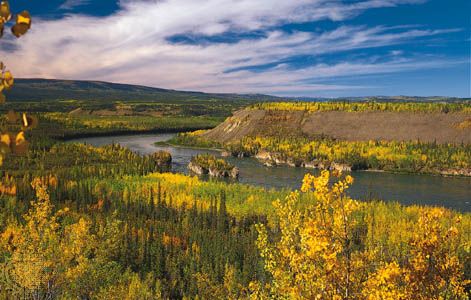
- Carmacks: A village located along the river, situated south of the Five Finger Rapids.7
- Fort Yukon: An Alaskan settlement located at the junction of the Porcupine River and the Yukon River.27
- Selkirk: A village situated at the confluence of the Pelly River and the Yukon.7
Sources
- Yukon River — Encyclopædia Britannica
- Yukon River - Physiography and hydrology — Encyclopædia Britannica
- Yukon River - Plant and animal life — Encyclopædia Britannica
- Yukon River - People and economy — Encyclopædia Britannica
- Yukon - Plant and animal life — Encyclopædia Britannica
- Yukon - Services, labour, and taxation — Encyclopædia Britannica
- Yukon River - History — Encyclopædia Britannica
Published on · 3 min read