Tapaculo
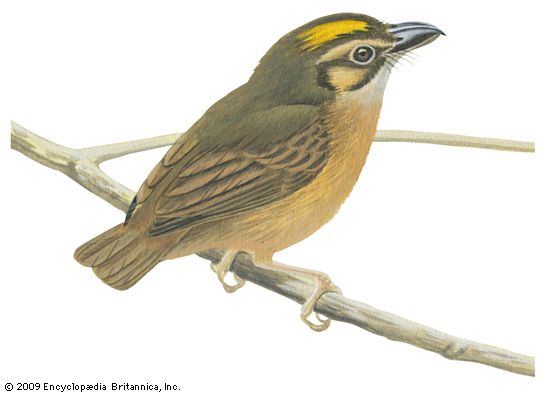
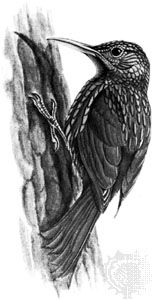
A tapaculo is any of approximately 55 species of ground-dwelling birds belonging to the family Rhinocryptidae, found throughout Central and South America.…
What is Tapaculo?
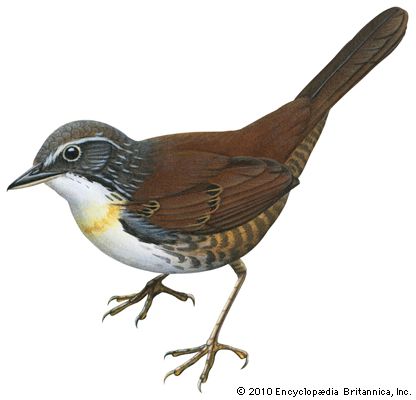
A tapaculo is any of approximately 55 species of ground-dwelling birds belonging to the family Rhinocryptidae, found throughout Central and South America. These wren- to thrush-sized birds are characterized by their short wings, long legs, and strong feet, which they use for scratching the earth.1
When disturbed, tapaculos are known for scurrying into cover with their tails held in an erect position. Their plumage is typically gray or reddish-brown, often featuring spots or bars. They are frequently identified by their loud, ventriloquial calls, which often sound like clucking or gobbling notes. Their nesting habits are diverse, ranging from ground burrows to tree holes or ball-shaped nests constructed in bushes. The name “tapaculo” is derived from American Spanish, literally meaning “one that covers its backside,” a reference to their habit of carrying their tails upright.12
Why do tapaculos hold their tails upright?
Tapaculos are known for holding their tails in an erect, or upright, position when they are disturbed or scurrying for cover.12
The name “tapaculo” itself is derived from American Spanish, literally translating to “one that covers its backside”. While this term is often associated with the bird’s habit of carrying its tail upright, the behavior is a characteristic trait of the Rhinocryptidae family, which includes approximately 55 species of ground-dwelling birds found in Central and South America.213
What does the name tapaculo literally mean?
The name tapaculo is derived from American Spanish and literally means “one that covers its backside.” This term is formed from the Spanish words tapar, meaning “to cover,” and culo, meaning “backside” (derived from the Latin culus).1
This name refers to the characteristic behavior of these birds, which belong to the family Rhinocryptidae. When disturbed, these ground-dwelling birds typically scurry for cover while holding their tails in an erect, upright position.31
How do ventriloquial calls help birds survive?
Ventriloquial calls are a specialized type of vocalization used by certain birds, such as the tapaculo, to aid in their survival. While the term “ventriloquial” refers to the auditory illusion that a sound is originating from a location other than its true source, these calls serve as a critical mechanism for detection and communication within the bird’s environment.
In the case of tapaculos, these loud, clucking, or gobbling notes are the primary means by which the birds are detected by observers, as the birds themselves are often elusive, ground-dwelling creatures that scurry for cover when disturbed. By producing sounds that are difficult for predators or other animals to pinpoint, birds may gain a survival advantage by masking their exact position, thereby reducing the likelihood of being targeted while still maintaining the ability to communicate with others of their species.1
More broadly, vocalizations in birds are essential for survival, functioning to attract mates, establish and defend territories, and alert others to the presence of danger through specific alarm notes.4
Sources
- Tapaculo — Encyclopædia Britannica
- tapacolo — Merriam-Webster
- Rhinocryptidae — Merriam-Webster
- How Do Birds Hear? — Encyclopædia Britannica
- Which parrots are most likely to talk? — Encyclopædia Britannica
- Bird - Sound — Encyclopædia Britannica
- Respiratory system - Birds — Encyclopædia Britannica
Published on · 2 min read