Wagtail
A wagtail is any of approximately 12 species of bird belonging to the genus Motacilla within the family Motacillidae, as well as the forest wagtail…
What is Wagtail?
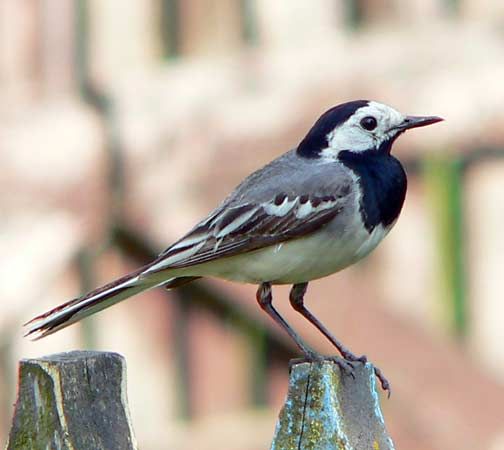
A wagtail is any of approximately 12 species of bird belonging to the genus Motacilla within the family Motacillidae, as well as the forest wagtail (Dendronanthus indicus) found in Asia. These birds are typically found in meadows, along beaches, and near streams.1
They are named for their characteristic habit of incessantly wagging their long tails up and down, though the forest wagtail uniquely wags its entire body from side to side. While most species are native to the Old World, the yellow wagtail is the only species that reaches the New World, breeding in Alaska before migrating to Asia. Common varieties include the white wagtail, which is widespread across Eurasia.12
What are some other birds in the Motacillidae family?
The family Motacillidae, also known as motacillids, consists primarily of two main groups of passerine birds: the wagtails and the pipits.
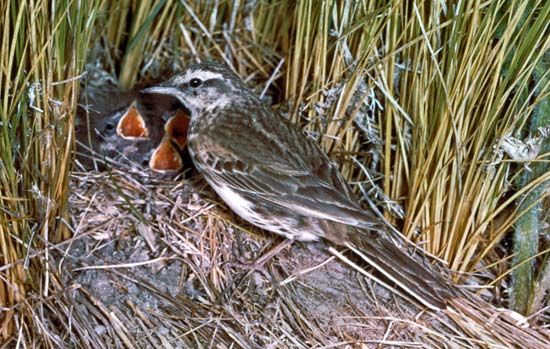
While wagtails are known for their bold markings and the habit of pumping their long tails, the family also includes approximately 50 species of pipits belonging to the genera Anthus and Tmetothylacus.31
Key characteristics of these pipits include:
- Appearance: They are small, slender-bodied birds, typically ranging from 12.5 to 23 cm in length, with brownish, streaked plumage.3
- Physical Traits: They possess thin, pointed bills, pointed wings, and elongated hind toes and claws.3
- Behavior: Unlike many other birds, they walk and run rapidly along the ground and never hop. Their flight pattern is strongly undulating, similar to that of many finches.3
- Distribution: They are found worldwide, with the notable exception of polar regions.3
Both groups within the Motacillidae family share the trait of having white outer tail feathers, which are most visible during flight.3
How do wagtails differ from pipits?
While both wagtails and pipits belong to the family Motacillidae, they exhibit distinct physical and behavioral differences:
- Appearance: Wagtails are characterized by bold markings, whereas pipits are typically brownish and streaked in appearance.3
- Tail Behavior: The most notable behavioral difference is that wagtails incessantly pump their long tails up and down. While both groups possess white outer tail feathers that are visible during flight, this specific tail-pumping habit is unique to the wagtail.3
- General Traits: Pipits are known for their thin, pointed bills and elongated hind toes and claws. They are ground-dwelling birds that walk and run rapidly but never hop, often seeking insects along the ground.3
Both groups share a similar family lineage within the order Passeriformes, but their visual patterns and specific tail movements serve as the primary identifiers for distinguishing between them in the field.3
Why do these birds wag their tails?
While the specific evolutionary purpose of tail-wagging in wagtails is not explicitly detailed in the provided search results, these birds are named for their habit of incessantly pumping their long tails up and down.61
In the broader context of animal behavior, such movements often function as communication signals. In many species, ritualized displays—which can involve modifications of existing structures or behaviors—are used to convey information regarding an individual’s status, territorial defense, or mate attraction. While tail-wagging in dogs is a well-documented tool for expressing emotions like excitement or nervousness, the constant tail movement in wagtails is a defining characteristic that distinguishes them from their relatives, the pipits.231
It is important to note that while some animal signals are honest indicators of health or fitness, they can also increase an animal’s conspicuousness to predators. Further research into the specific social or environmental triggers for this behavior in the Motacilla genus would be required to fully understand its function.2
Sources
- Wagtail — Encyclopædia Britannica
- wagtail — Merriam-Webster
- Pipit — Encyclopædia Britannica
- motacillid — Merriam-Webster
- Motacillidae — Merriam-Webster
- Why do dogs wag their tails? — Encyclopædia Britannica
- Animal social behavior - Social interactions involving communication — Encyclopædia Britannica
Published on · 3 min read