Garonne River
The Garonne River is a significant geographical feature in southwestern France, though its role in transportation and the economy is nuanced.
What role does the Garonne River play in the region’s economy and transportation?
The Garonne River is a significant geographical feature in southwestern France, though its role in transportation and the economy is nuanced.
Transportation
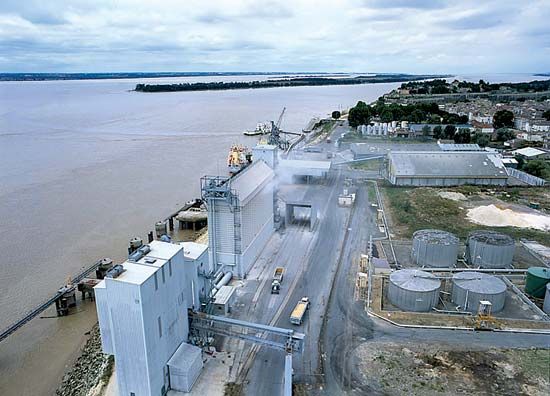
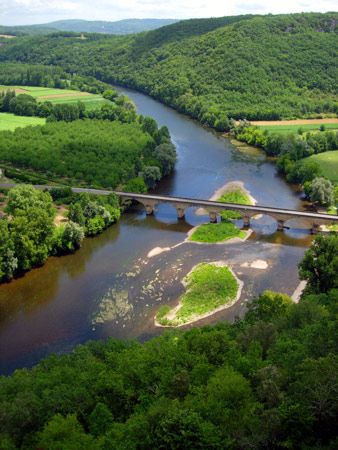
The Garonne itself is generally not navigable due to its rapid, dangerous currents and irregular flow. While it is regulated by 50 locks, it is accompanied by an old, little-used lateral canal that runs from Toulouse to Castets. Historically, the Canal du Midi was constructed to connect the Garonne at Toulouse to the Mediterranean Sea. However, the river becomes vital for maritime transport once it joins the Dordogne to form the Gironde Estuary. This estuary is navigable for oceangoing vessels and serves as a critical hub for the port of Bordeaux, facilitating the movement of oil products, bulk liquids, cereals, and containerized cargo through specialized facilities along its banks.123
Economic Context
The river flows through the Aquitaine Basin, a region where the landscape supports significant agricultural activity, including wine production in areas such as the Entre-deux-Mers peninsula and the Médoc. While the river itself is not a primary industrial artery, its basin is a central element of the regional geography.12
What are the major cities located along the Garonne River?
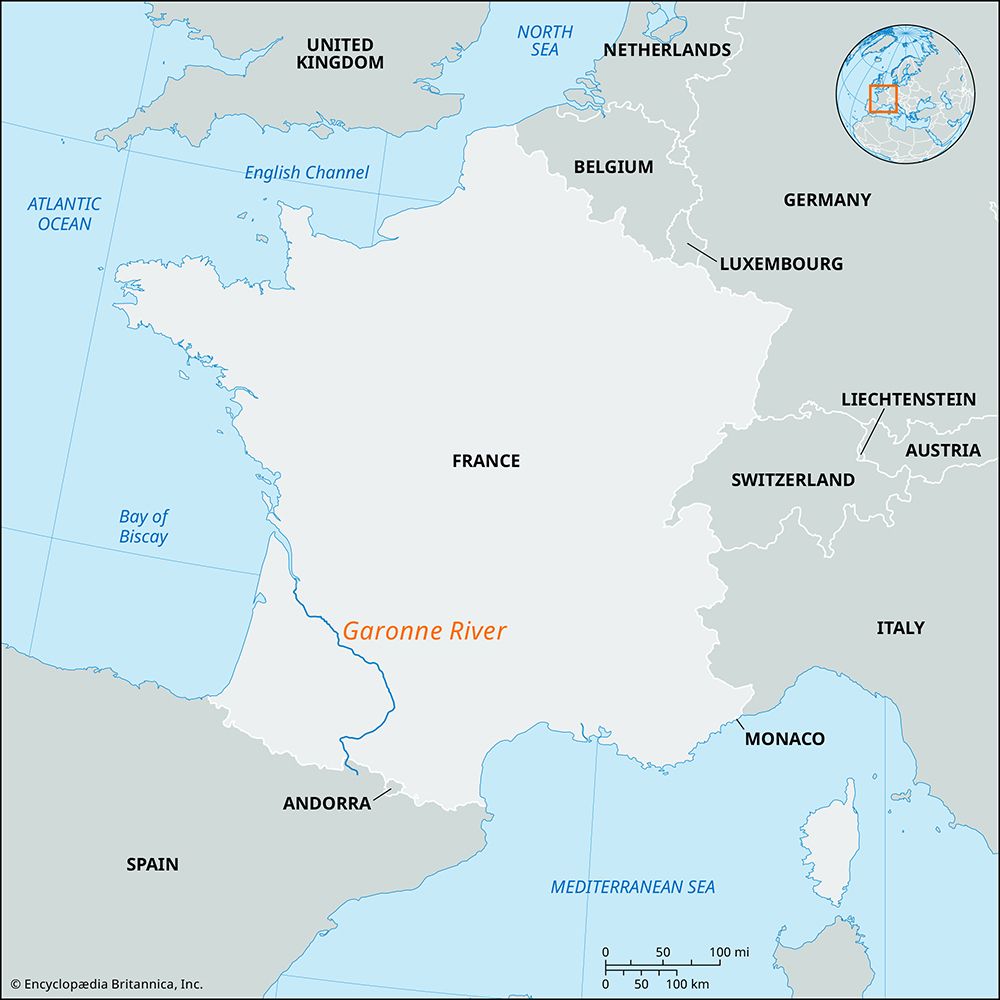
Several notable cities and towns are situated along the course of the Garonne River as it flows from the Pyrenees toward the Atlantic Ocean:
- Saint-Gaudens: Located in the upper reaches of the river, the Garonne flows east around this town after crossing the frontier from Spain.1
- Toulouse: A major city on the river’s path, Toulouse serves as a significant point where the river turns northwestward and where the Canal du Midi begins.1
- Moissac: Situated further downstream, this town is located near the confluence where the Garonne receives the Tarn River.1
- Aiguillon: Located near the junction where the Garonne is joined by the Lot River.1
- Marmande: This town is situated northwest of the confluence with the Lot River.1
- Castets: This location is significant as the river’s highest tidal point.1
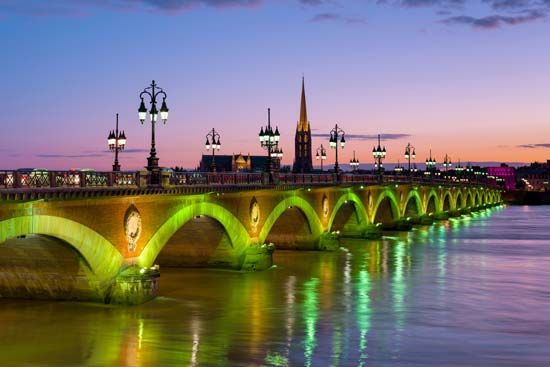
- Bordeaux: One of the most prominent cities on the river, Bordeaux is located 60 miles from the river’s mouth and serves as a major cultural and commercial center for the Nouvelle-Aquitaine region.12
Where does the Garonne River originate, and through which countries does it flow?
The Garonne River originates in the Maladeta Massif of the central Pyrenees in the Aragon region of northeastern Spain.1
The river flows through two countries:
- Spain: It travels north for approximately 30 miles (48 km) through the Val d’Aran before crossing the border into France.1
- France: After entering France through the Pont-du-Roi, the river traverses the southwestern part of the country, passing through cities such as Toulouse and Bordeaux before eventually joining the Gironde Estuary to reach the Atlantic Ocean.1
How long is the Garonne River, and what is its average discharge rate?
The Garonne River has a length of 357 miles (575 km), a measurement that excludes the 45-mile-long Gironde Estuary into which it flows.12
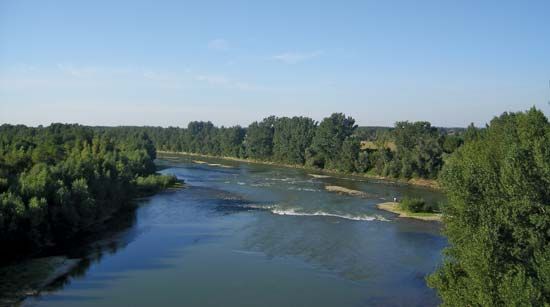
Regarding its discharge rate, the provided information does not specify an average value. The river is characterized by an irregular seasonal flow, experiencing high water levels in the winter due to oceanic rainfall and in the spring from snowmelt, while reaching its lowest levels during the summer and autumn months.12
Sources
Published on · 3 min read