Taxaceae
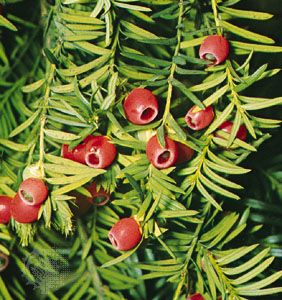
The Taxaceae family, commonly known as the yew family, is primarily distributed throughout the Northern Hemisphere. The geographical range of its six genera…
What is the geographical distribution of Taxaceae plants?
The Taxaceae family, commonly known as the yew family, is primarily distributed throughout the Northern Hemisphere. The geographical range of its six genera varies significantly:1
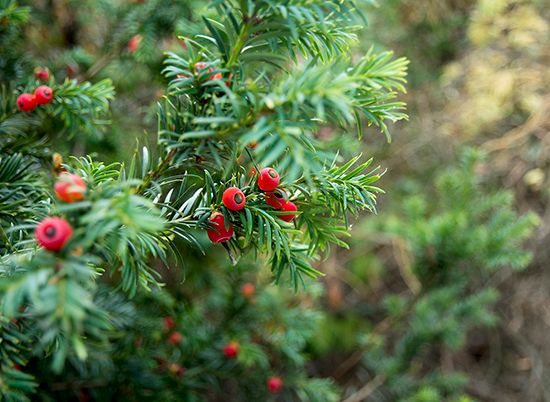
- Taxus: This largest genus, which includes the yew, is found across North America, Europe, Asia Minor, and eastern Asia.1
- Torreya: These trees are found in localized regions within East Asia, California, and the southeastern United States.1
- Austrotaxus: This genus is native to the mountain forests of New Caledonia.1
- Pseudotaxus: This genus is represented by a single species found in eastern China.1
Are there any endangered species within the Taxaceae family?
Within the Taxaceae family, the stinking yew (Torreya taxifolia) is recognized as a critically imperiled and endangered species in the wild.1
Native to a limited range in western Florida and southwestern Georgia, the stinking yew faces significant survival challenges. While the species thrives in cultivation, wild populations have been decimated by habitat destruction. Furthermore, remaining wild specimens often fail to reach their full height or successfully reproduce, a phenomenon that researchers are currently investigating to develop stabilization and restoration strategies for the species.1
Protecting biodiversity is a fundamental ethical imperative, as the loss of unique species like the stinking yew diminishes the resilience and complexity of our natural ecosystems.
How many genera are included in the Taxaceae family, and what are they?
The Taxaceae family, commonly known as the yew family, consists of 6 genera and approximately 30 species of evergreen trees and shrubs.15
While classification can sometimes be subject to debate—with some botanists choosing to include the family Cephalotaxaceae within Taxaceae—the following 6 genera are generally recognized as comprising the family:5
- Taxus: The largest genus, which includes the yew, containing about eight species distributed across North America, Europe, Asia Minor, and eastern Asia.1
- Torreya: Comprising about six species found in localized areas of East Asia, California, and the southeastern United States.1
- Austrotaxus: A genus represented by a single species (A. spicata) native to the mountain forests of New Caledonia.1
- Pseudotaxus: A genus containing one species (P. chienii), a shrub native to eastern China.1
- Cephalotaxus: Often classified as its own family (Cephalotaxaceae), this genus of plum-yews is sometimes included within Taxaceae by certain botanists.5
- Amentotaxus: Also a genus of plum-yews, typically grouped with Cephalotaxus.5
How are Taxaceae plants used in horticulture and landscaping?
Plants in the Taxaceae family, particularly those in the genus Taxus, are highly valued in horticulture and landscaping for their rich, dark-green foliage and versatility.3
Horticultural Characteristics
- Growth Habits: Yews are long-lived and grow slowly, making them excellent for controlled landscape designs. They are among the few conifers capable of producing new growth from behind the ends of cut branches, which allows them to be regularly trimmed into formal hedges.36
- Varieties: Many cultivars have been developed to suit different aesthetic needs. For example, the Irish yew is prized for its compact, columnar form in formal plantings. Other varieties, such as those derived from the Japanese yew, offer varying growth patterns depending on whether they are propagated from lateral or leader shoots.67
- Hybrids: Crosses between the English and Japanese yew, such as Taxus × media, are common and provide a range of hardy, ornamental options for gardeners.67
While these plants are beautiful additions to gardens, it is important to note that their foliage and seeds contain poisonous alkaloids, which can be fatal to livestock and humans.36
Sources
- Taxaceae — Encyclopædia Britannica
- Taxaceae — Merriam-Webster
- yew — Encyclopædia Britannica
- stinking yew — Encyclopædia Britannica
- conifer - Annotated classification — Encyclopædia Britannica
- English yew — Encyclopædia Britannica
- Japanese yew — Encyclopædia Britannica
Published on · 3 min read