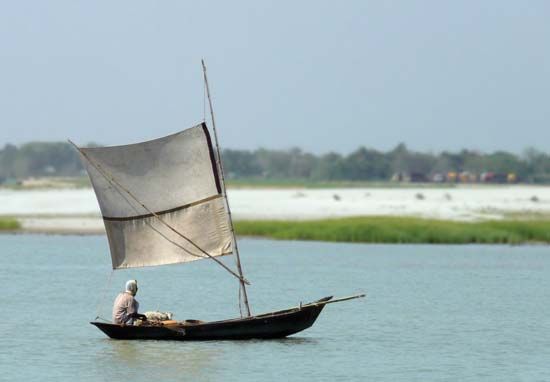
Teesta River
The Teesta River is primarily associated with the Teesta Barrage Project, a significant engineering endeavor designed for both irrigation and flood…
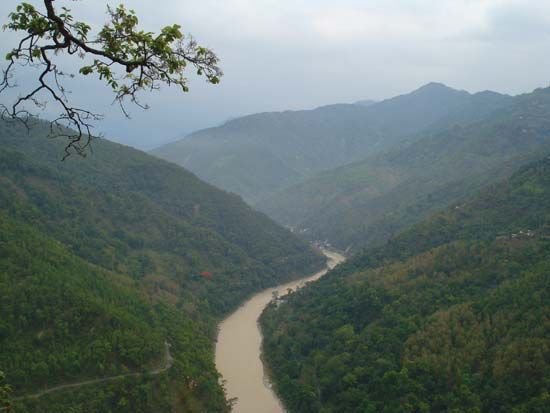
Are there any notable bridges or engineering projects associated with the Tista River?
The Teesta River is primarily associated with the Teesta Barrage Project, a significant engineering endeavor designed for both irrigation and flood protection.12
The Teesta Barrage is a dam that helps provide essential irrigation for the plains located between the upper Padma River and the Jamuna River. Because the river is prone to frequent, violent course changes and heavy seasonal flooding—particularly during the monsoon months from June to September—this project serves as a critical infrastructure component for managing water resources in the region.13
While the river is a vital water carrier for northwestern Bangladesh, its lower reaches are often difficult to navigate due to the presence of shoals and quicksand near its junction with the Jamuna. The provided information does not detail specific bridge structures, focusing instead on these large-scale hydraulic engineering projects aimed at water management and agricultural support.132
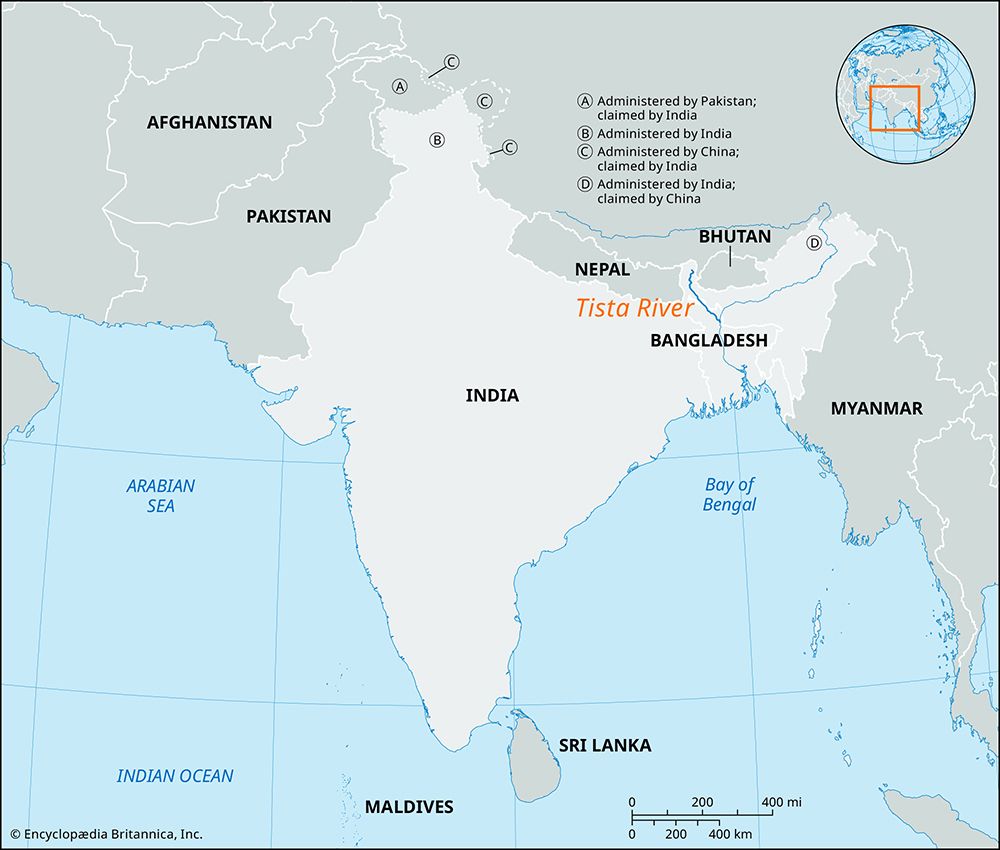
How has the Tista River been affected by human activities such as dams and water management?
Human activities on the Teesta River have primarily focused on managing its volatile flow and supporting regional agriculture through large-scale infrastructure.
The most significant intervention is the Teesta Barrage Project, a major engineering scheme designed to serve dual purposes: providing essential irrigation for the plains situated between the upper Padma River and the Jamuna River, and acting as a flood-protection measure.12
These interventions are critical because the river is characterized by extreme seasonal fluctuations. Its flow is at its peak during the monsoon season (June to September), when heavy rains and glacier meltwater contribute to frequent, violent course changes and significant flooding in its lower reaches. While these projects aim to stabilize water resources, the river remains challenging to navigate due to the presence of shoals and quicksand near its confluence with the Jamuna.1
What historical or cultural importance does the Tista River hold for the local communities?
The Teesta River holds significant importance as a vital geographical and economic artery for the communities in India and Bangladesh. Rising in the Himalayas near Chunthang in Sikkim, the river has historically shaped the landscape and settlement patterns of the regions it traverses, including Darjiling and West Bengal.1
Culturally and economically, the river is defined by its volatile nature. A major historical turning point occurred around 1787, when the river shifted its course eastward to join the Jamuna River near Chilmari, fundamentally altering the hydrology of the Rangpur region. Today, the river remains central to local livelihoods through the Teesta Barrage, which provides essential irrigation for the plains between the upper Padma River and the Jamuna. While its seasonal flooding and shifting course present ongoing challenges, the river continues to be a defining feature of the regional environment.1
How does the Tista River contribute to agriculture and irrigation in the surrounding regions?
The Teesta River serves as a critical water source for agriculture in the regions it traverses, primarily through the infrastructure of the Teesta Barrage Project.12
This project functions as both an irrigation and a flood-protection scheme. By managing the river’s flow, the barrage provides essential water for the plains situated between the upper Padma River and the Jamuna River. This management is particularly vital because the river experiences extreme seasonal fluctuations; its flow is significantly higher during the summer monsoon season (June to September) due to heavy rainfall and glacier meltwater. By regulating these waters, the project helps stabilize the water supply for agricultural activities in the surrounding areas, mitigating the risks posed by the river’s historically volatile course.21
Sources
- Teesta River — Encyclopædia Britannica
- Brahmaputra River - Irrigation and flood control — Encyclopædia Britannica
- Bangladesh - Rivers of Bangladesh — Encyclopædia Britannica
Published on · 3 min read