The Largest Islands in the World
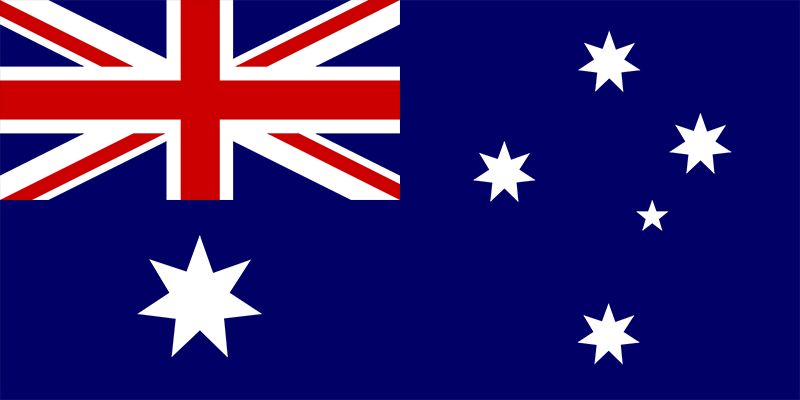
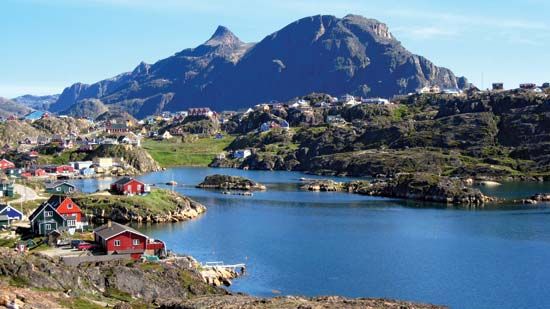
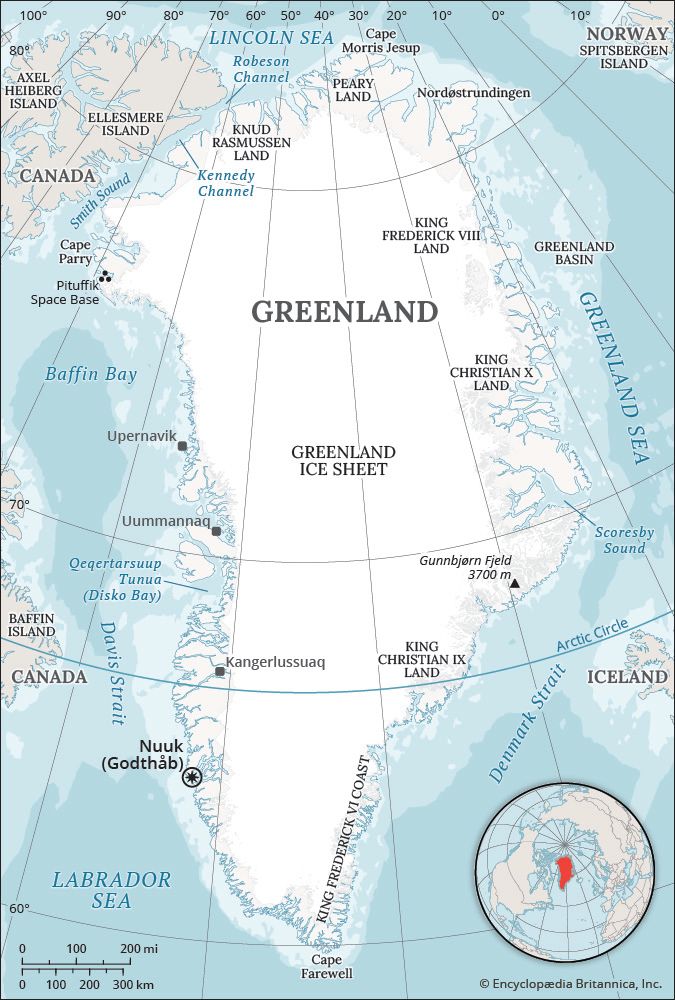
Greenland is the world’s largest island, covering an area of approximately 2,166,086 square kilometers (836,331 square miles). While Australia is surrounded…
What is The Largest Islands in the World?
Greenland is the world’s largest island, covering an area of approximately 2,166,086 square kilometers (836,331 square miles). While Australia is surrounded by water, it is classified as a continent rather than an island due to its significantly larger size and distinct geological, biological, and anthropological characteristics.123
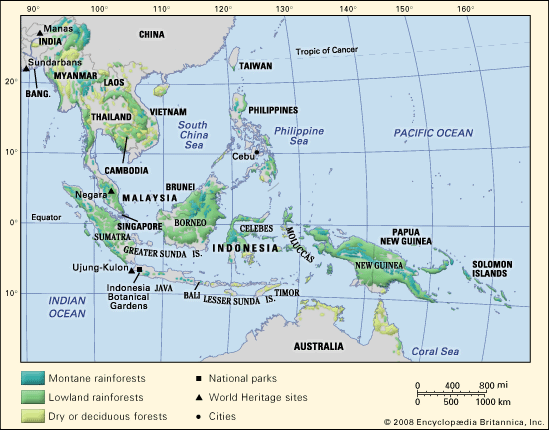
The following table lists the five largest islands in the world by area:
Island
Location
Area (sq km)
Greenland
North Atlantic/Arctic Ocean
2,166,086
New Guinea
Malay Archipelago
821,400
Borneo
Malay Archipelago
755,000
Madagascar
Indian Ocean
591,896
Baffin Island
Canadian Arctic Archipelago
507,451
These landmasses are distinct from continents, which are defined by broader criteria including tectonic plate placement and unique biodiversity.13
Why is Australia classified as a continent rather than an island?
Australia is classified as a continent rather than an island primarily because of its size and distinct geological, biological, and anthropological characteristics. While an island is defined as a landmass entirely surrounded by water that is smaller than a continent, Australia is nearly four times the size of Greenland, the world’s largest island.3
Geographers distinguish continents from islands using several criteria:
- Geology: Australia sits on its own tectonic plate, whereas Greenland shares a tectonic plate with North America.3
- Biology: A significant percentage of Australia’s plant and animal species are endemic, meaning they are found nowhere else on Earth, unlike the species found in Greenland.3
- Anthropology: Australia has a unique human history, with Aboriginal people native to the land, while indigenous Greenlanders are part of the Inuit population found across the broader Arctic region.3
Historically, Australia was once part of the supercontinent Gondwana before drifting into its current position.5
What are the main geological differences between continents and islands?
The geological distinctions between continents and islands are primarily defined by their composition, thickness, and tectonic behavior.
Composition and Structure
- Continental Crust: Continents are primarily composed of continental crust, which is granitic in composition, less dense (about 2.7 grams per cubic cm), and significantly thicker, averaging 35–40 km (22–25 miles) in depth. Because of its lower density and greater buoyancy, continental crust “floats” higher in the mantle than oceanic crust.63
- Oceanic Crust: Many islands are formed from oceanic crust, which is basaltic, denser (2.9–3 grams per cubic cm), and much thinner, averaging only about 6 km (4 miles) thick.63
Formation and Tectonic Context
- Continents: Continents are characterized by ancient, stable cores known as shield areas, some of which formed 2 to 4 billion years ago. They resist subduction, making them the primary repositories of Earth’s geological history. Continents often sit on their own tectonic plates and have evolved through the accretion of various island arcs over geologic time.736
- Islands: Islands are often categorized by their origin. Oceanic islands are typically volcanic, rising from the ocean floor without a foundation of continental rock. Conversely, some islands are “continental fragments”—pieces of continental crust that have broken away from larger landmasses.89
How do tectonic plates influence the formation of islands?
Tectonic plates play a fundamental role in the formation of islands through three primary geological processes:
Convergent Boundaries and Island Arcs
When two oceanic plates collide, the denser plate is forced downward into the mantle in a process called subduction. As the subducting slab descends, it releases volatile components that stimulate melting in the overlying mantle. This generates magma, which rises to the surface to form a curved chain of volcanic islands known as an island arc, such as the Mariana Islands13.1813
Intraplate Volcanism (Hot Spots)
Islands can also form far from plate boundaries due to hot-spot volcanoes. These occur when a stationary plume of hot mantle material rises beneath a moving tectonic plate. As the plate drifts over the hot spot, a chain of volcanic islands is created. The Hawaiian Islands are the classic example; the islands become progressively older as they move away from the active magma source.1913
Divergent Boundaries
While most volcanic activity at oceanic ridges occurs deep underwater, islands can form where these ridges are sufficiently elevated to emerge above sea level. Iceland is the most prominent example of an island formed by rift volcanism at a divergent plate boundary.1320
Sources
- Greenland: Top Questions — Encyclopædia Britannica
- world’s largest islands — Encyclopædia Britannica
- Is Australia an Island? — Encyclopædia Britannica
- Greenland — Encyclopædia Britannica
- Australia - Geologic history — Encyclopædia Britannica
- continental drift — Encyclopædia Britannica
- continental shelf — Encyclopædia Britannica
- continent — Encyclopædia Britannica
- continental shelf - Structure — Encyclopædia Britannica
- Atlantic Ocean - Islands of the Atlantic Ocean — Encyclopædia Britannica
- continent: Top Questions — Encyclopædia Britannica
- continental crust — Encyclopædia Britannica
- plate tectonics - Island arcs — Encyclopædia Britannica
- plate tectonics - Continental rifting — Encyclopædia Britannica
- Indian Ocean - Islands — Encyclopædia Britannica
- continent — Merriam-Webster
- North America - General considerations — Encyclopædia Britannica
- volcano - Intraplate volcanism — Encyclopædia Britannica
- island arc — Encyclopædia Britannica
- volcanism — Encyclopædia Britannica
- subduction zone — Encyclopædia Britannica
- seafloor spreading — Encyclopædia Britannica
- volcano - Rift volcanoes — Encyclopædia Britannica
- plate tectonics - Seafloor spreading — Encyclopædia Britannica
- back-arc basin — Encyclopædia Britannica
Published on · 3 min read