The Pampas
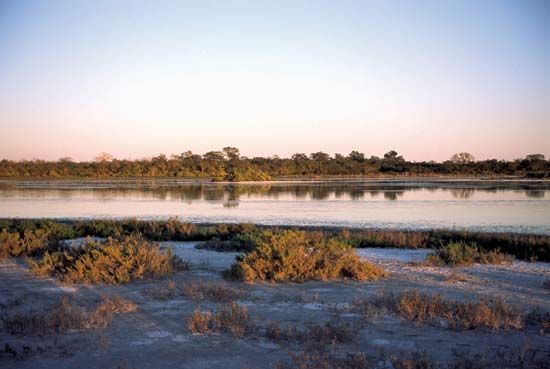
The Pampas are vast, centrally located plains in Argentina that extend westward from the Atlantic Ocean coast to the foothills of the Andes. The region…
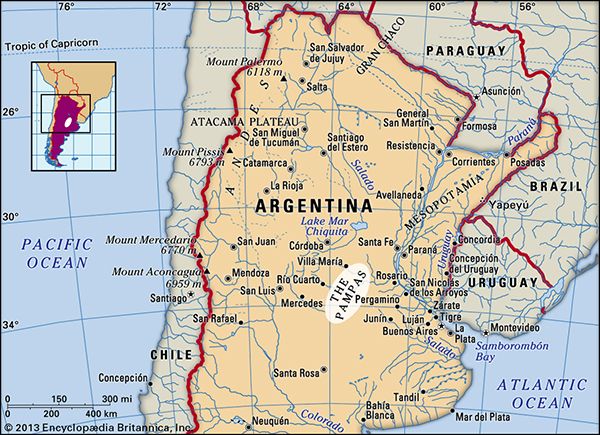
What is the geographical location and extent of the Pampas in Argentina?
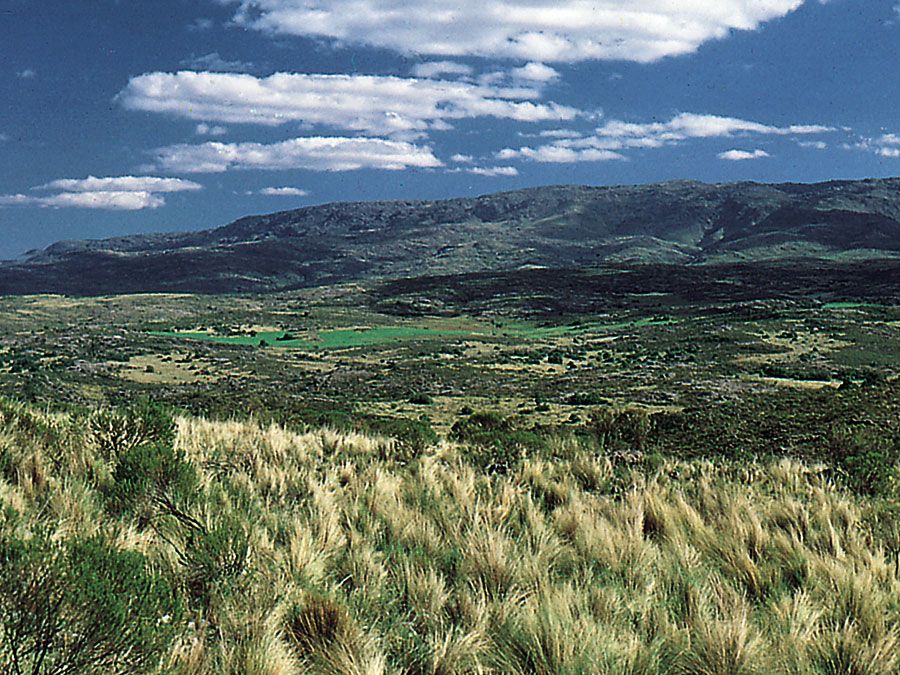
The Pampas are vast, centrally located plains in Argentina that extend westward from the Atlantic Ocean coast to the foothills of the Andes. The region covers approximately 295,000 square miles (760,000 square km), bounded by the Gran Chaco to the north and Patagonia to the south.12
The terrain generally slopes downward from the northwest to the southeast, ranging from about 1,640 feet (500 meters) above sea level near Mendoza to 66 feet (20 meters) at Buenos Aires2. The region is divided into two distinct zones:
- Dry Pampa: Located in the west, this area is largely barren, featuring saline lands, sandy deserts, and brackish streams.12
- Humid Pampa: Located in the east, this temperate and well-watered zone serves as the nation’s economic heart and most densely populated area.2
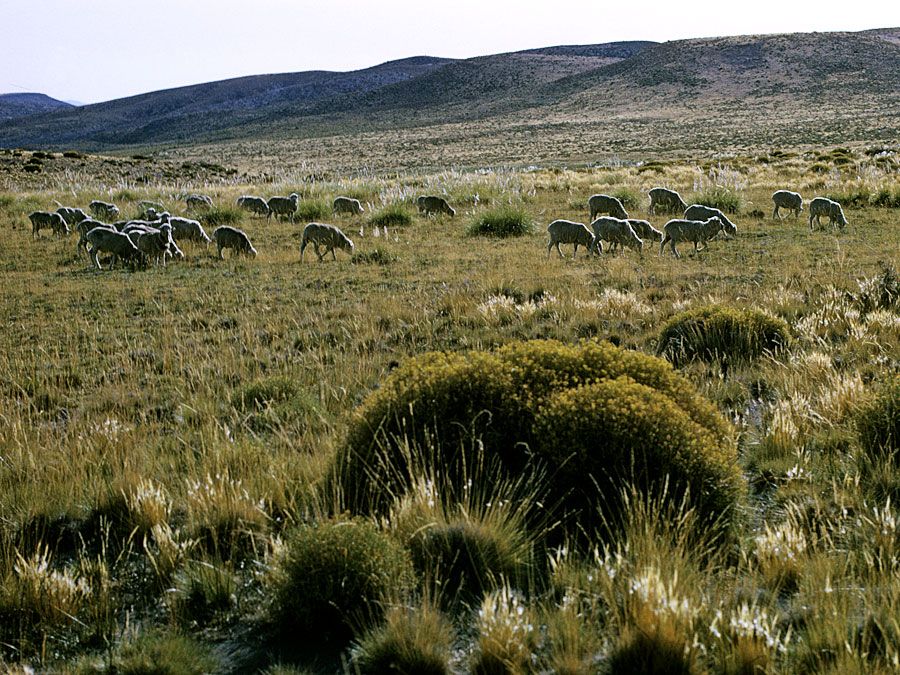
How has human activity, particularly agriculture and ranching, impacted the Pampas region?
Human activity has profoundly transformed the Pampas since the mid-19th century, shifting the region from an open range into Argentina’s primary agricultural and industrial heartland.32
Initially, the landscape was dominated by indigenous hunters and later by estancias—vast cattle ranches where gauchos managed semi-wild herds. This era ended as global demand for food products spurred modernization. Landowners fenced their properties, replaced native criollo cattle with imported English breeds, and introduced crops like alfalfa, wheat, corn, and flax.32
This agricultural expansion had significant ecological and social consequences:
- Flora and Fauna: Native vegetation has been largely replaced by planted grains, grasses, and trees. Many native animal populations have dwindled; while rheas remain, guanacos have disappeared from the region, and introduced species like hares have become common.4
- Demographics and Infrastructure: The need for labor to cultivate crops led to the arrival of millions of European immigrants. Railroads were constructed to connect the interior to the coast, and meat-packing plants (frigoríficos) were established, fueling the growth of cities like Buenos Aires.3
What role did the Pampas play in Argentina’s economic and cultural development?
The Pampas have served as the cornerstone of Argentina’s development, functioning as both the nation’s economic engine and the primary source of its cultural identity.52
Economic Significance
For much of the 19th and 20th centuries, the Pampas dominated the Argentine economy. The region’s rich grasslands enabled the country to become one of the world’s wealthiest nations through the production and export of livestock and cereals.35
- Agribusiness: The development of refrigeration in the late 19th century allowed for the mass export of fresh meat, leading to the establishment of frigoríficos (meat-packing plants) that spurred industrialization.26
- Global Trade: Argentina became a leading world exporter of meat, wheat, corn, and flax, creating a robust trade relationship with European markets.3
- Urbanization: The agricultural boom necessitated infrastructure, including a dense network of railroads radiating from Buenos Aires, which facilitated the growth of major cities and attracted millions of European immigrants.52
Cultural Development
The Pampas are deeply embedded in the Argentine national consciousness, primarily through the figure of the gaucho.78
- National Identity: Once viewed as lawless wanderers, the gauchos were later romanticized as symbols of self-reliance, courage, and national character.78
- Literature and Arts: The region inspired a significant body of gaucho literature, including iconic works like José Hernández’s El gaucho Martín Fierro and Ricardo Güiraldes’s Don Segundo Sombra. These works, alongside musical folklore, helped define a uniquely Argentine identity that balances the urban sophistication of Buenos Aires with the vast, solitary spirit of the plains.987
How have the Pampas been depicted in Argentine literature and art?
The Pampas have served as a foundational backdrop for Argentine cultural expression, most notably through the development of gaucho literature. This genre emerged from the ballads and legends of the nomadic horsemen who roamed the plains, eventually evolving into a central pillar of the nation’s identity.276
Key literary works that immortalized the region and the figure of the gaucho include:
- El gaucho Martín Fierro (1872) by José Hernández: Often considered the national epic poem, it celebrates the gaucho’s self-reliance, courage, and resilience.26
- Don Segundo Sombra (1926) by Ricardo Güiraldes: A classic novel that romanticizes the solitary life and traditional values of the pampas ranch hand.27
- Other Contributions: Writers such as Domingo Faustino Sarmiento and Benito Lynch also explored the region’s character, while the stories of Jorge Luis Borges frequently evoke the vastness of the plains alongside the urban atmosphere of Buenos Aires.6
Beyond literature, the Pampas serve as a primary theme for much of Argentina’s musical folklore, reflecting the deep connection between the land and the national spirit.2
Sources
- Argentina - Land — Encyclopædia Britannica
- the Pampas — Encyclopædia Britannica
- Argentina - The Pampas — Encyclopædia Britannica
- Argentina - The Pampas — Encyclopædia Britannica
- Argentina — Encyclopædia Britannica
- Argentina - Cultural life — Encyclopædia Britannica
- Gaucho — Encyclopædia Britannica
- Argentina - Economy of Argentina — Encyclopædia Britannica
- Argentina - Agriculture, forestry, and fishing — Encyclopædia Britannica
- Argentina - Agribusiness — Encyclopædia Britannica
Published on · 4 min read