Why Are There Two Colorado Rivers?
There are actually more than two rivers named Colorado; the name is a common geographic descriptor used by early Spanish explorers to describe waters that…
Why are there two Colorado Rivers?
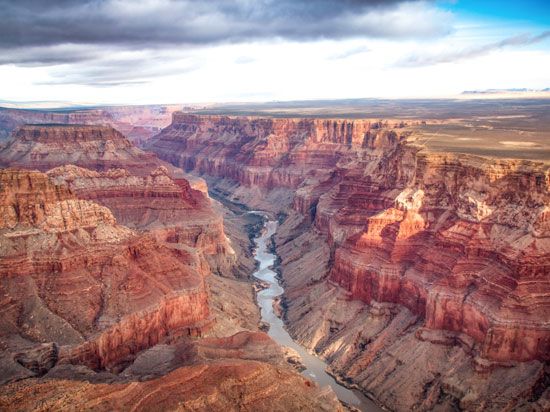
There are actually more than two rivers named Colorado; the name is a common geographic descriptor used by early Spanish explorers to describe waters that appeared “colored” or “reddish” due to heavy silt content.1
In the United States, two major rivers share this name:
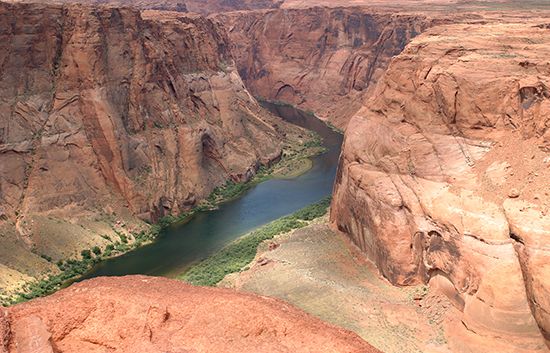
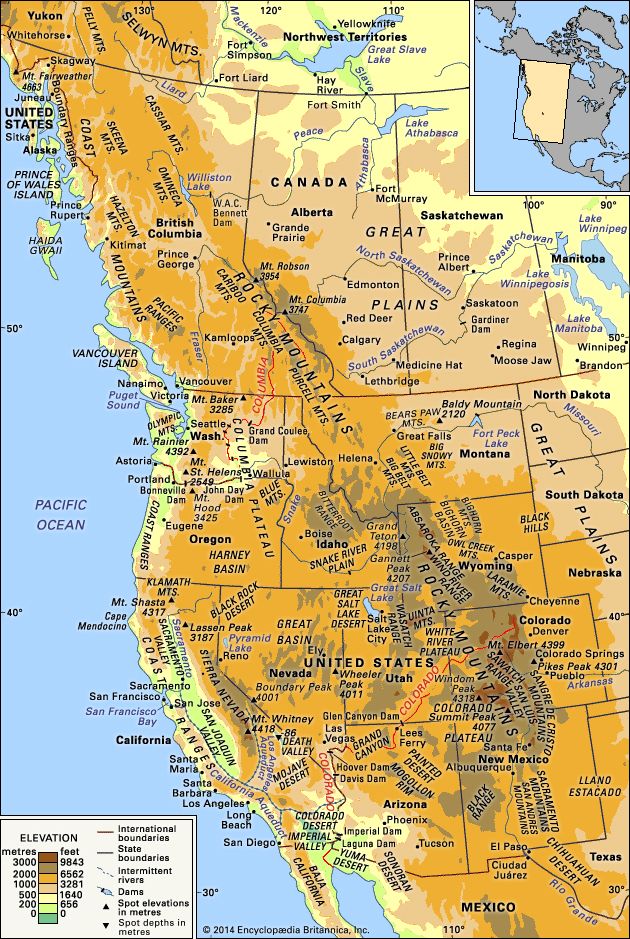
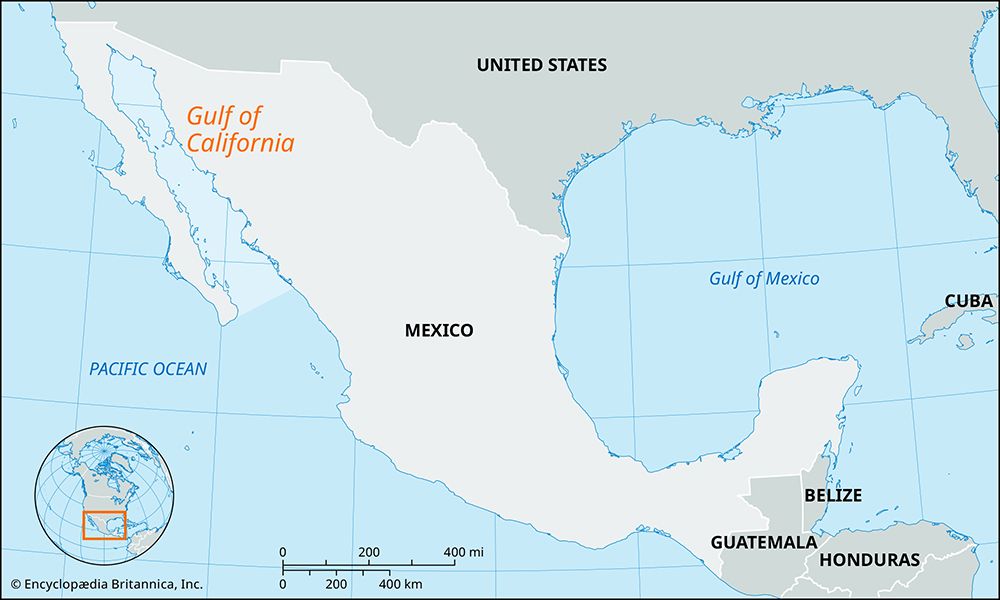
- The Western Colorado River: Rising in the Rocky Mountains, this 1,450-mile river flows into the Gulf of California. It was historically known as the Grand River until Congress renamed it in 1921 to align with the state of Colorado.1
- The Texas Colorado River: Located entirely within Texas, this 862-mile river flows from the Llano Estacado to Matagorda Bay.21
Additionally, there is a Colorado River in Argentina that flows through Patagonia to the Atlantic Ocean. The repetition of the name across the Americas stems from historical naming practices and confusion among early mapmakers.31
What does the name Colorado mean in Spanish?
In Spanish, the word colorado translates to “colored,” “red,” or “ruddy.”45
The term was frequently used by early Spanish explorers to describe bodies of water that appeared reddish due to heavy silt content. This naming convention is reflected in the geography of the United States, where the name was applied to multiple rivers, as well as the state of Colorado, which derives its name from this same Spanish descriptor.45
How do dams affect the ecosystem of the Colorado River in the Southwest?
The construction of dams along the Colorado River has fundamentally transformed its ecosystem, leading to significant disruptions for native species and natural habitats.910
Ecological Impacts
- Habitat Disruption: Large-scale damming has radically altered the river’s natural flow, which historically supported diverse environments ranging from alpine headwaters to arid desert deltas. The creation of reservoirs, such as Lake Mead and Lake Powell, has inundated vast landscapes, destroying pristine areas and displacing native flora and fauna.10911
- Native Species Decline: The river’s native fish populations—including the humpback chub, bonytail chub, Colorado squawfish, and razorback sucker—have suffered greatly, requiring protection under the Endangered Species Act. Furthermore, the introduction of non-native species like the tamarisk shrub has exacerbated water loss through high transpiration rates.10
- Flow Modification: Because the river is over-apportioned, it often reaches the Gulf of California as a mere trickle or remains entirely dry. To mitigate these effects, the U.S. Department of the Interior has experimented with controlled spring releases to mimic natural floods, aiming to redistribute sediment and flush contaminants from the riverbed.9
We could dive deeper into the specific conservation efforts currently underway to protect the river’s remaining biodiversity.
What are the main differences between the Colorado River in Texas and the one in Argentina?
The Colorado rivers in Texas and Argentina are distinct geographical features that share a name but differ significantly in their location, scale, and hydrological characteristics.
Key Differences
Feature
Colorado River (Texas)
Colorado River (Argentina)
Location
Entirely within
Texas
, U.S.
South-central
Argentina
Length
Approximately 862 miles (1,387 km)
Approximately 530 miles (850 km)
Source
Llano Estacado
plateau
Confluence of the Grande and Barrancas rivers (Andes)
Mouth
Matagorda Bay
Atlantic Ocean
Key Features
Highland Lakes
system
Border for four provinces; arid
Patagonia
terrain
The Texas river is the largest river lying entirely within that state and is heavily managed through a system of dams and reservoirs for flood control, power, and recreation. In contrast, the Argentine river flows across the arid terrain of the southern Pampas and Patagonia, experiencing significant seasonal fluctuations due to snow and ice melt in the Andes. Both rivers were named by early explorers for their reddish, silt-heavy waters, a common naming practice throughout the Americas.11343
Sources
- Colorado River — Encyclopædia Britannica
- Colorado River — Encyclopædia Britannica
- Colorado River — Encyclopædia Britannica
- Why are there two Colorado Rivers? — Encyclopædia Britannica
- Colorado — Merriam-Webster
- Colo — Merriam-Webster
- Colorado - The earliest inhabitants — Encyclopædia Britannica
- Columbian red — Merriam-Webster
- Colorado River - Economic development — Encyclopædia Britannica
- dam - Rise of environmental and economic concerns — Encyclopædia Britannica
- Colorado River - Plant and animal life — Encyclopædia Britannica
- Colorado River - Physiography — Encyclopædia Britannica
- Argentina - Drainage — Encyclopædia Britannica
Published on · 3 min read