Patagonia
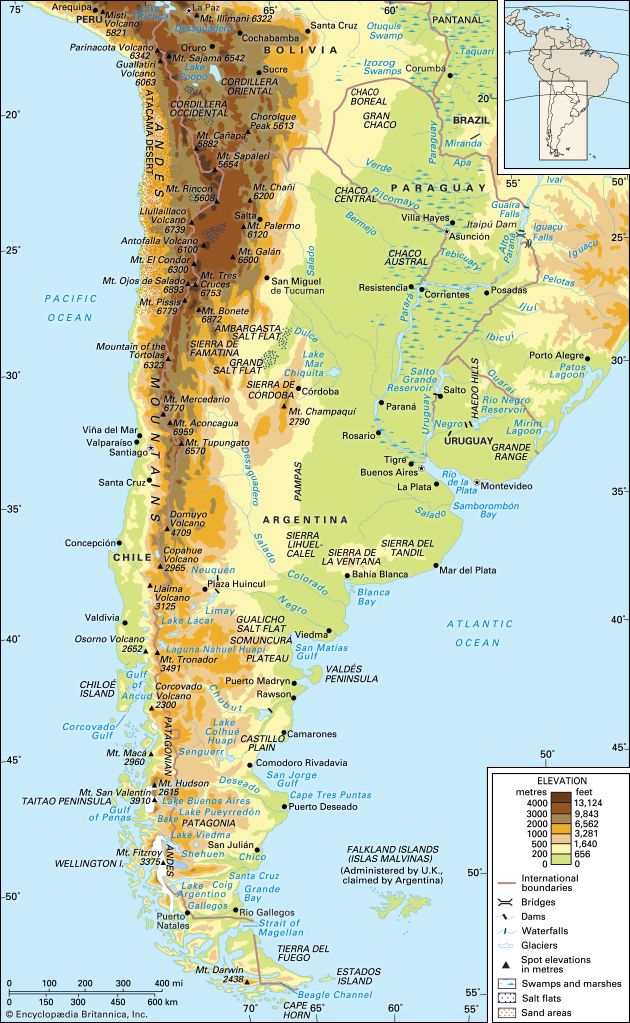
The climate of Patagonia is primarily defined by the Andes Mountains, which create a significant rain shadow effect. Humid winds from the Pacific lose their…
How has the climate of Patagonia influenced its ecosystem and wildlife?
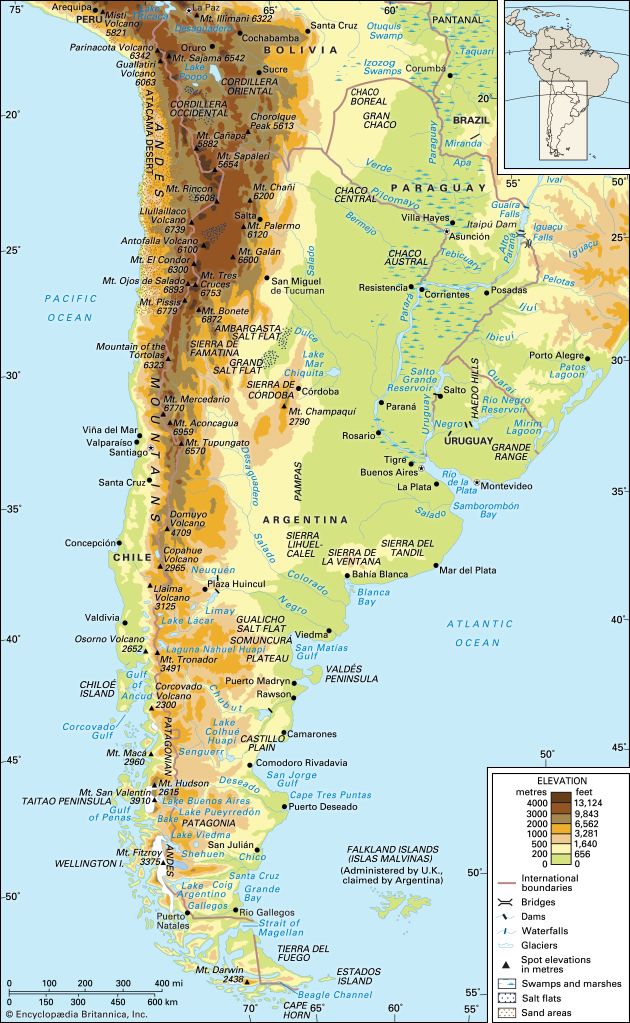
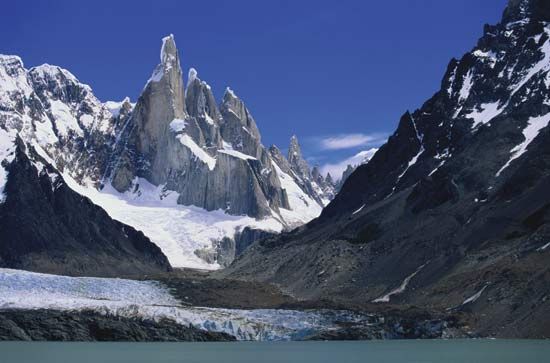
The climate of Patagonia is primarily defined by the Andes Mountains, which create a significant rain shadow effect. Humid winds from the Pacific lose their moisture while crossing the mountains, leaving the vast eastern tablelands cold and arid.12
Influence on Ecosystems
This moisture gradient dictates the region’s vegetation:
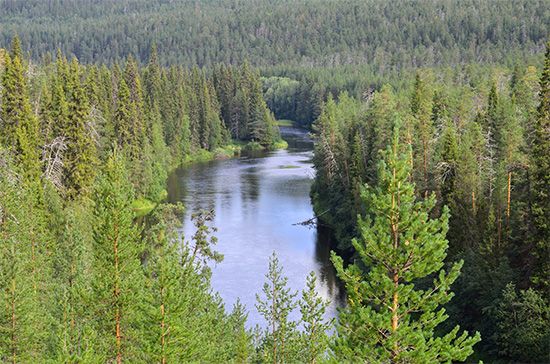
- Western Border: The humid Andean slopes support dense deciduous and coniferous forests, including Antarctic beech and araucaria.34
- Steppe and Desert: East of the mountains, the landscape transitions into a vast steppe. Northern areas feature drought-tolerant monte scrub, while the more arid southern zones contain sparse, low-growing vegetation that requires minimal water.34
Influence on Wildlife
The harsh, dry environment has shaped a specialized fauna:
- Terrestrial Species: The steppe is home to burrowing rodents like the tuco-tuco, the Patagonian cavy, and predators such as pumas and mountain cats. The guanaco and rhea are iconic, though now rare, inhabitants.45
- Coastal and Marine Life: The Atlantic coast, particularly the Valdés Peninsula, hosts abundant marine mammals, including whales, elephant seals, and sea lions, as well as Magellanic penguins.45
What are some of the main economic activities and industries in Patagonia today?
Patagonia’s economy is diverse, relying on a mix of natural resource extraction, agriculture, and a growing service sector.
Energy and Mining
Energy production is a cornerstone of the regional economy. Patagonia contains the majority of Argentina’s oil and natural gas reserves, particularly in areas surrounding Comodoro Rivadavia and Neuquén7. Additionally, the region exploits its hydroelectric potential through dams constructed on the Neuquén and Limay rivers. Mining also plays a role, with operations extracting iron ore, copper, gold, uranium, and various other minerals.78
Agriculture and Livestock
Irrigation projects have enabled extensive agriculture in the Negro River region, producing crops such as apples, pears, grapes, and alfalfa. Sheep raising remains a traditional and vital economic activity, particularly in the southern regions where wool has been a major export since the late 19th century.81
Tourism and Services
Since the end of World War II, tourism has become increasingly important. The region attracts adventure travelers and those interested in wildlife reserves and national parks along the Patagonian Andes. Scientific research, including glacier studies, also contributes to the local economy.89
What indigenous peoples have historically inhabited Patagonia, and what is their current status?
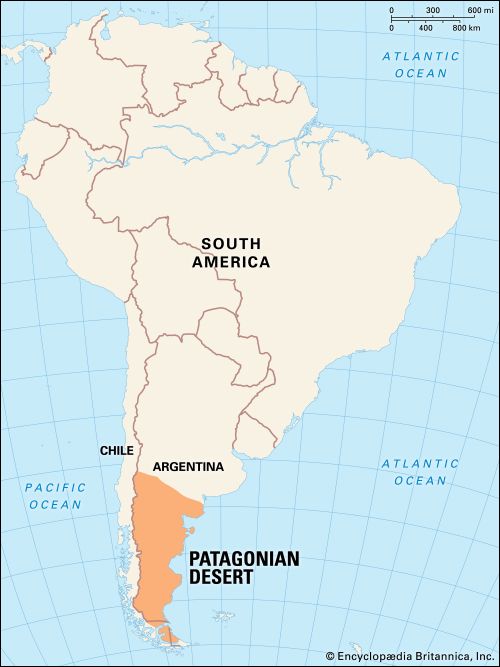
The primary indigenous inhabitants of Patagonia were the Tehuelche people, who historically occupied the plains from the Strait of Magellan to the Negro River. Other groups in the southernmost regions included the Ona, Yámana, and Alacaluf.111213
Historical Context
The Tehuelche were nomadic hunters who relied on guanaco and rhea. Their society was significantly transformed in the 18th century by the introduction of the horse, which enabled them to form large, mobile bands. For centuries, these groups remained relatively unmolested by European settlers due to the region’s harsh geography. However, this changed in the mid-19th century as European encroachment intensified, culminating in the “Conquest of the Desert” campaign in the 1870s, which effectively dismantled indigenous resistance.121411
Current Status
Following the conquest, indigenous populations in Patagonia declined rapidly due to warfare, disease, and displacement. Most survivors were eventually absorbed into the broader national culture. Today, these groups are considered either extinct or virtually extinct, with few remaining descendants who have been largely assimilated into Spanish-speaking society.131112
How has European exploration and settlement impacted Patagonia’s development?
European exploration and settlement significantly reshaped Patagonia, transforming it from an indigenous-controlled territory into a region integrated into the modern Argentine state.
Early Exploration and Failed Settlements
Initial European interest in the 16th century was driven by maritime exploration and the search for resources. However, the region’s harsh coastal geography and the presence of indigenous groups hindered early colonization efforts. Attempts by the Spanish to establish settlements in the late 18th century—such as those at San José, Viedma, and Puerto Deseado—were largely temporary and failed to establish a permanent European foothold.11
The Conquest of the Desert
For centuries, the Tehuelche and other indigenous groups remained largely unmolested. This changed in the 1870s with the Conquest of the Desert, a military campaign that dismantled indigenous resistance and opened the region to state-led colonization. Soldiers and financial backers of these wars were granted large tracts of land, laying the foundation for the modern agrarian and industrial landscape.1115
Immigration and Development
Following the conquest, diverse groups—including Welsh, Scottish, and English immigrants—settled the region, leaving a lasting cultural imprint. Economic development accelerated as these settlers established sheep ranching, fruit production in the Negro River valley, and eventually the extraction of oil and natural gas in centers like Comodoro Rivadavia.1115
Sources
- Patagonia - Climate — Encyclopædia Britannica
- South America - Temperate climates — Encyclopædia Britannica
- Patagonia - Plant life — Encyclopædia Britannica
- Argentina - Patagonia and Tierra del Fuego — Encyclopædia Britannica
- Andes Mountains - Physiography of the Southern Andes — Encyclopædia Britannica
- Patagonia - Animal life — Encyclopædia Britannica
- Patagonia - Resource exploitation — Encyclopædia Britannica
- Chile - Settlement patterns — Encyclopædia Britannica
- Argentina - Services — Encyclopædia Britannica
- Argentina - Resources and power — Encyclopædia Britannica
- Patagonia - History — Encyclopædia Britannica
- Tehuelche — Encyclopædia Britannica
- Argentina - Patagonia — Encyclopædia Britannica
- South American Indian - The European conquest — Encyclopædia Britannica
- Argentina - Discovery and settlement — Encyclopædia Britannica
Published on · 4 min read