Tiktaalik Roseae
Tiktaalik roseae is an extinct, fishlike aquatic animal that lived approximately 380–385 million years ago during the Devonian Period. Discovered on…
What is Tiktaalik roseae and why is it considered an important fossil discovery?
Tiktaalik roseae is an extinct, fishlike aquatic animal that lived approximately 380–385 million years ago during the Devonian Period. Discovered on Ellesmere Island in 2004, this creature is significant for providing critical evidence regarding the emergence of vertebrates onto land.1
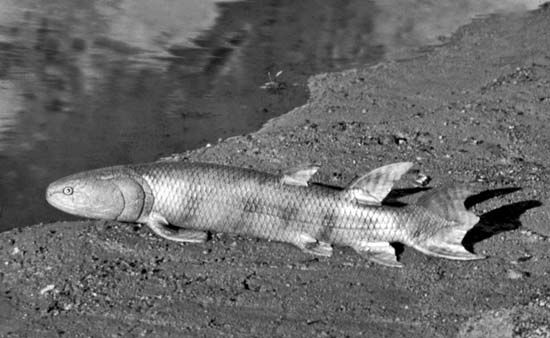
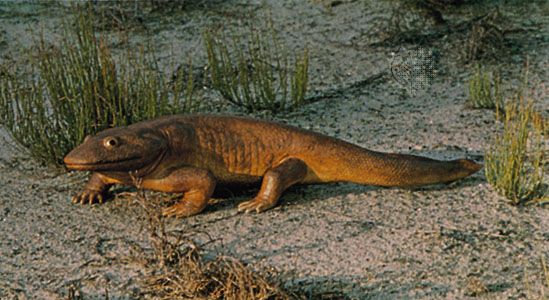
It is important to clarify that Tiktaalik is not a “missing link” or a simple “fish-amphibian transition.” Instead, it represents a key stage in the evolutionary history of vertebrates, bridging the gap between fully aquatic forms like Eusthenopteron and early land-dwelling tetrapods like Ichthyostega.1
Tiktaalik possessed a unique combination of features:
- Intermediate Limbs: Its fins contained bones that foreshadowed the structure of tetrapod forearms and hands, allowing it to clamber along the bottoms of shallow watercourses.1
- Anatomical Adaptations: It featured a broad, flat skull with upward-facing eyes and a long, crocodile-like body, suggesting it was a predator that snapped up prey.1
- Dual Capability: While it retained primitive traits like bony fin rays for swimming, its robust pelvic girdle and ribs indicate it could support its weight in shallow water or potentially on land.1
What impact did the discovery of Tiktaalik roseae have on the field of paleontology?
The discovery of Tiktaalik roseae significantly advanced the field of paleontology by providing a clearer understanding of the emergence of vertebrates onto land. Rather than being a “missing link,” the fossil serves as a vital piece of a larger evolutionary puzzle, bridging the gap between fully aquatic forms like Eusthenopteron and early land-dwelling tetrapods like Ichthyostega.1
By revealing a creature with a unique mosaic of traits—such as a crocodile-like body, a flat skull with upward-facing eyes, and limb structures that foreshadowed the development of wrists and fingers—Tiktaalik demonstrated how aquatic vertebrates adapted to shallow water environments. Its robust pelvic girdle and limb joints provided evidence that these animals could support their weight to clamber along watercourse bottoms, a crucial step toward terrestrial life. This discovery has helped paleontologists move away from simplistic “fish-to-amphibian” narratives, instead highlighting the complex, gradual transition of ancient sarcopterygian lineages.1
What unique features of Tiktaalik roseae’s anatomy suggest it was adapted for both aquatic and terrestrial environments?
Tiktaalik roseae possessed a unique mosaic of anatomical features that allowed it to navigate both shallow water and, to a limited extent, land. Rather than being a simple “fish-amphibian transition,” its anatomy reflects the complex emergence of vertebrates onto land.
Key features supporting this dual capability include:
- Intermediate Limbs: The forelimbs contained a bone structure that foreshadowed the development of tetrapod forearms and hands. These limbs, supported by a robust pelvic girdle, allowed the animal to flex and push its body along the bottoms of shallow watercourses.1
- Structural Adaptations: Enlarged ribs provided the necessary support to hold the body up against gravity, facilitating movement in shallow water or potentially short excursions on land.1
- Aquatic Retentions: Despite its terrestrial-like mobility, Tiktaalik retained primitive bony fin rays and a flattened, streamlined body, which indicate it remained a capable swimmer.1
- Predatory Morphology: Its broad, flat skull with upward-facing eyes and a long, crocodile-like snout suggest it was adapted for snapping up prey in shallow environments, rather than the suction-feeding typical of many fishes.1
How does Tiktaalik roseae fit into the broader timeline of vertebrate evolution?
Tiktaalik roseae occupies a critical position in the evolutionary history of vertebrates, serving as a key representative of the transition from aquatic life to the emergence of land-dwelling tetrapods during the late Devonian Period, approximately 380–385 million years ago.1
Rather than acting as a “missing link” or a simple “fish-to-amphibian” transition, Tiktaalik is understood as part of a broader, complex series of fossil forms—including Panderichthys, Elpistostege, and Acanthostega—that bridge the gap between fully aquatic sarcopterygian fishes like Eusthenopteron and early tetrapods like Ichthyostega.1
Its place in this timeline is defined by its mosaic of anatomical traits:
- Aquatic Foundations: It retained primitive features such as bony fin rays and a streamlined body, indicating it remained a capable swimmer.1
- Terrestrial Precursors: Its limb structure, featuring joints that foreshadowed the development of wrists and fingers, combined with a robust pelvic girdle and enlarged ribs, allowed it to clamber along the bottoms of shallow watercourses.1
This evolutionary progression highlights a gradual shift where aquatic ancestors developed the structural support necessary for terrestrial locomotion, eventually leading to the diverse lineages of tetrapods that followed.12
Sources
- Tiktaalik roseae — Encyclopædia Britannica
- skeleton - General features — Encyclopædia Britannica
- amphibian - Evolution and classification — Encyclopædia Britannica
- fish - Sarcopterygii: fleshy-finned fishes — Encyclopædia Britannica
- Devonian Period - Vertebrates — Encyclopædia Britannica
Published on · 3 min read