Tisza River
Several significant cities and river ports are located along the banks of the Tisza River, which flows through Central Europe. Key urban centers situated…
What major cities are located along the banks of the Tisza River?
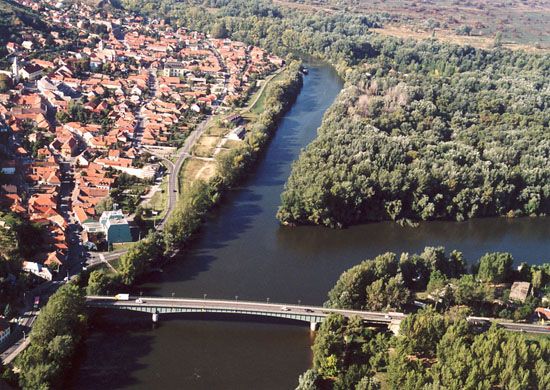
Several significant cities and river ports are located along the banks of the Tisza River, which flows through Central Europe. Key urban centers situated along its course include:
- Szolnok: A major city in Hungary that serves as an important river port and the limit of navigation for larger river boats.
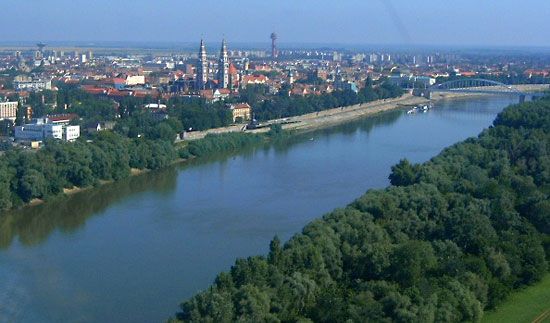
- Szeged: A prominent Hungarian city located on the river. It has a long history of managing the river’s flood risks, which historically devastated the area in 1879.
- Csongrád: Another notable Hungarian city that functions as a river port along the Tisza.
While other cities like Kiskunfélegyháza are situated in the region between the Danube and the Tisza, they are not located directly on the banks of the river itself. The Tisza remains a vital waterway for irrigation and transportation as it traverses the Great Alföld before eventually joining the Danube River in Serbia.
How has the Tisza River been represented in Hungarian literature and folklore?
Sorry, the Britannica knowledge base does not contain information regarding the representation of the Tisza River in Hungarian literature and folklore. The available records focus on the river’s geography, its role in the Great Alföld region, its history of flood control, and its impact on the Hortobágy landscape.
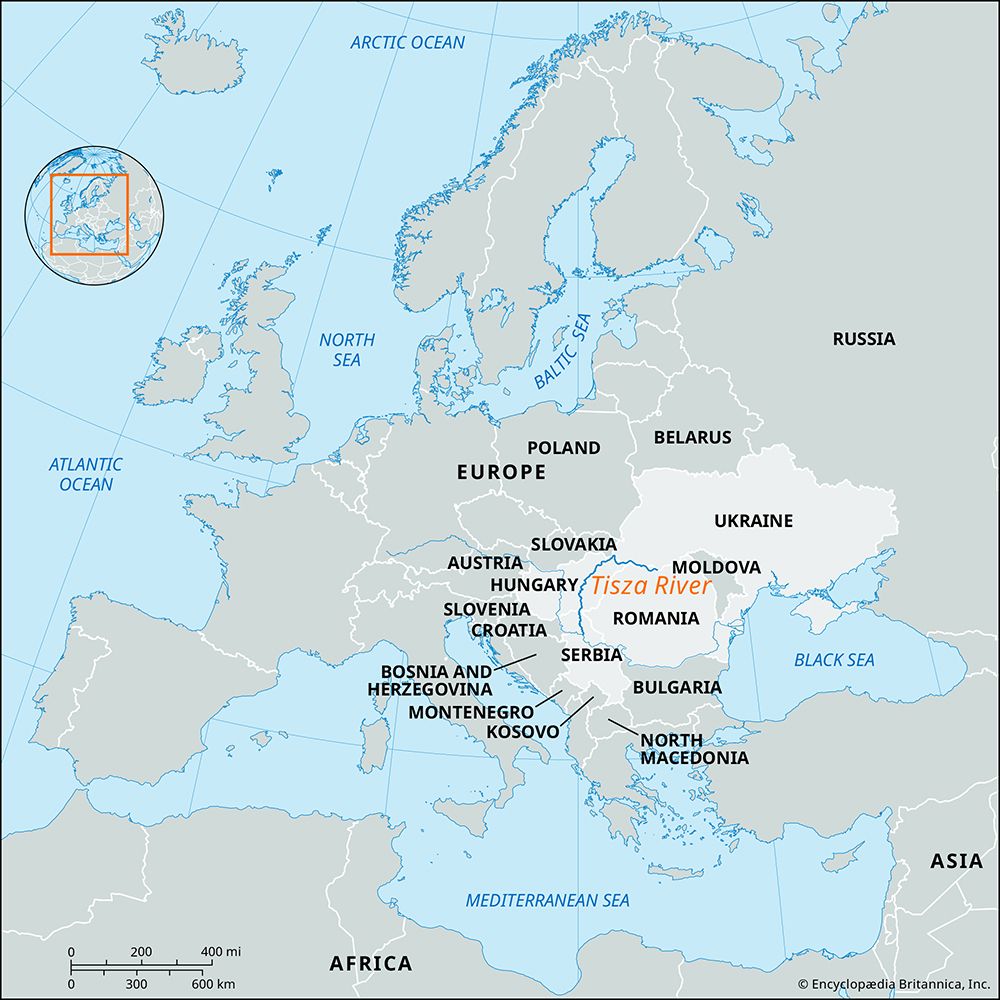
Where does the Tisza River originate, and which countries does it flow through?
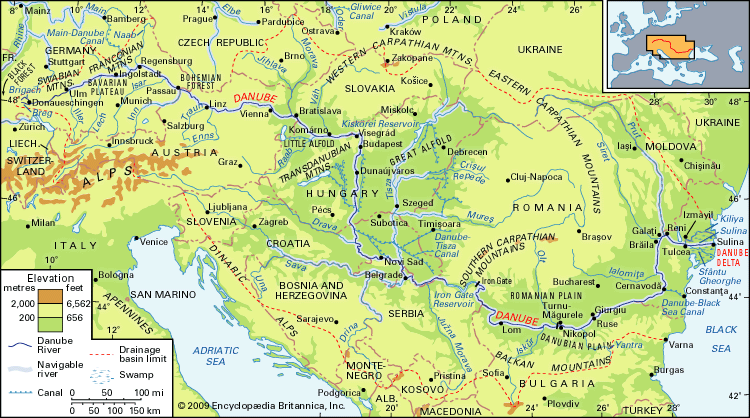
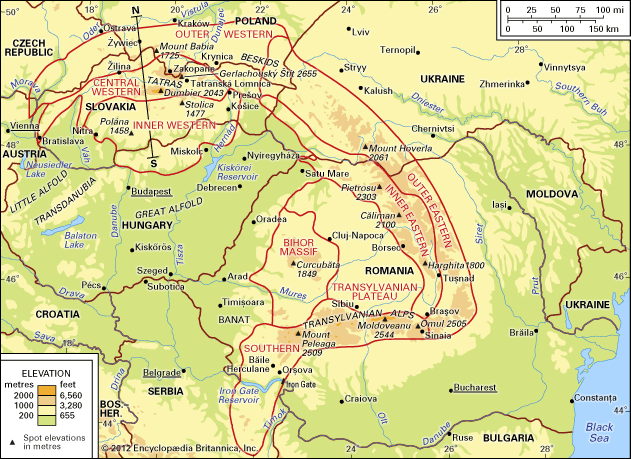
The Tisza River originates in the Bukovina segment of the Carpathian Mountains, where its two headstreams—the Black and White Tisza—unite east of Sighet, Romania, near the border with Ukraine.1
The river flows through or along the borders of the following countries:
- Ukraine: It flows through a small portion of the country and marks part of the border between Ukraine and Romania.1
- Romania: The river begins near the Romanian border.1
- Hungary: The river traverses a significant portion of Hungary, flowing through the Great Alföld plain.1
- Slovakia: The river’s course passes near the point where the Slovak, Ukrainian, and Hungarian frontiers converge.1
- Serbia: The river flows into Serbia, where it eventually joins the Danube River north of Belgrade.1
How has the Tisza River historically impacted the development of settlements and agriculture in the region?
The Tisza River has historically shaped the development of the Great Alföld by dictating both the risks and the potential of the landscape. Before the 19th-century regulation efforts, the river’s natural, meandering course frequently flooded vast areas of the plain, creating a terrain characterized by swamps and floodplain groves.17
These floods posed significant threats to human settlement, most notably the destruction of Szeged in 1879, which necessitated the construction of extensive dikes. However, the subsequent regulation of the river—involving 2,400 miles of levees—transformed the region. By draining swamps and controlling water levels, these projects converted previously unusable floodplains into highly productive agricultural land.17
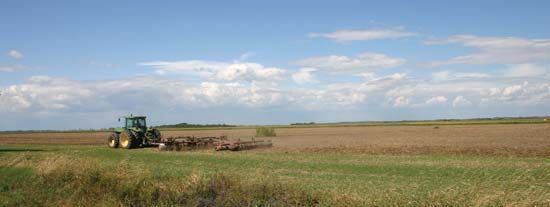
Modern infrastructure, such as the Tiszalök Dam, further revolutionized the area by providing hydroelectric power and essential irrigation. Through systems like the Eastern Main Canal, the river now supplies year-round water to the Hajdúság and Hortobágy plains, supporting the cultivation of cereals, fodder crops, vegetables, and fruit.17
Sources
- Tisza River — Encyclopædia Britannica
- Serbia - Drainage of Serbia — Encyclopædia Britannica
- Kiskunfélegyháza — Encyclopædia Britannica
- Hungary - Traditional regions — Encyclopædia Britannica
- Tisza — Merriam-Webster
- Hortobágy — Encyclopædia Britannica
- Great Alfold — Encyclopædia Britannica
Published on · 2 min read