West African Crocodile
The West African crocodile (Crocodylus suchus) is a large species of crocodile found across western and central Africa. Although it was historically…
What is the West African crocodile?
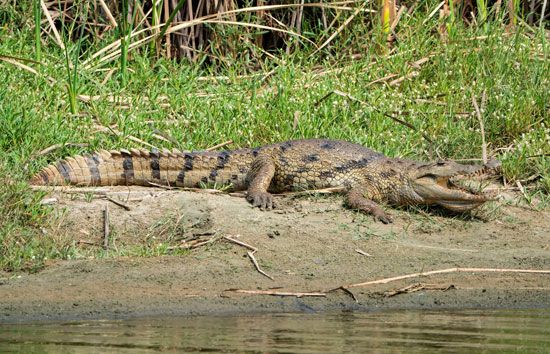
The West African crocodile (Crocodylus suchus) is a large species of crocodile found across western and central Africa. Although it was historically classified as a Nile crocodile, it was recognized as a distinct species in 2011.1
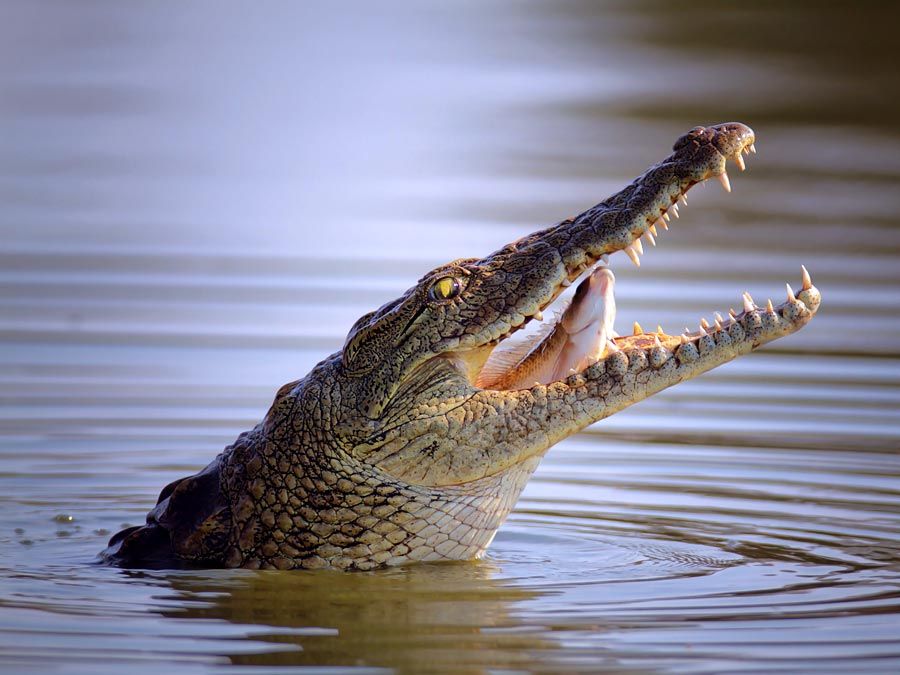
Compared to the Nile crocodile, the West African crocodile is generally smaller, lighter, and possesses a narrower snout. Adults typically measure 2 to 3.3 meters (6.6 to 10.8 feet) in length, though they can reach up to 4 meters (13 feet). They are apex predators that inhabit diverse environments, including swamps, marshes, and rivers.1
While the species is adaptable, it faces threats from habitat loss, hunting for its meat and hides, and persecution due to perceived competition with human fishing activities.1
Where can you find West African crocodiles in the wild?
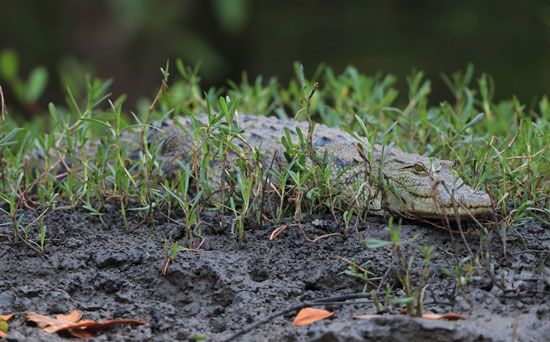
The West African crocodile (Crocodylus suchus) is found across a wide geographic range in western and central Africa. Its distribution spans from Senegal and The Gambia in the west to Somalia in the east. Its range also extends from Chad, Niger, and Mauritania in the north down to Gabon and the Democratic Republic of the Congo in the south. Additionally, some individuals have been observed near lakes within the East African Rift System.1
Within these regions, the species is highly adaptable and inhabits diverse environments, including forested swamps, marshes, freshwater rivers, streams, and even certain arid areas.1
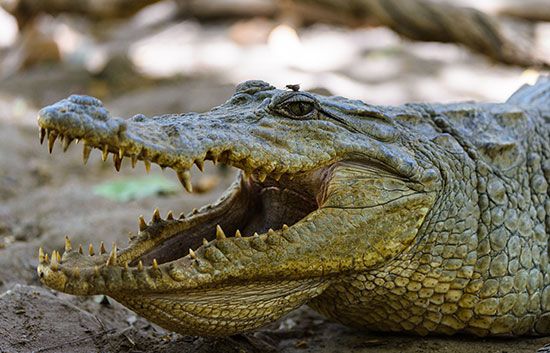
What do West African crocodiles look like?
The West African crocodile (Crocodylus suchus) is a large reptile that exhibits specific physical characteristics distinguishing it from its relative, the Nile crocodile.
- Size and Build: While they can reach lengths of up to 4 meters (13 feet) and weigh 750 kg (1,650 pounds), most adults typically measure between 2 and 3.3 meters (6.6 to 10.8 feet) and weigh 70–100 kg (155–220 pounds). They are generally smaller and lighter than Nile crocodiles and possess a noticeably narrower snout.1
- Coloration: Adult West African crocodiles display an olive to brown coloration. Their bodies are marked by several faded dark charcoal to black bands that run from side to side, starting behind the neck and continuing to the tip of the tail.
- Juveniles: Young crocodiles share a similar color pattern to adults but feature more pronounced black banding.1
Like other crocodilians, they exhibit sexual dimorphism, with males typically growing larger than females.1
What does the West African crocodile eat?
The West African crocodile (Crocodylus suchus) functions as an apex predator within its habitat, with a diet that shifts significantly as the animal matures.1
- Juveniles: Young crocodiles primarily consume insects and other invertebrates. As they grow, their diet expands to include larger prey items such as amphibians, small birds, and rodents.1
- Adults: Fully grown crocodiles have a diverse diet consisting of a wide variety of prey, including fish, birds, large mammals, and other vertebrates.1
While they are generally considered less aggressive than other African crocodilians, they are opportunistic hunters, and attacks on people are not unknown.1
Sources
- West African crocodile — Encyclopædia Britannica
- dwarf crocodile — Encyclopædia Britannica
- American crocodile — Encyclopædia Britannica
- reptile - Feeding habits — Encyclopædia Britannica
- Nile crocodile — Encyclopædia Britannica
Published on · 3 min read