Ediacaran Period
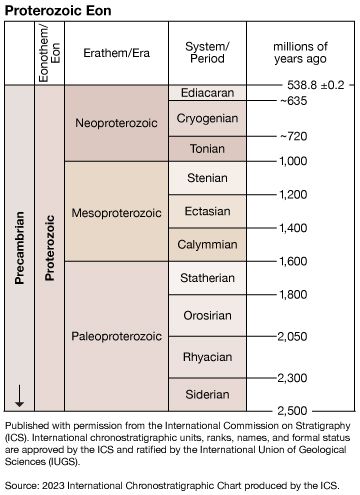
The Ediacaran Period is the final division of the Neoproterozoic Era, spanning approximately 635 million to 541 million years ago. It represents a pivotal…
What is the Ediacaran Period?
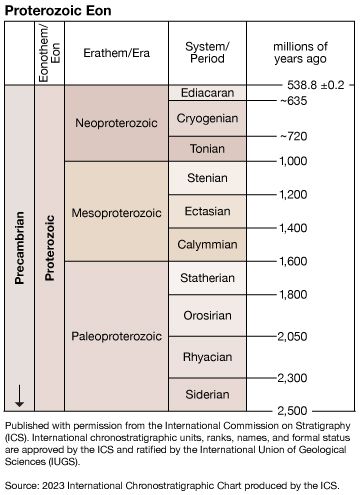
The Ediacaran Period is the final division of the Neoproterozoic Era, spanning approximately 635 million to 541 million years ago. It represents a pivotal interval in Earth’s history, characterized by significant environmental and biological shifts, including the rise of atmospheric and oceanic oxygen levels.1
Biologically, the period is defined by the Ediacara fauna—a collection of soft-bodied, multicellular invertebrate organisms that predated the Cambrian explosion. It also marks the earliest evidence of sexual reproduction, appearing in the fossil record roughly 567 million years ago.1
Geologically, the period saw intense tectonic activity, including the assembly and subsequent rifting of the supercontinent Pannotia. The period concluded with the appearance of the trace fossil Trichophycus pedum, which serves as the biological marker for the start of the Cambrian Period.1
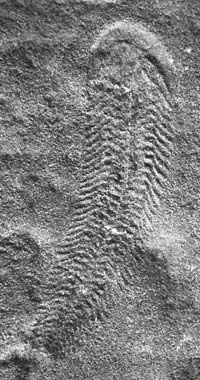
When did the Ediacaran Period take place?
The Ediacaran Period took place from approximately 635 million to 541 million years ago. It served as the final division of the Neoproterozoic Era within Precambrian time, following the Cryogenian Period and preceding the Cambrian Period.1
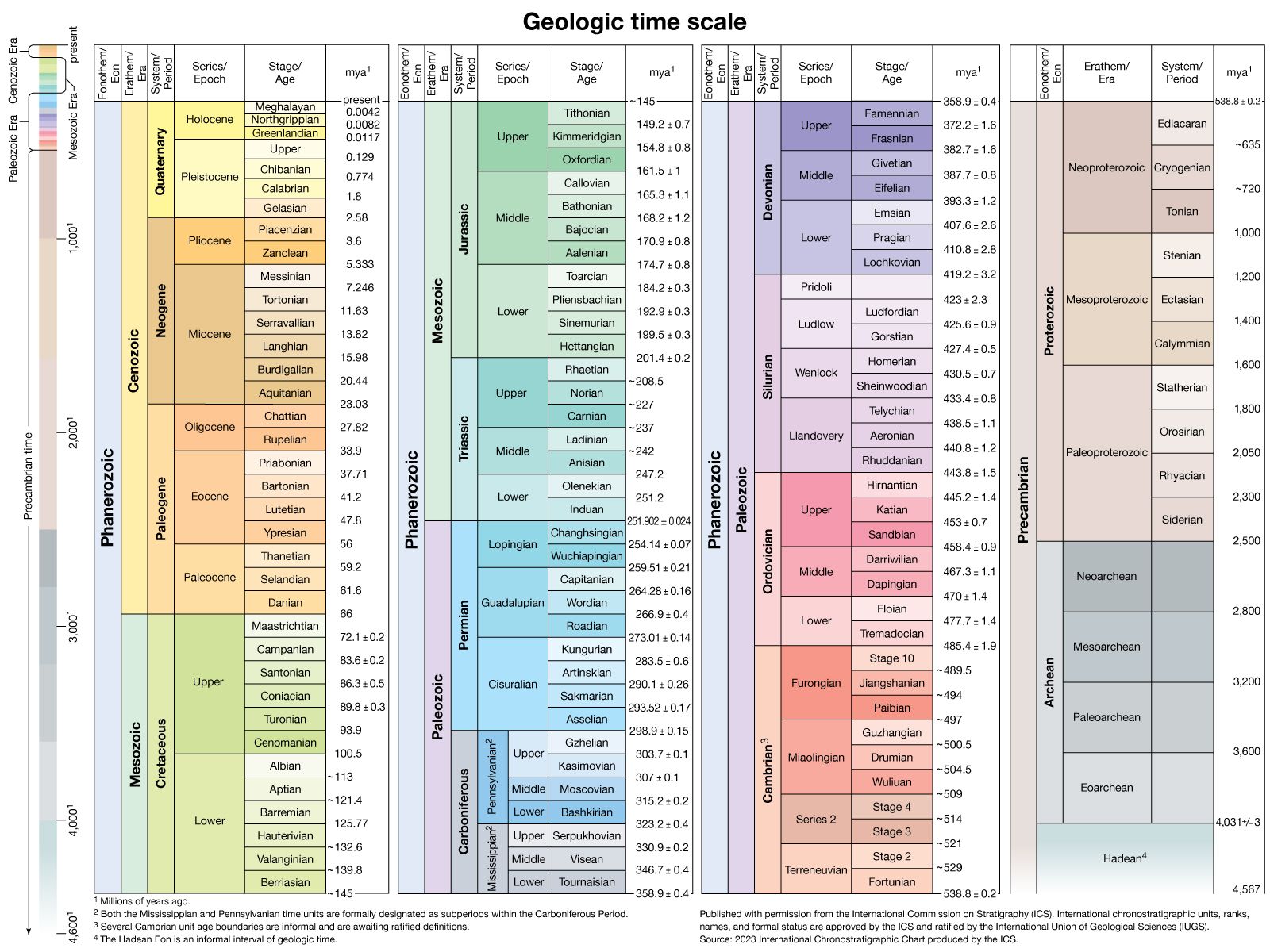
How do scientists determine the age of the Ediacaran Period?
Scientists determine the age of the Ediacaran Period primarily through radiometric dating, a method that measures the constant rate of radioactive decay in isotopes found within geologic materials. Because Precambrian rocks often lack useful index fossils, precise isotopic dating is essential for establishing their chronology.213
A key technique used is uranium-lead dating, which frequently utilizes the mineral zircon. Zircon is highly resistant to chemical and physical changes, making it an ideal “clock” for determining the timing of crystallization in igneous and metamorphic rocks. Geochronologists analyze the ratio of parent uranium atoms to daughter lead atoms in these samples to calculate the time elapsed since the rock formed. Additionally, volcanic ash layers often serve as critical key beds; because they are deposited rapidly over vast areas and often contain unaltered mineral crystals, they provide precise absolute ages for adjacent sedimentary units.423
While radiometric methods define the period’s duration, the end of the Ediacaran is specifically marked by the first appearance of the trace fossil Trichophycus pedum in the fossil record.5
What kinds of rocks or fossils help date the Ediacaran Period?
Dating the Ediacaran Period relies on a combination of precise radiometric techniques and specific biological markers, as the period’s rocks often lack the abundant index fossils used to date younger eras.16
Radiometric Dating and Key Beds
Because Precambrian rocks are generally devoid of useful index fossils, geochronologists rely on radiometric dating to establish a numerical chronology.6
- Zircon Analysis: The mineral zircon is highly valued for uranium-lead dating. Its crystal structure excludes lead during formation and is exceptionally resistant to chemical and physical alteration, allowing scientists to measure the time of crystallization with high precision.2
- Volcanic Ash: Layers of volcanic ash serve as critical key beds. These layers are deposited rapidly over vast areas and often contain unaltered mineral crystals, providing an “instantaneous” marker that can be dated radiometrically to provide absolute ages for adjacent sedimentary units.6
Biological Markers
While radiometric methods define the period’s duration, the end of the Ediacaran is specifically determined by a biological marker: the lowermost boundary of the trace fossil Trichophycus pedum.1
Sources
- Ediacaran Period — Encyclopædia Britannica
- dating - Importance of zircon in uranium-lead dating — Encyclopædia Britannica
- dating - Principles of isotopic dating — Encyclopædia Britannica
- dating - Principles and techniques — Encyclopædia Britannica
- geochronology — Encyclopædia Britannica
- Precambrian - Ediacaran fossils — Encyclopædia Britannica
- Precambrian - Oldest minerals and rocks — Encyclopædia Britannica
- geology - Historical geology and stratigraphy — Encyclopædia Britannica
- Quaternary - Correlation of Quaternary deposits — Encyclopædia Britannica
Published on · 3 min read