Tonle Sap
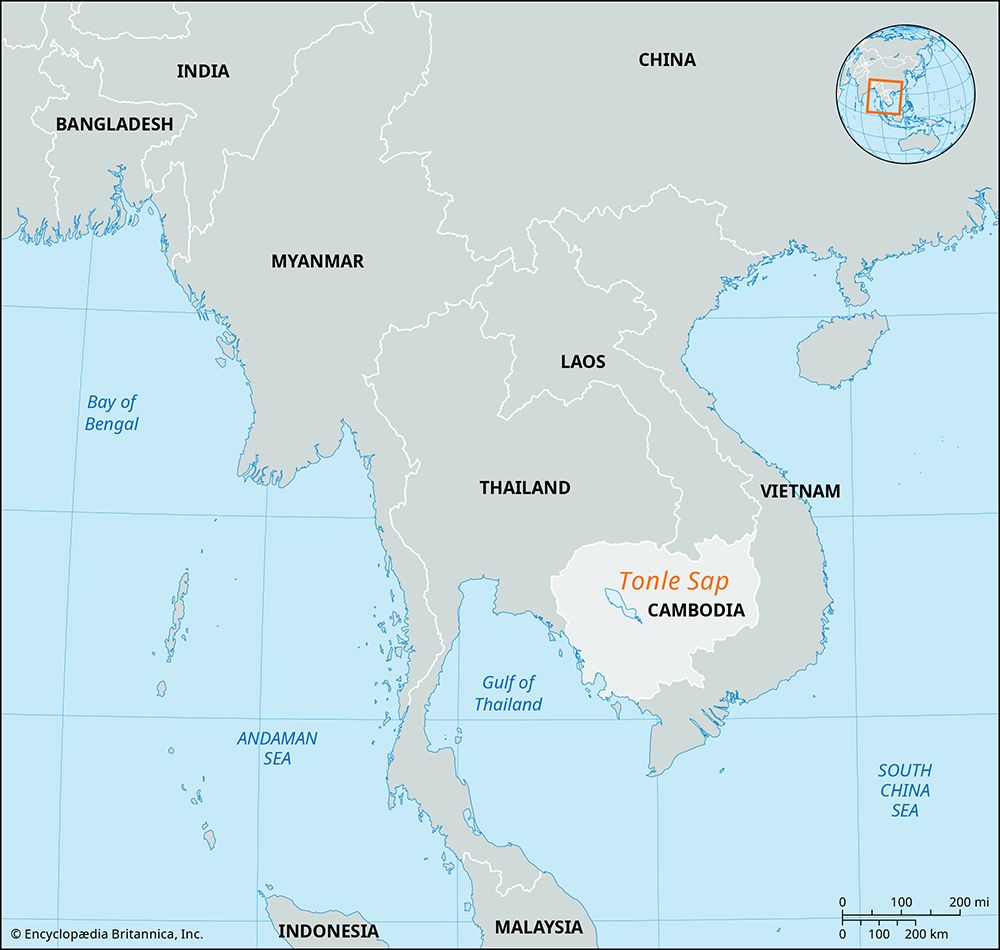
Tonle Sap, the largest freshwater body in Southeast Asia, is central to Cambodian culture and survival. Its historical and cultural significance is rooted in…
What is the historical significance of Tonle Sap in Cambodian culture?
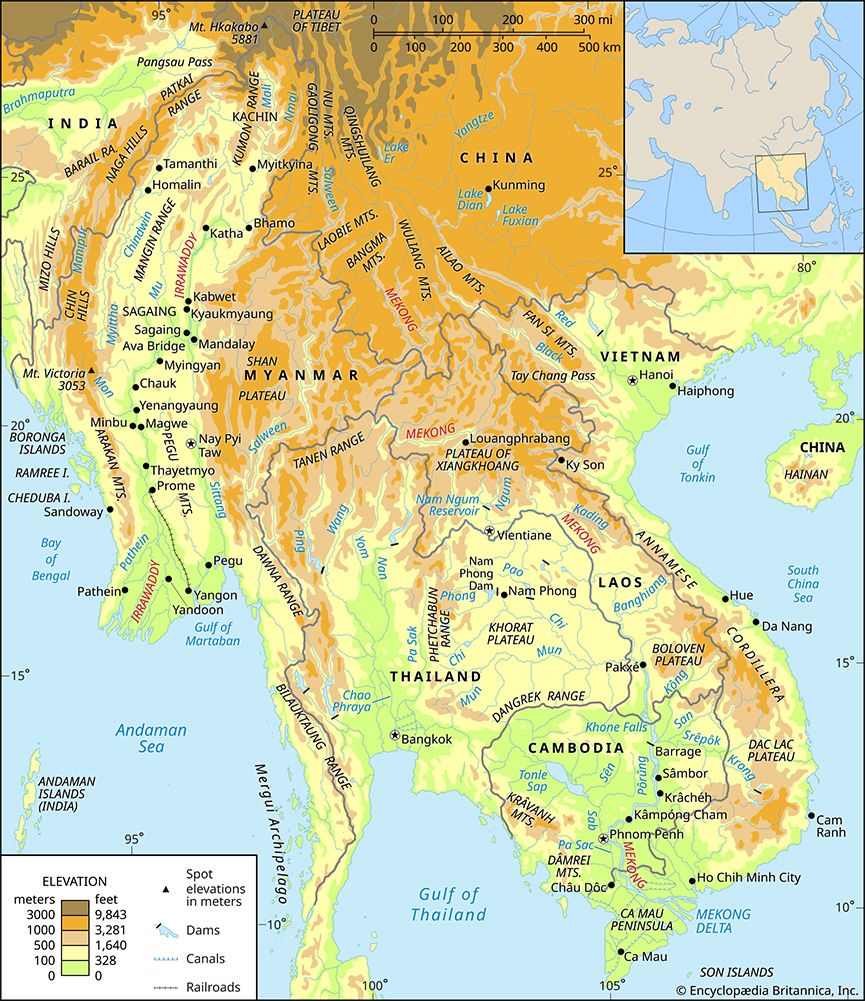
Tonle Sap, the largest freshwater body in Southeast Asia, is central to Cambodian culture and survival. Its historical and cultural significance is rooted in its unique hydrological cycle, where the Mekong River reverses the flow of the Sab River during the monsoon season, dramatically expanding the lake’s size and depth.12
This natural phenomenon makes the lake one of the world’s richest sources of freshwater fish. Consequently, fish—whether fresh, dried, smoked, or salted—serves as the primary protein source in the Cambodian diet and a staple of the national economy. Beyond sustenance, the lake has been a focal point of civilization; in the late 9th century, the Khmer capital shifted to the lake’s northern shores, where rulers constructed monumental architecture, such as the Bakong temple, establishing a model for the royal temples at Angkor. Today, the region remains vital for agriculture and is recognized as a UNESCO World Network Biosphere Reserve.2134
How does the monsoon season affect the size and ecosystem of Tonle Sap?
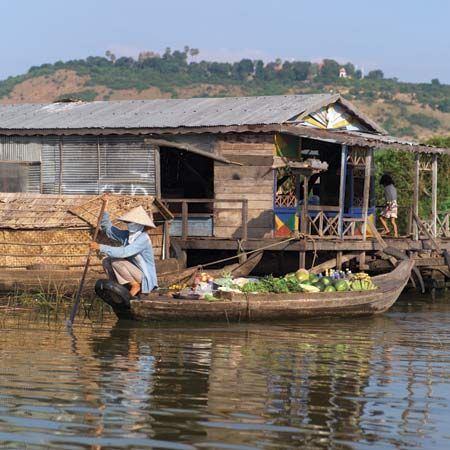
The monsoon season, occurring roughly from June to November, triggers a dramatic hydrological reversal that fundamentally transforms the Tonle Sap ecosystem1.1
During this period, the Mekong River swells with monsoon rains, forcing the Sab River to reverse its flow and push water northwest into the lake. This process causes the lake to expand significantly:41
- Surface Area: The lake grows from a dry-season minimum of approximately 1,050–1,200 square miles to a rainy-season maximum of 3,000–4,000 square miles.41
- Depth: Water levels rise from a shallow 3–10 feet to a depth of 30–45 feet.4
- Width: The lake’s width expands from about 22 miles to 65 miles.4
This annual flooding cycle creates one of the world’s most productive freshwater ecosystems, supporting a massive carp-breeding industry that serves as a vital food source for Cambodia. In contrast, during the dry season, the lake recedes into a reed-infested swamp, completing a cycle that sustains the region’s unique biodiversity and human settlements.41
How do floating villages on Tonle Sap adapt to the lake’s seasonal changes?
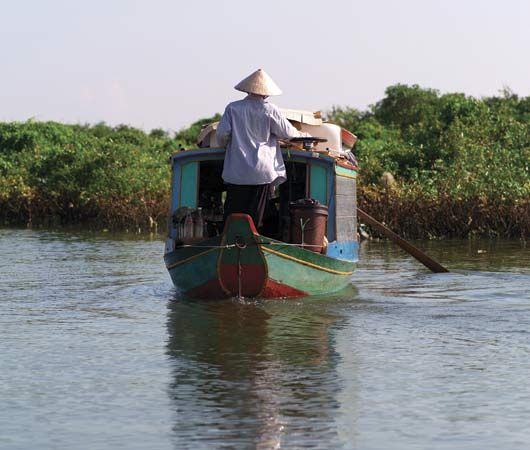
Floating villages on Tonle Sap are uniquely adapted to the lake’s dramatic seasonal fluctuations. Because the lake’s surface area expands from approximately 1,050 square miles in the dry season to as much as 4,000 square miles during the monsoon, these communities utilize floating structures that rise and fall with the water level.16
These villages are primarily inhabited by ethnic Vietnamese populations who rely on the lake’s massive carp-breeding and harvesting industry. The floating nature of their homes allows residents to remain mobile and connected to the water, which serves as both their primary resource for protein and their main transportation route.13
While traditional rural Cambodian houses are typically built on wooden pilings to accommodate seasonal flooding on land, the floating villages on Tonle Sap take this adaptation further by existing entirely on the water. This lifestyle is deeply integrated into the lake’s hydrological cycle, ensuring that these communities can continue their fishing activities regardless of whether the lake is a deep, expansive body of water or a shallow, reed-infested swamp.41
What role does Tonle Sap play in Cambodia’s economy and food security?
Tonle Sap is a cornerstone of Cambodia’s economy and food security, serving as the nation’s most vital source of freshwater fish.13
Economic Importance
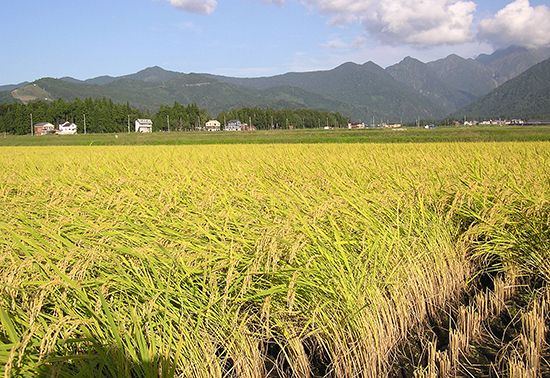
The lake supports a massive commercial and subsistence fishing industry. The government generates revenue by leasing segments of the lake and inland rivers for large-scale harvesting, though this program has historically faced challenges with corruption. Additionally, the lake’s fertile floodplains are essential for rice cultivation, which remains the most significant sector of the Cambodian economy in terms of GDP contribution and workforce employment.4
Food Security
Fish—whether fresh, dried, smoked, or salted—is the primary source of protein in the Cambodian diet. The lake’s unique hydrological cycle, which causes it to expand significantly during the monsoon, creates an exceptionally productive environment for species such as carp, perch, and lungfish. However, the sustainability of this resource is currently a major public concern due to overfishing and environmental degradation, which have reduced supplies and increased food prices.413
Sources
- Tonle Sap — Encyclopædia Britannica
- Cambodia - Foundation of the kingdom — Encyclopædia Britannica
- Cambodia - Agriculture, forestry, and fishing — Encyclopædia Britannica
- Cambodia - Drainage — Encyclopædia Britannica
- Tonle Sap — Merriam-Webster
- Mekong River - Irrigation and flood control — Encyclopædia Britannica
- Cambodia - Rural settlement — Encyclopædia Britannica
Published on · 3 min read