Lungfish
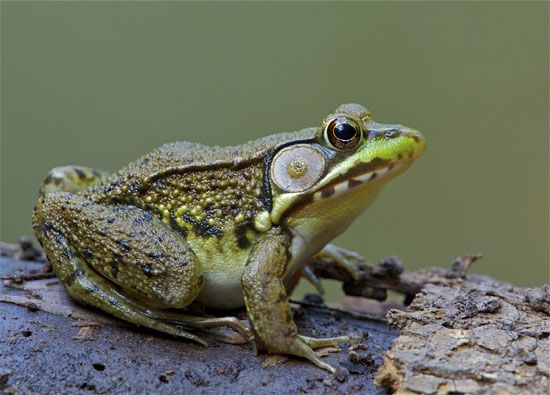
Lungfish are voracious predators that play an active role in their aquatic ecosystems by consuming a variety of prey, including tadpoles, small frogs…
What role do lungfish play in their ecosystems, and how do they interact with other species?
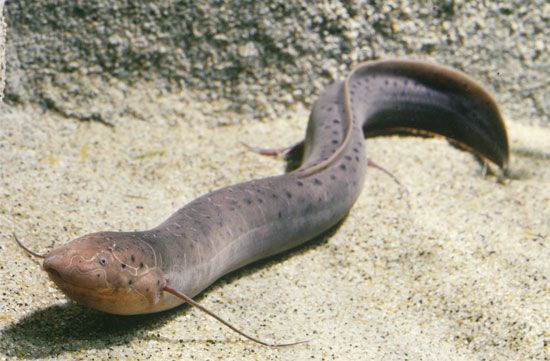
Lungfish are voracious predators that play an active role in their aquatic ecosystems by consuming a variety of prey, including tadpoles, small frogs, earthworms, and other fish. Their unique feeding method involves sucking in prey and using specialized crushing teeth to chew it, a behavior rarely seen in other fish species.1
Their interactions with other species are also defined by their reproductive strategies. For instance, male African lungfish and South American lungfish guard their nests and protect their young. In the case of the South American species, the male develops vascularized growths on his pelvic fins during spawning, which are believed to oxygenate the water for the developing brood. Additionally, some species, such as the South American lungfish, are known to coexist in the same muddy watercourses as other species like the eel-like Synbranchus marmoratus.23
What are the unique characteristics that distinguish lungfish from other fish?
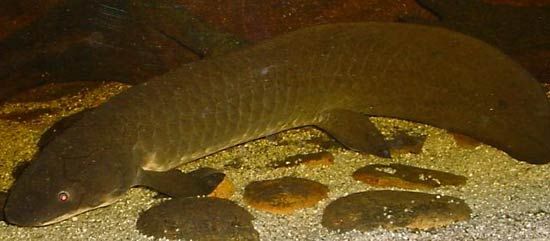
Lungfish (subclass Dipnoi) are a unique group of lobe-finned vertebrates that serve as a transitional form between water- and air-breathing animals. Their distinct characteristics include:378
- Respiratory Adaptations: Lungfish possess one or two functional lungs, allowing them to engage in bimodal respiration. Unlike most fish, they use a buccal force pump to inflate their lungs, a mechanism similar to that of amphibians.371
- Circulatory System: Their hearts are partially divided, with a septum in the ventricle and a subdivided atrium, which helps separate oxygenated and deoxygenated blood. This system is strikingly similar to that of amphibians.97
- Feeding Mechanics: They possess specialized crushing teeth fused into plates, which they use to thoroughly chew their prey—a behavior rarely observed in other fish.101
- Survival Strategies: Some species, such as the African and South American lungfish, can enter a state of estivation during droughts, building a subterranean cocoon to survive for months or years without food or water.71
- Evolutionary Lineage: As members of the class Sarcopterygii, they are distinct from ray-finned fishes and retain archaic features dating back to the Devonian Period.38
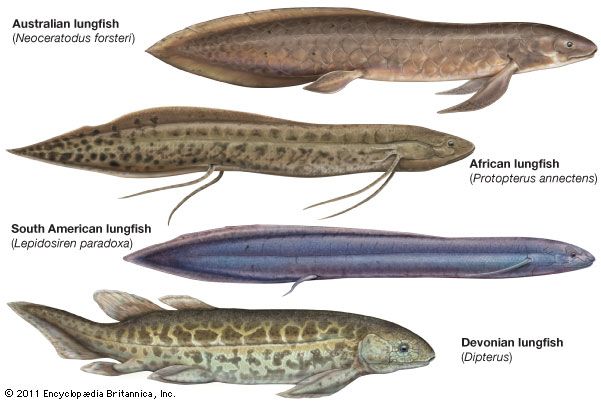
How have lungfish evolved over time, and what is their significance in understanding the transition from aquatic to terrestrial life?
Lungfish (subclass Dipnoi) have a long evolutionary history dating back to the Early Devonian Epoch, approximately 419 million years ago. Their evolution provides critical insights into the transition from aquatic to terrestrial life, as they belong to the Sarcopterygii (lobe-finned fishes), the group from which tetrapods eventually emerged.37
Evolutionary Significance
Lungfish are significant because they possess anatomical traits that served as structural predecessors for terrestrial adaptations. Key evolutionary developments include:7
- Aerial Respiration: Lungfish possess functional lungs, a trait that appeared in bony fishes well before the fish-tetrapod transition. While ray-finned fishes evolved these structures into swim bladders for buoyancy, lungfish retained them for breathing air.7
- Circulatory Modifications: Their hearts exhibit a partial division of the atrium and ventricle, which helps separate oxygenated and deoxygenated blood—a system strikingly similar to that of amphibians.11
- Locomotion: Some scientists argue that walking and bounding behaviors evolved in sarcopterygian fishes before the emergence of tetrapods. For example, the modern African lungfish, Protopterus annectens, can use its long fins to lift its body and propel itself along a substrate in a quadrupedal or bipedal gait.12
While lungfish are not direct ancestors of tetrapods, they share a common lineage with the fishes that were, making them essential for understanding the evolutionary pressures and physiological changes that enabled vertebrates to colonize land.117
How do lungfish adapt to survive during periods of drought or low water levels?
Lungfish have evolved remarkable physiological and behavioral strategies to survive periods of drought or low water levels, a state known as estivation or “dry sleep.”28
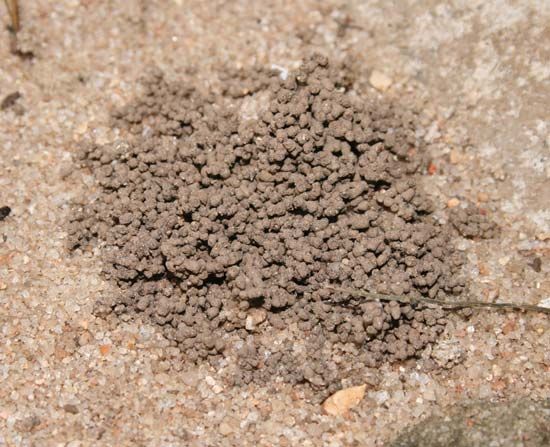
- Burrowing and Cocoon Formation: African lungfish (Protopterus) burrow into the mud of riverbeds or lake beds as water levels drop. They encase themselves in a protective mucous sheath that hardens into a cocoon, which remains connected to the surface via a thin tunnel for air access. South American lungfish (Lepidosiren) also burrow into the mud, though they do not form a protective sheath. Notably, the Australian lungfish does not exhibit this burrowing behavior.286
- Metabolic Suppression: During estivation, the fish’s metabolism, heart rate, and respiration fall to very low levels. This state is believed to be induced by a proteinlike substance that inhibits normal metabolic activity.862
- Respiratory and Excretory Adjustments: While dormant, their gills become nonfunctional, and they rely on their lungs for respiration. To conserve water and avoid toxicity, they shift their nitrogen excretion from ammonia to urea, which is less toxic and requires significantly less water to eliminate. They rely on stored fat reserves for energy during these periods, which can last for months or even years.862
Sources
- lungfish - Behaviour and ecology — Encyclopædia Britannica
- lungfish - Physiology and biochemistry — Encyclopædia Britannica
- lungfish — Encyclopædia Britannica
- lungfish - Size range and distribution — Encyclopædia Britannica
- lungfish - Economic importance — Encyclopædia Britannica
- lungfish - Reproduction and life cycle — Encyclopædia Britannica
- Circulatory system - Fishes — Encyclopædia Britannica
- Respiratory system - Fishes — Encyclopædia Britannica
- Dipterus — Encyclopædia Britannica
- lungfish - Annotated classification — Encyclopædia Britannica
- amphibian - Evolution and classification — Encyclopædia Britannica
- lungfish - Evolution — Encyclopædia Britannica
- lobe-finned — Merriam-Webster
- lobe-fin — Merriam-Webster
- Dormancy - Fishes and amphibians — Encyclopædia Britannica
Published on · 4 min read