Trepostomata
Trepostomata is an extinct order of bryozoans (commonly known as moss animals) that lived during the Paleozoic Era, ranging from the Ordovician to the…
What is Trepostomata?
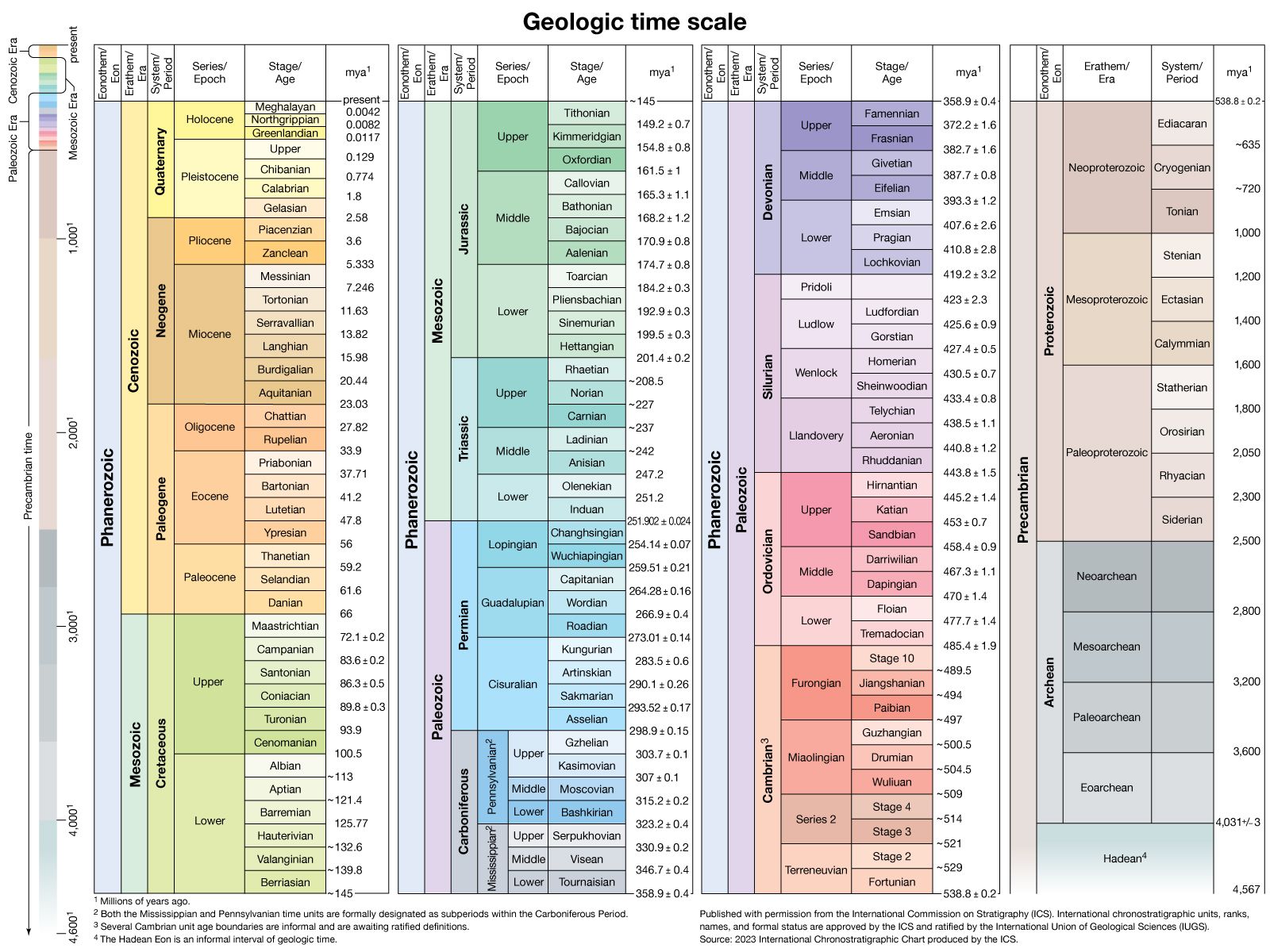
Trepostomata is an extinct order of bryozoans (commonly known as moss animals) that lived during the Paleozoic Era, ranging from the Ordovician to the Permian periods. These marine invertebrates are well-known for forming massive, colonial structures composed of long, tubular zooid skeletons.12
Key characteristics of the order include:
- Colony Structure: The colonies are typically massive and feature polygonal orifices.2
- Internal Anatomy: The tubular skeletons often contain numerous diaphragms, which are transverse partitions that intersect the interior of the tubes.12
- Wall Development: The zooid walls are generally thin proximally and become thicker toward the distal ends.2
- Classification: Trepostomes are classified within the class Stenolaemata, a group primarily composed of fossil forms.23
These organisms are significant in the fossil record, with well-known genera such as Prasopora and Dekayella providing insight into ancient marine ecosystems.1
What are bryozoans and how do they form colonies?
Bryozoans, also known as moss animals or Ectoprocta, are a phylum of sedentary, aquatic invertebrates that live in both fresh and salt water. They are characterized by a lophophore—a ring of ciliated tentacles used to collect food particles suspended in the water. While individual bryozoans, called zooids, are typically less than one millimeter long, they live together in integrated colonies that can reach significant sizes.5267
How Colonies Form
Bryozoan colonies are formed through a process of asexual budding. The development typically follows these steps:89
- Initiation: A colony originates from a primary zooid called an ancestrula, which is created through the metamorphosis of a sexually produced larva.9
- Expansion: New zooids bud from the ancestrula or existing parent zooids. In many species, these zooids remain in intimate contact, secreting rigid or gelatinous walls that provide structural support for the colony.68
- Integration: The colony is not merely an aggregation of individuals but an integrated organism. Zooids are often connected by interzooidal pores or cables, which allow for the exchange of nutrients and coordinated physiological responses, such as the withdrawal of tentacles when a stimulus is detected.107
- Growth Patterns: Depending on the species, budding can result in various forms, including gelatinous masses, crusts on stones or shells, or complex, calcified branching structures.27
How do fossils help scientists understand marine life from the Paleozoic Era?
Fossils are the primary source of information regarding the history of life on Earth, and they are essential for understanding marine ecosystems during the Paleozoic Era. Because most Paleozoic marine organisms possessed hard, calcareous skeletons, they were frequently preserved in sedimentary rocks formed in ancient shallow seas12.1112
Scientists use these fossils in several key ways:
- Defining Geologic Time: Certain organisms, known as index fossils, are used to assign relative ages to rock strata. In the Paleozoic, groups like trilobites, graptolites, and conodonts are vital for correlating rock layers across different geographic locations.13711
- Tracking Evolution and Extinction: The fossil record documents the rapid diversification of life during the Cambrian explosion and the subsequent impact of mass extinctions, such as the end-Permian event, which decimated groups like bryozoans and crinoids.1114
- Reconstructing Environments: By analyzing the types of fossils present, researchers can infer ancient climates and water conditions, such as identifying coral species that required warm, shallow water.7
What are the main differences between bryozoans and corals?
While bryozoans and corals are both sessile, colonial aquatic animals that were historically mistaken for plants, they belong to entirely different phyla and possess distinct biological structures.
Biological Classification
- Bryozoans: Members of the phylum Bryozoa (or Ectoprocta). They are complex invertebrates that possess a complete digestive tract with both a mouth and an anus, the latter of which is located outside the ring of tentacles.59
- Corals: Members of the phylum Cnidaria (specifically the class Anthozoa). Unlike bryozoans, cnidarians have a simple, sac-like digestive system with only one opening that serves as both mouth and anus.7
Feeding Mechanisms
- Bryozoans: They feed using a lophophore, a specialized organ consisting of a ring of ciliated tentacles that capture minute planktonic particles from the water.54
- Corals: They capture prey using tentacles equipped with nematocysts—specialized stinging structures used to paralyze and secure food.7
Structural Differences
- Individual Units: Bryozoan colonies are composed of tiny units called zooids, which are complete animals. Coral colonies are composed of polyps, which are the basic body form of cnidarians.597
- Skeletons: While both can secrete calcareous (calcium carbonate) skeletons, the nature of these structures differs. Bryozoan zooids secrete walls that form the colony structure. Coral polyps secrete a calcareous cup into which they can retract, and in many species, the soft tissue of the colony remains external to the skeleton.9171819
Sources
- Trepostomata — Encyclopædia Britannica
- moss animal - Annotated classification — Encyclopædia Britannica
- Trepostomata — Merriam-Webster
- moss animal - Critical appraisal — Encyclopædia Britannica
- moss animal — Encyclopædia Britannica
- moss animal - Colonies — Encyclopædia Britannica
- moss animal - Distribution and abundance — Encyclopædia Britannica
- moss animal - Reproduction and life cycle — Encyclopædia Britannica
- moss animal - Size range and diversity of structure — Encyclopædia Britannica
- moss animal - Budding — Encyclopædia Britannica
- index fossil — Encyclopædia Britannica
- fossil — Encyclopædia Britannica
- Paleozoic Era — Encyclopædia Britannica
- moss animal - Evolution and paleontology — Encyclopædia Britannica
- Earth sciences - Micropaleontology — Encyclopædia Britannica
- geology - Invertebrate paleontology — Encyclopædia Britannica
- polyp — Encyclopædia Britannica
- cnidarian - Support mechanisms and skeletons — Encyclopædia Britannica
- skeleton - Calcareous structures — Encyclopædia Britannica
- moss animal - Food and feeding — Encyclopædia Britannica
Published on · 4 min read