Tristan Da Cunha
The climate of Tristan da Cunha is characterized as mild, wet, and windy. The island experiences significant precipitation, with approximately 66 inches…
What is the climate like on Tristan da Cunha and how does it impact daily life?
The climate of Tristan da Cunha is characterized as mild, wet, and windy. The island experiences significant precipitation, with approximately 66 inches (1,675 mm) of rain falling annually at the settlement of Edinburgh of the Seven Seas.1
This environment directly influences daily life and infrastructure on the island:
- Settlement Challenges: The island’s weather, including severe events like the hurricane in 2001, has necessitated significant rebuilding efforts for the community.1
- Agriculture and Industry: The climate supports the cultivation of potatoes, which serve as the main crop, and the raising of livestock for domestic consumption. The surrounding waters support the island’s primary industry: shore-based fishing for lobster and crawfish, which are exported.1
- Infrastructure: The island’s geography and climate necessitated the construction of a harbor in the 1960s to facilitate trade and access, alongside modern facilities like a hospital and utility systems.1
How do the inhabitants of Tristan da Cunha govern themselves and what is their relationship with the United Kingdom?
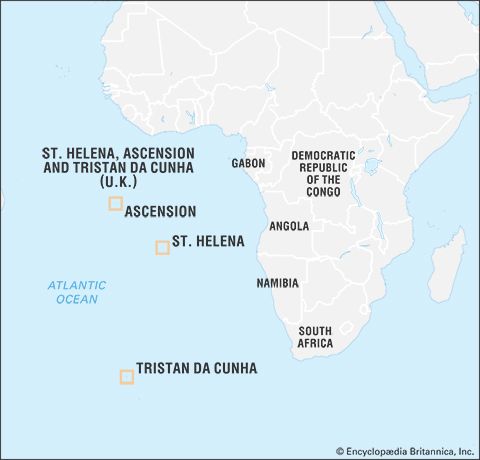
Tristan da Cunha is a constituent part of the British overseas territory of St. Helena, Ascension and Tristan da Cunha, having been formally annexed by the United Kingdom in 1816. Under the terms of a 2009 constitution, the island group is considered an equal part of this territory rather than a dependency.1
The governance of the island is structured as follows:
- Executive Authority: This is vested in a governor who resides on St. Helena. The governor appoints an administrator to represent them on Tristan da Cunha.1
- Island Council: This body advises the administrator, who serves as its president. The council consists of three ex officio members and eight elected members.1
This administrative framework ensures that while the island maintains local representation through its council, it remains integrated within the broader governance structure of the British overseas territory.1
What is the history of human settlement on Tristan da Cunha?
The history of human settlement on Tristan da Cunha began long after its discovery in 1506 by the Portuguese admiral Tristão da Cunha. Several attempts to settle the islands occurred during the 17th century and in 1810, but these were unsuccessful.1
Permanent habitation was established in 1816 when the United Kingdom stationed a garrison on the island and formally annexed the group. When the garrison was withdrawn in 1817, three members chose to remain. Over the following decades, this small group was joined by shipwrecked sailors, settlers of European descent, and women from St. Helena. By 1886, the population had grown to 97 people living in the settlement of Edinburgh of the Seven Seas.1
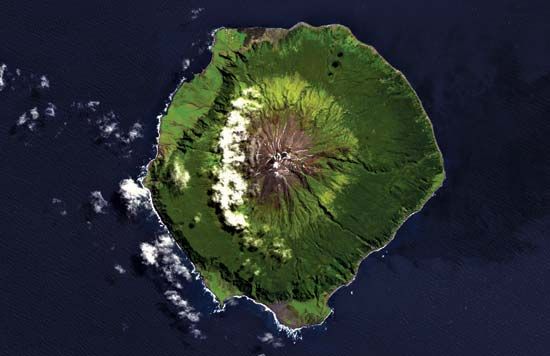
The community faced a major disruption in October 1961, when a volcanic eruption forced the evacuation of all inhabitants to England. Most of the islanders returned in 1963, subsequently modernizing the settlement with a new harbor, hospital, and improved infrastructure.1
Where exactly is Tristan da Cunha located in the Atlantic Ocean?
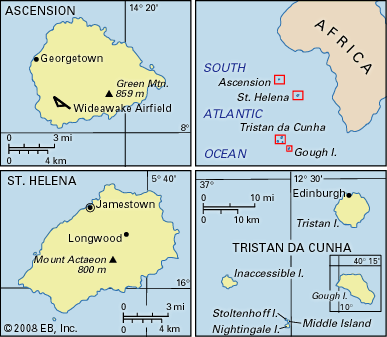
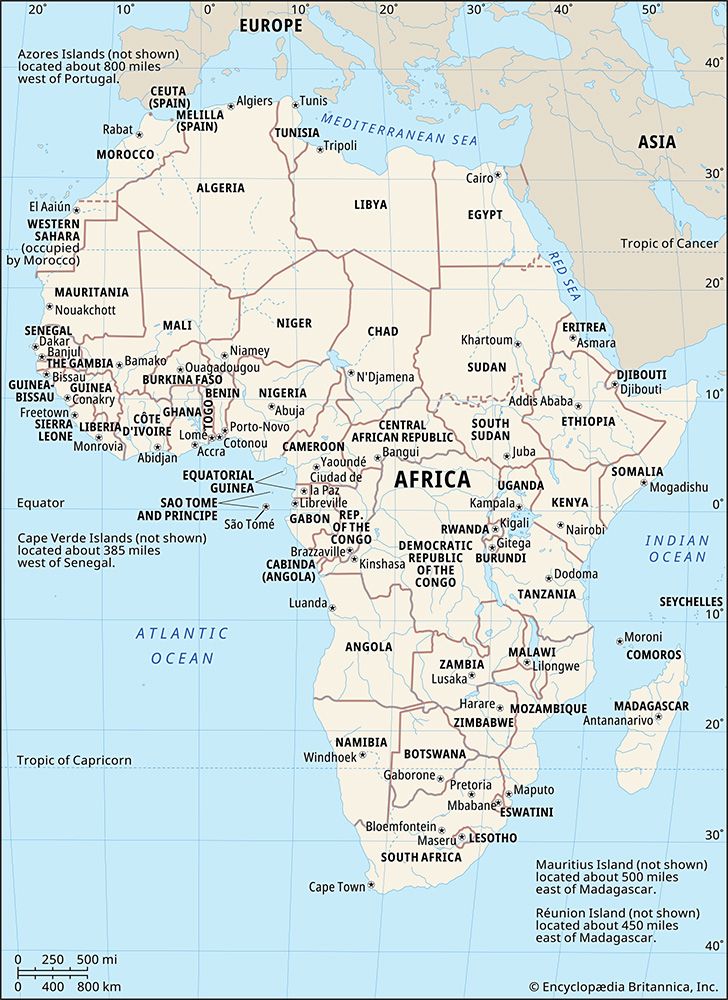
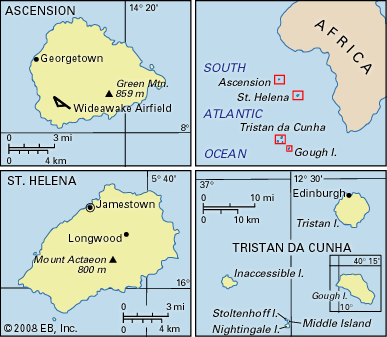
Tristan da Cunha is an island group located in the South Atlantic Ocean, situated approximately midway between southern Africa and South America.1
The group consists of six small islands. The main island, Tristan da Cunha, is the largest and northernmost of the group. Four other islands—Inaccessible, Nightingale, Middle, and Stoltenhoff—are located within 25 miles (40 km) of the main island. The sixth island, Gough, is located further away, lying about 200 miles (320 km) south-southeast of the main group.1
Sources
- Tristan da Cunha — Encyclopædia Britannica
- Tristan da Cunha — Merriam-Webster
- Virgin Islands - Justice — Encyclopædia Britannica
Published on · 3 min read