Trumpeter Swan
The trumpeter swan (Cygnus cygnus buccinator) is a large, black-billed swan native to North America, recognized for its far-carrying, low-pitched, and…
What is Trumpeter swan?
The trumpeter swan (Cygnus cygnus buccinator) is a large, black-billed swan native to North America, recognized for its far-carrying, low-pitched, and sonorous call.123
As the largest species of swan, it measures approximately 6 feet (1.8 meters) in length and possesses a wingspan of about 10 feet (3 meters). Despite its size, it weighs less than the mute swan, which holds the title of the heaviest flying bird.12
Historically, the species faced a severe threat of extinction, with fewer than 100 individuals recorded in the United States in 1935. Through conservation efforts, the trumpeter swan has made a significant recovery, with populations now exceeding 5,000 in western Canada and the northwestern United States. While the species has seen a strong comeback, it remains listed as vulnerable. Like other members of the Anatidae family, these birds are known for their graceful movement and social nature outside of the breeding season.12
How do trumpeter swans differ from mute swans?
Trumpeter swans and mute swans differ significantly in their physical characteristics and vocalizations. While the trumpeter swan is the largest swan species in terms of length and wingspan, the mute swan is heavier, weighing up to 23 kg (50 pounds), making it the heaviest flying bird.12
Key differences include:
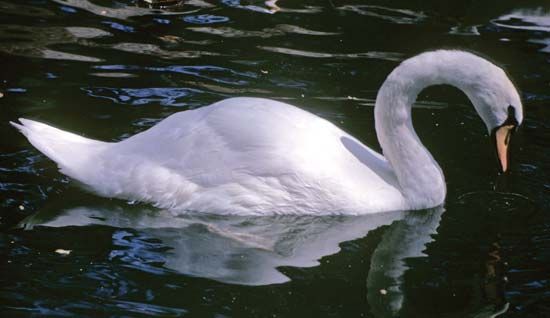
- Bill Appearance: The trumpeter swan has an all-black bill, whereas the mute swan features an orange bill with a distinctive black knob at the base.2
- Vocalization: The trumpeter swan is named for its far-carrying, low-pitched, sonorous call. In contrast, the mute swan is the least vocal species, typically only hissing, grunting, or making soft snoring sounds.12
- Posture and Behavior: Mute swans are known for their characteristic curved neck posture and aggressive wing-arching behavior.2
Both species are part of the Anatidae family and share general traits like life-long mating and social behavior outside of the breeding season.2
What conservation efforts helped the trumpeter swan recover?
The trumpeter swan faced a critical population decline, with fewer than 100 individuals recorded in the United States by 1935. The species’ recovery is largely attributed to targeted conservation efforts centered within the national parks of the western United States and Canada.
These protected areas provided the necessary habitat for the birds to survive and reproduce, allowing the population to grow from that precarious low to over 5,000 individuals in those regions. While the species remains listed as vulnerable, these managed environments were instrumental in preventing its extinction and fostering a significant comeback.12
What are the life stages of a cygnet?
A cygnet is a young swan that emerges from the egg covered in thick down. While they are capable of running and swimming within hours of hatching, they remain under the careful guidance and protection of their parents for several months.42
The development of a cygnet follows these general stages:
- Downy Stage: Hatchlings retain their initial downy plumage for approximately six weeks. During this time, they are guarded and brooded by their parents, particularly at night or during inclement weather.2
- Juvenal Stage: After about six weeks, the down is gradually replaced by juvenal plumage. The development of flight feathers is a slower process, taking anywhere from five weeks to five months. Unlike many other waterfowl, young swans remain with their parents through their first winter.2
- Immature Stage: Swans retain mottled gray or brown immature plumage for two or more years. They do not reach full size until the end of their second year and may still retain some immature feathers at that age.42
- Maturity: Swans typically reach sexual maturity in their third or fourth year.4
Sources
- Trumpeter swan — Encyclopædia Britannica
- Swan — Encyclopædia Britannica
- trumpeter swan — Merriam-Webster
- cygnet — Merriam-Webster
- Anseriform - Life history — Encyclopædia Britannica
Published on · 3 min read