Swan
A swan is a large, heavy-bodied, and long-necked waterfowl belonging to the family Anatidae. Most species are classified within the genus Cygnus. These birds…
What is a swan?
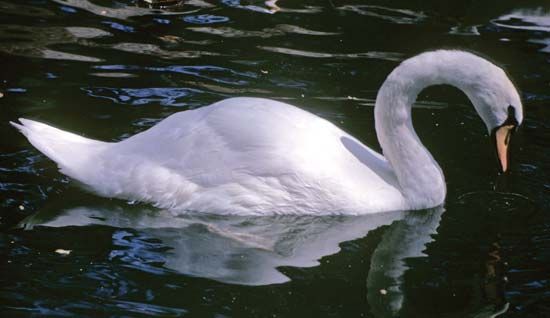
A swan is a large, heavy-bodied, and long-necked waterfowl belonging to the family Anatidae. Most species are classified within the genus Cygnus. These birds are known for their graceful movement on water and their ability to fly at great heights in V-formations.1
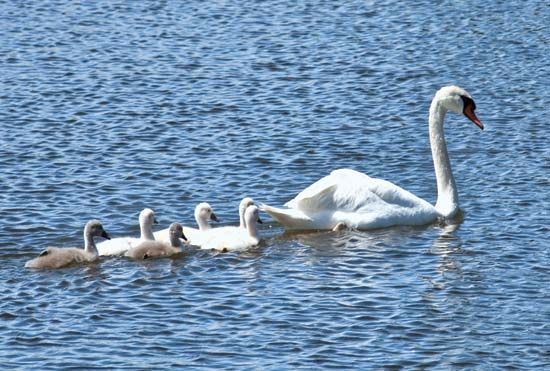
Swans are generally sociable, except during the breeding season, and they are known to mate for life. Females, called pens, incubate their eggs on heaps of vegetation, while males, known as cobs, typically guard the nest. Their young, called cygnets, are carefully tended by their parents for several months and often remain with them through their first winter.12
There are seven or eight species of swans, including the mute swan, the trumpeter swan, and the whistling swan. While they can live for 20 years in the wild, they have been known to live for 50 years or more in captivity.12
What do swans look like?
Swans are large, heavy-bodied, and long-necked birds characterized by their graceful appearance and majestic movement. They possess big feet and are known for flying with their necks outstretched and their wings beating slowly.1
Key physical features include:
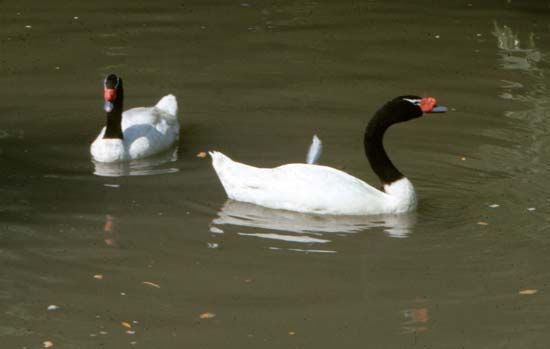
- Plumage: Many species are all-white, a striking appearance produced by “structural color”—the reflection of light by air-filled cavities within the feathers. Other species, such as the black swan and black-necked swan, feature darker coloration. Immature birds typically display mottled gray or brown plumage for their first two or more years.14
- Bills: Swans have specialized bills adapted for feeding on aquatic plants in shallow water. These vary by species; for example, the mute swan has an orange bill with a black knob, while the trumpeter swan has an all-black bill.1
- Anatomy: They possess a looped trachea, which in some species is tucked within the breastbone, allowing them to produce a variety of sounds.15
Male swans (cobs) and females (pens) look alike, and both sexes are typically larger than other waterfowl.1
Where do swans live?
Swans are found across the globe, with their distribution largely determined by species and migratory patterns. They primarily inhabit wetland environments, including lakes, rivers, and shallow coastal waters, where they feed by dabbling for aquatic plants.167
- Northern Hemisphere: Five species of all-white swans are native to these regions, including the mute swan, trumpeter swan, and whistling swan. Many of these birds breed in northern areas, such as the Arctic tundra, and migrate to spend the winter in milder climates, including along the coasts of the United States or in parts of Europe.167
- Southern Hemisphere: Swans are also native to the Southern Hemisphere, notably the black swan in Australia and two species in South America: the black-necked swan and the coscoroba.1
- Migratory Habits: Many swan populations are migratory, moving between breeding grounds and wintering quarters in lake and river regions across continents, such as from Europe to Africa.6
What do swans eat?
Swans primarily feed by dabbling in shallow water to reach aquatic plants. Unlike some other waterfowl that dive to forage, swans remain on the surface or stand in shallows, using their specialized bills to gather vegetation.9
While their diet consists largely of aquatic plants, their feeding behavior is distinct from diving species that forage at the bottom of deeper lakes or bays. By keeping to shallower areas, they can access the submerged vegetation they require for sustenance.49
Sources
- Swan — Encyclopædia Britannica
- swan — Merriam-Webster
- Anseriform - Life history — Encyclopædia Britannica
- Anseriform - Anatomy — Encyclopædia Britannica
- Integument - Birds — Encyclopædia Britannica
- Migration - In Europe — Encyclopædia Britannica
- Whistling swan — Encyclopædia Britannica
- Anseriform - Importance to humans — Encyclopædia Britannica
- What do ducks eat? — Encyclopædia Britannica
- Bird - Feeding habits — Encyclopædia Britannica
Published on · 3 min read