Trumpeter
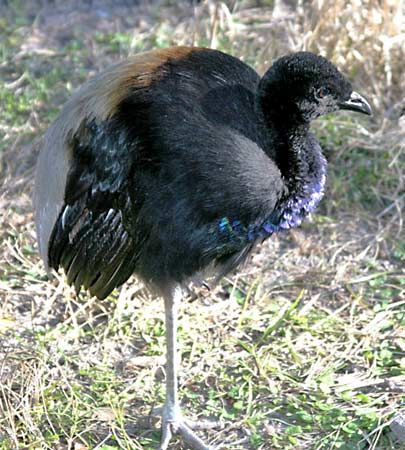
The term "trumpeter" most commonly refers to any of three species of long-legged, round-bodied birds in the family Psophiidae, native to northern South…
What is Trumpeter?
The term “trumpeter” most commonly refers to any of three species of long-legged, round-bodied birds in the family Psophiidae, native to northern South America. These birds—the common trumpeter, the pale-winged trumpeter, and the dark-winged trumpeter—are named for the strident calls they make while foraging on the jungle floor.1
Additionally, the term is used in the following contexts:
- Trumpeter Swan: A rare, large, pure white North American swan (Cygnus buccinator) known for its sonorous voice.2
- Trumpet Bird: A name sometimes applied to certain birds-of-paradise from the genera Manucodia and Phonygammus.1
- Musicians: Historically, the term also refers to individuals who play the trumpet, a brass wind instrument that has been used for military, ritual, and musical purposes since ancient times.3
How do valves change the pitch of a modern trumpet?
Valves change the pitch of a modern trumpet by altering the length of the vibrating air column within the instrument. When a player depresses a valve, it deflects the airstream into additional, permanently attached lengths of tubing, known as crooks. By increasing the total length of the tube, the instrument’s fundamental pitch is lowered.456
Most modern trumpets are equipped with three descending valves, which can be used individually or in combination to lower the pitch by up to six semitones. This mechanism allows the player to access notes that lie outside the instrument’s natural harmonic series, effectively making the trumpet capable of playing a full chromatic scale.465
Because these valves add a fixed amount of tubing, they can sometimes create slight tuning discrepancies. To address this, many trumpets feature compensating slides that can be adjusted to ensure accurate intonation.4
What are the main differences between a trumpet and a cornet?
While the trumpet and cornet are both three-valved brass instruments with similar ranges, they possess distinct physical and tonal characteristics:
- Bore Shape: The primary difference lies in the bore. Trumpets typically feature a narrow, cylindrical bore that expands only in the final third of the tube. In contrast, the cornet has a more conical bore that tapers gently throughout its length, which contributes to its unique sound profile.748
- Tone Quality: The cornet’s conical bore, paired with a deeper, funnel-shaped mouthpiece, produces a mellower, more flexible tone. The trumpet, using a mouthpiece with a shallower, hemispheric cup, is designed to produce a brighter, more brilliant sound.48
- Historical Usage: The cornet evolved in the 1820s and gained early popularity as a solo instrument, often displacing the trumpet in 19th-century orchestras and preceding it in jazz and dance bands. While the two instruments have become more similar due to modern design developments, the cornet remains a staple of brass bands, whereas the trumpet is the standard in orchestral settings.78
Why are trumpeter swans considered a conservation success story?
The trumpeter swan is widely regarded as a conservation success story because it successfully rebounded from the brink of extinction. In 1935, the population of these birds in the United States had plummeted to fewer than 100 individuals.910
Through dedicated conservation efforts, particularly within the national parks of the western United States and Canada, the species made a significant recovery. While the total population was estimated at only about 2,000 in the mid-1970s, it has since grown to exceed 5,000 birds in those regions. Although the species remains listed as vulnerable, this steady population growth demonstrates the effectiveness of protected habitats in preventing the loss of this iconic waterfowl.910
Sources
- Trumpeter — Encyclopædia Britannica
- trumpeter swan — Merriam-Webster
- trumpet — Encyclopædia Britannica
- wind instrument - Trumpet -type aerophones — Encyclopædia Britannica
- Brass instrument — Encyclopædia Britannica
- valve — Encyclopædia Britannica
- Did you know? — Merriam-Webster
- cornet — Encyclopædia Britannica
- Trumpeter swan — Encyclopædia Britannica
- Swan — Encyclopædia Britannica
Published on · 3 min read