Tulip
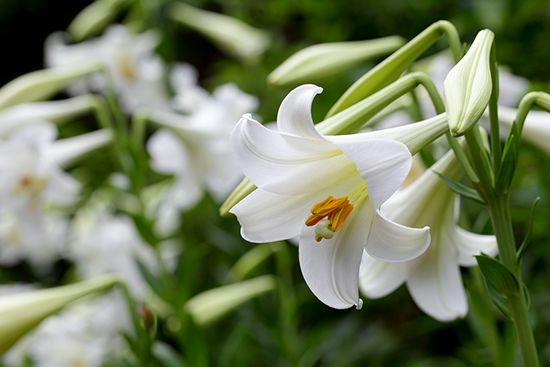
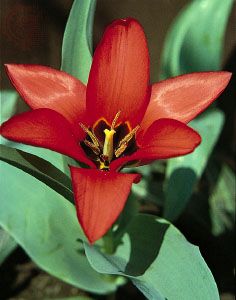
Tulips belong to the lily family, known botanically as Liliaceae. Within this family, they are classified under the genus Tulipa.
What is the botanical classification of tulips, and which plant family do they belong to?
Tulips belong to the lily family, known botanically as Liliaceae. Within this family, they are classified under the genus Tulipa.12
The full botanical classification for tulips is as follows:
- Kingdom: Plantae
- Clade: Angiosperm
- Order: Liliales
- Family: Liliaceae
- Genus: Tulipa1
These bulbous perennial herbs are native to regions in Central Asia and Turkey and are widely cultivated for their diverse and showy blooms.1
What are some of the most popular tulip varieties and their unique features?
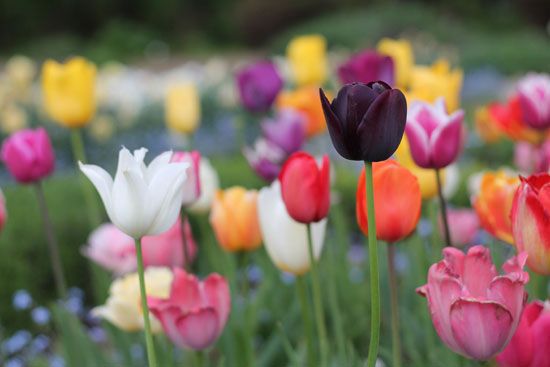
With nearly 4,000 horticultural varieties developed from Tulipa gesneriana and other species, tulips are categorized based on their bloom time, flower shape, and size. While there are many ways to group them, some of the most notable types include:3
- Parrot Tulips: These are highly distinctive for their ruffled, laciniate (fringed) petals, which are often variegated in color.13
- Darwin Tulips: Known for being mid-season to late-blooming, these are among the most popular and widely recognized garden varieties.34
- Lily-Flowered Tulips: A late-blooming class characterized by their elegant, pointed petals that curve outward, resembling the shape of a lily.34
- Early-Flowering Types: These include both single-flowered and double-flowered varieties that are among the first to signal the arrival of spring.3
- Mendel and Breeder Tulips: These represent mid-season varieties that have historically been significant in the development of modern garden cultivars.34
- Cottage and Double Late Tulips: These fall into the late-blooming category, which offers the widest range of growth habits and color variations.34
What is ‘tulip mania,’ and how did it impact the Dutch economy in the 17th century?
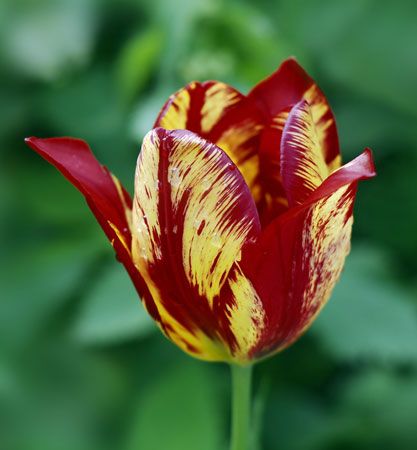
Tulip Mania, or the Dutch Tulip Bubble, was a speculative frenzy in 17th-century Holland centered on the trade of tulip bulbs. Following their introduction to Europe from Turkey, these flowers became highly coveted status symbols. The most prized varieties were those that “broke” into exotic, streaked patterns—a phenomenon later identified as the result of a virus.56
Between 1633 and 1637, the market reached a fever pitch. Driven by the greater fool theory, individuals bought bulbs not for their intrinsic value, but in the hope of reselling them at higher prices. Speculation became so widespread that middle-class and poor families mortgaged homes and businesses to participate. Much of this trade occurred through futures contracts, where bulbs were traded repeatedly without ever being physically exchanged.56
The bubble burst in early 1637 when market confidence evaporated. Prices collapsed almost overnight, leaving many families in financial ruin. This event remains a classic historical example of the dangers of speculative excess.56
What are the ideal growing conditions for tulips, and when is their typical blooming season?
To achieve the best results, tulips should be planted in autumn in well-drained loam enriched with compost. Bulbs should be placed 10 to 20 cm (4 to 8 inches) below the soil surface. While they can thrive in various soils, they require good drainage to prevent issues.1
Tulips are generally considered perennial plants, though in many garden settings, they tend to degenerate after a few years. To maintain the most reliable and showy blooms, many gardeners and commercial growers treat them as annuals, lifting the bulbs after the foliage turns yellow and replanting with fresh stock the following autumn.14
The blooming season for tulips occurs in the spring, with varieties categorized by their specific timing:
- Early-flowering: These are among the first to bloom, signaling the start of the season.1
- Mid-season: Varieties such as Mendel and Darwin tulips typically bloom during this period.1
- Late-blooming: This is the largest class of tulips, including types like parrot, lily-flowered, and double late tulips, which extend the flowering season.1
Sources
- tulip — Encyclopædia Britannica
- Liliaceae — Encyclopædia Britannica
- parrot tulip — Merriam-Webster
- horticulture - Bulb crops — Encyclopædia Britannica
- Tulip Mania — Encyclopædia Britannica
- Tulip Mania: How a Plant Virus Fueled a Speculative Frenzy — Encyclopædia Britannica
Published on · 3 min read