Lily
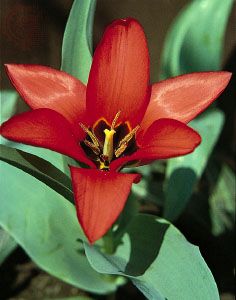
True lilies belong to the genus Lilium within the Liliaceae family. These erect perennial plants are characterized by leafy stems and distinctive scaly…
What are the main characteristics of lily plants and their flowers?
True lilies belong to the genus Lilium within the Liliaceae family. These erect perennial plants are characterized by leafy stems and distinctive scaly bulbs, which serve as underground storage structures with naked, overlapping leaves.123
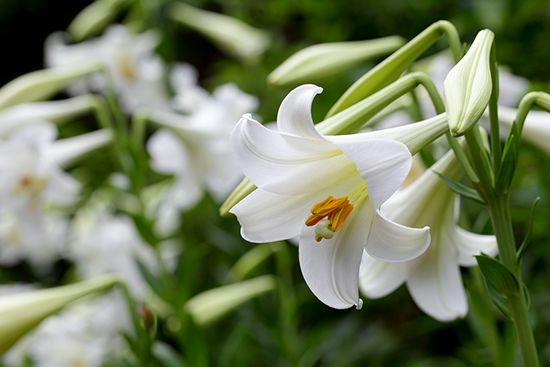
The flowers of true lilies are highly diverse and typically consist of six petal-like segments. Their shapes vary significantly:
- Trumpet: Featuring an elongated tube, as seen in the Easter lily.2
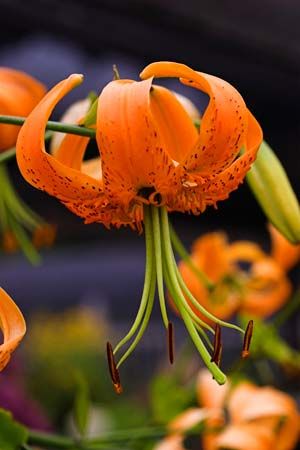
- Turban: With segments that are reflexed (curved back), characteristic of the Turk’s cap lily.2
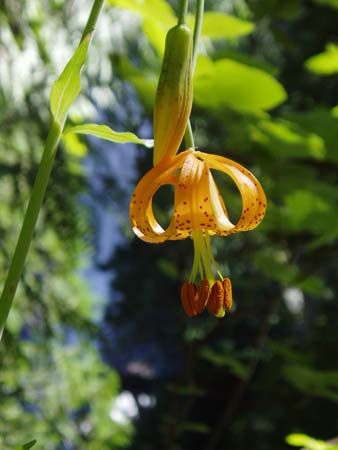
- Cup or Bowl: Formed by less strongly reflexed segments, as found in the wood lily.2
These plants generally range from 30 cm to 120 cm in height, though some species can exceed 2.5 meters. They typically bloom in the summer, preferring porous, loamy soil with good drainage. While the term “lily” is often applied to other plants like the daylily, true lilies are botanically distinct.23
How many different species of lilies exist, and where are they commonly found?
True lilies, which belong to the genus Lilium, consist of approximately 80 to 100 distinct species. These plants are native to the temperate regions of the Northern Hemisphere.1
It is important to note that the term “lily” is frequently used as a common name for plants in other genera that share a similar appearance, such as the daylily (Hemerocallis) or various species within the Amaryllidaceae family. Additionally, water lilies belong to an entirely different family, Nymphaeaceae, and are found in both temperate and tropical freshwater habitats worldwide.14
What are the cultural and symbolic meanings associated with lilies throughout history?
Lilies have been among the oldest cultivated plants, carrying diverse cultural and symbolic meanings throughout history. In the Middle Ages, the Madonna lily (Lilium candidum) became widely associated with the Virgin Mary, serving as a prominent symbol of purity; this association is frequently reflected in religious art and paintings of her.2
Beyond religious symbolism, lilies have held practical and cultural significance across various civilizations:
- Ancient Asia Minor: During the 2nd millennium BCE, the bulbs of the Madonna lily were cultivated for use in medicinal ointments and as a food source.2
- Greece and Rome: These cultures grew lilies for both their ornamental beauty and their medicinal properties.2
- East Asia: Various lily species have been cultivated since early times, valued both as ornamental plants and as food.2
While the term “lily” is sometimes used broadly to describe other showy flowers, the true lilies of the genus Lilium remain distinct in their long-standing history of human cultivation and symbolic use.26
Are there any medicinal or culinary uses for lilies?
True lilies (Lilium species) have a long history of both culinary and medicinal use, though it is essential to distinguish them from other plants that share the name “lily” but may be toxic or possess different properties.29
Culinary and Medicinal History
- Culinary Uses: Historically, the bulbs of the Madonna lily (Lilium candidum) were raised by ancient civilizations as a food source. In East Asia, various species of lilies have been cultivated for food since early times.2
- Medicinal Uses: During the 2nd millennium BCE in Asia Minor, the bulbs of the Madonna lily were used to create medicinal ointments. Ancient Greeks and Romans also cultivated these plants for their medicinal properties.2
Important Safety Considerations
While some Lilium species have been used historically, it is vital to exercise extreme caution:
- Toxicity to Pets: True lilies (Lilium species) and daylilies (Hemerocallis species) are highly toxic to cats; ingestion of even small amounts, including pollen, can cause fatal kidney failure.9
- Botanical Confusion: Many plants commonly called “lilies” are not true lilies and may contain different toxins. For example, the flame lily contains colchicine, which can cause multi-organ failure, and lily of the valley contains cardiac toxins9.
Sources
- Liliaceae — Encyclopædia Britannica
- lily — Encyclopædia Britannica
- Bulb — Encyclopædia Britannica
- Liliales — Encyclopædia Britannica
- water lily — Encyclopædia Britannica
- lily — Merriam-Webster
- lotus — Encyclopædia Britannica
- Easter lily — Merriam-Webster
- Why Are Lilies Toxic to Cats? — Encyclopædia Britannica
- Peace lily: Top Questions — Encyclopædia Britannica
Published on · 3 min read