Liliaceae
Liliaceae, commonly known as the lily family, is a group of flowering plants within the order Liliales. It currently comprises 16 genera and 635 species of…
What is Liliaceae?
Liliaceae, commonly known as the lily family, is a group of flowering plants within the order Liliales. It currently comprises 16 genera and 635 species of herbs and shrubs, primarily native to temperate and subtropical regions.12
Key characteristics of the family include:
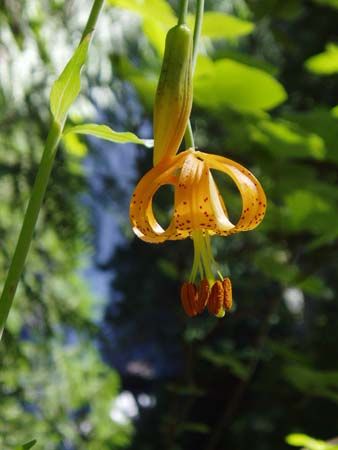
- Morphology: Members typically feature six-segmented flowers and three-chambered capsular fruits, though some produce berries.1
- Foliage: Leaves generally possess parallel veins and are often clustered at the base of the plant, though they may also alternate along the stem or grow in whorls.1
- Storage: Most species utilize underground storage structures, such as a bulb.1
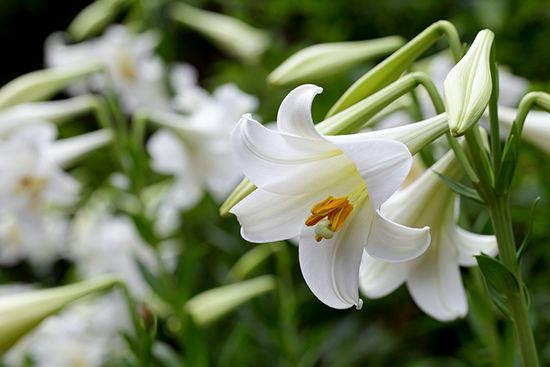
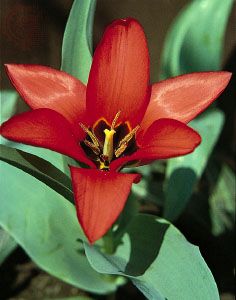
Liliaceae is highly valued for its garden ornamentals and houseplants, including the lily, tulip, fritillary, and Erythronium. While the family was once more broadly defined, modern molecular data has led to a more restricted classification, separating it from other groups within the monocotyledons.12
What is the difference between a bulb and other underground storage structures?
Underground storage structures are specialized organs that allow plants to survive unfavorable conditions and fuel future growth. While often grouped together in casual conversation, they differ significantly in their botanical composition and structure.34
Bulbs
A bulb is a modified, globe-shaped bud consisting of a short stem base attached to fleshy, overlapping leaves or leaf bases that store food. When cut in half, a bulb displays distinct, visible rings. They are categorized into two types: tunicate bulbs (protected by a papery covering, like an onion) and scaly bulbs (lacking a protective covering, like a lily).345
Other Storage Structures
- Corms: Unlike bulbs, corms are composed primarily of solid stem tissue rather than leaves. They are typically round, dry, and starchy, and they lack the internal rings found in bulbs. They are usually covered by a fibrous or membranous tunic.35
- Tubers: These are also composed of stem tissue but are often irregular in shape, lack specialized coverings, and can persist for several years.3
- Rhizomes: These are prostrate, creeping stems that grow horizontally, producing roots from their lower surface and leaves from their apex.3
How do monocotyledonous plants differ from other flowering plants?
Monocotyledonous plants, or monocots, are one of the two primary groups of angiosperms, distinguished from eudicotyledons by several fundamental physical and developmental characteristics.6
Key Differences
- Seed Structure: Monocots possess a single cotyledon (seed leaf) in the embryo, whereas eudicots typically have two.678
- Leaf Venation: Monocot leaves feature longitudinally parallel veins, while eudicot leaves generally exhibit a netlike (reticulate) venation pattern.698
- Root Systems: Monocots lack a primary taproot; instead, they develop a fibrous root system consisting of adventitious roots that emerge from the stem base. Eudicots typically develop a primary taproot from the radicle.610
- Stem Anatomy: Monocot stems contain scattered vascular bundles and lack a typical vascular cambium, meaning they generally cannot undergo secondary thickening (girth increase).6
- Floral Parts: Monocot flowers usually have parts arranged in multiples of three, whereas eudicot floral parts are typically arranged in multiples of four or five.68
- Pollen: Monocot pollen grains characteristically feature a single aperture, unlike the multiple apertures often found in eudicots.6
What are some common medicinal uses for plants in the Liliales order?
The order Liliales is a significant source of pharmaceutical compounds, primarily due to the presence of specific alkaloids in several of its genera.
Key Medicinal Compounds and Uses
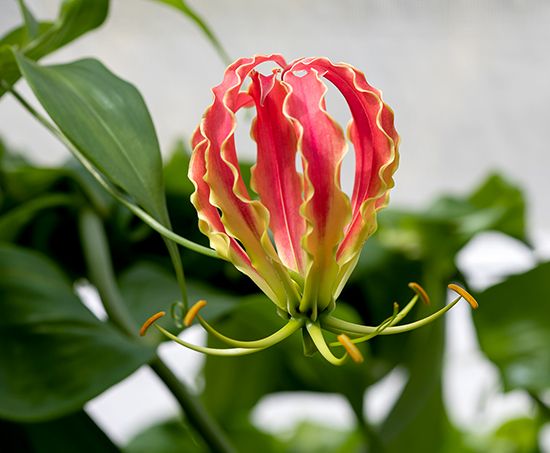
- Colchicine: This important medicinal compound is found in genera such as Colchicum (family Colchicaceae) and Gloriosa. It is specifically used to relieve the pain associated with gout. However, it is important to note that the flame lily (Gloriosa superba) contains this toxin, which disrupts cell division and can lead to multi-organ failure if ingested.
- Veratrine: Various genera in the Northern Hemisphere, including Veratrum and Zigadenus (family Melanthiaceae), contain the alkaloid veratrine and similar compounds used in drug production.
- Historical Uses: Historically, the bulb of the Madonna lily (Lilium candidum) was cultivated by ancient civilizations in Asia Minor, Greece, and Rome for use in medicinal ointments.
While these plants have historical and pharmaceutical applications, many members of the order are also highly toxic. For example, lily of the valley contains cardiac toxins that cause irregular heartbeats.
Sources
- Liliaceae — Encyclopædia Britannica
- Liliales — Encyclopædia Britannica
- Asparagales - Storage organs — Encyclopædia Britannica
- corm — Encyclopædia Britannica
- bulb — Encyclopædia Britannica
- monocotyledon — Encyclopædia Britannica
- angiosperm - Leaves — Encyclopædia Britannica
- seed - Angiosperm seeds — Encyclopædia Britannica
- dicot — Merriam-Webster
- root — Encyclopædia Britannica
- Colchicum — Encyclopædia Britannica
- Lamiaceae — Encyclopædia Britannica
- Why Are Lilies Toxic to Cats? — Encyclopædia Britannica
- lily — Encyclopædia Britannica
Published on · 3 min read