Liliales
Plants within the order Liliales are recognized as significant sources of pharmaceutical compounds, particularly due to the presence of specific alkaloids.
What medicinal properties have been discovered in plants belonging to the Liliales order?
Plants within the order Liliales are recognized as significant sources of pharmaceutical compounds, particularly due to the presence of specific alkaloids.1
Key medicinal properties and compounds include:
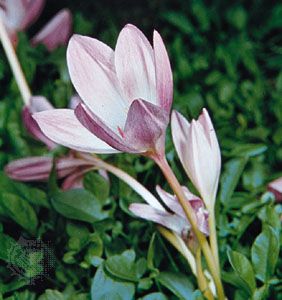
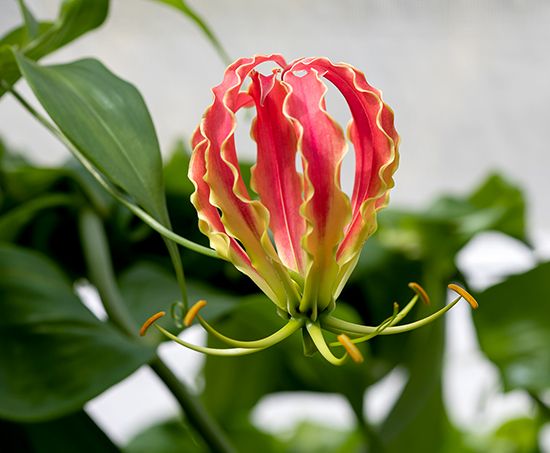
- Colchicine: This important medicinal compound, along with related alkaloids, is found in Old World genera such as Colchicum (family Colchicaceae) and Gloriosa.1
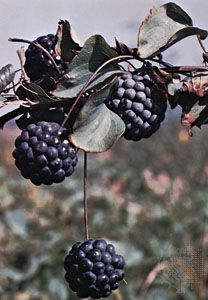
- Veratrine: Various genera native to the Northern Hemisphere, including Veratrum and Zigadenus (star lily) of the family Melanthiaceae, contain the alkaloid veratrine and similar chemical compounds.1
While the order Lamiaceae (the mint family) is also widely noted for its medicinal properties, it belongs to a different order, Lamiales, and should not be confused with the Liliales.2
What are the main characteristics that define the Liliales plant order?
The order Liliales consists of monocotyledonous flowering plants, primarily comprising perennial herbs and climbers that are most common in subtropical and temperate regions, particularly in the Northern Hemisphere.1
Defining Characteristics
Modern botanical classification, specifically the APG IV system, defines the order by several key morphological features:
- Floral Structure: Members possess perigonal nectaries located at the base of the tepals (undifferentiated sepals and petals).1
- Anther Orientation: The anthers are extrorse, meaning they open to face outward.1
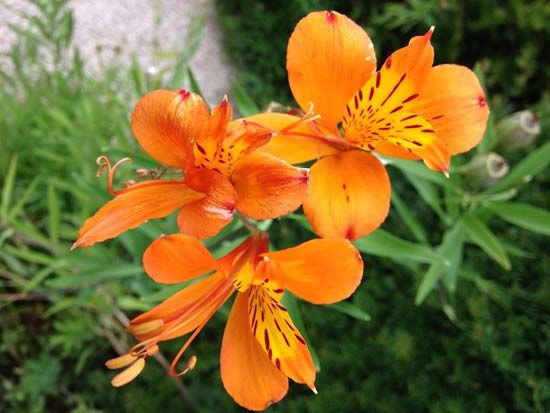
- Petal Appearance: Flowers often feature spotted or variegated petals.1
Growth and Morphology
Beyond these diagnostic traits, the order is characterized by:
- Habit: Plants are typically erect or twining herbs, though some are woody shrubs. Many species utilize underground storage or perennating organs to survive.1
- Leaves: Leaf structure varies from straplike with parallel venation to ovate with palmate veins. Some species, such as those in the Alstroemeriaceae family, exhibit resupinate leaves, where the leaf is twisted so the undersurface faces upward.1
How has the classification of Liliales changed over time with advances in molecular biology?
The classification of the Liliales order has undergone a significant transformation due to the integration of molecular biology into botanical taxonomy. Historically, taxonomists circumscribed the order based on morphological similarities, which often grouped diverse taxa together under broad categories like the Liliidae and the former, more inclusive definition of the Liliaceae family1.
Advances in molecular techniques—specifically the sequencing of DNA from chloroplasts and nuclei—have provided more robust, testable data on plant phylogeny. These molecular insights revealed that many previous, morphology-based schemes, such as the system developed by Arthur Cronquist, did not accurately reflect evolutionary relationships.1
As a result, the taxa formerly lumped into the old Liliales have been redistributed among three distinct orders: Liliales, Asparagales, and Dioscoreales. The modern, reduced definition of Liliales is now grounded in specific shared traits, such as:4
- The presence of perigonal nectaries at the base of the tepals.4
- Extrorse anthers (anthers that open outward).4
- Frequently spotted or variegated petals.4
This shift reflects a broader move toward a phylogenetic classification system, such as the APG IV system, which prioritizes monophyletic groups—lineages where all members descend from a common ancestor.1
How do plants in the Liliales order reproduce and what are their typical flowering patterns?
Plants in the Liliales order reproduce through both sexual and asexual means.
Sexual Reproduction
Sexual reproduction involves the production of flowers, which are often large and showy, though they can range from small and green to highly ornate. These flowers typically possess both stamens and pistils, and they utilize various strategies to ensure successful pollination, including the use of nectar to attract pollinators such as insects and birds. To maintain genetic diversity and prevent self-fertilization, many species employ mechanisms like self-incompatibility or dichogamy, where the timing of pollen release and stigma receptivity is staggered. Following successful pollination, plants produce seeds that can be used for propagation.1678
Asexual Reproduction
Many members of the order are perennial herbs that rely on specialized underground storage or perennating organs for vegetative reproduction. These structures include:19
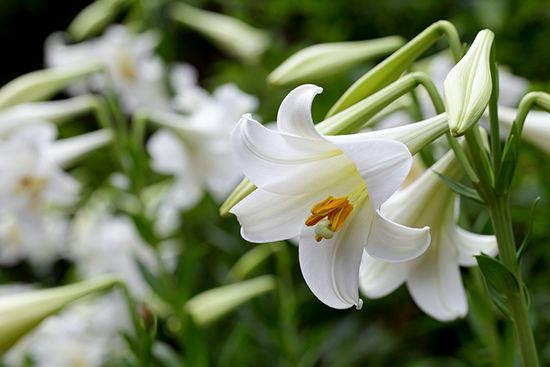
- Bulbs: Common in genera like Lilium, these consist of a basal stem surrounded by fleshy, food-storing leaf bases.19
- Bulbils: Miniature bulbs that can form on aerial stems or near flower parts, allowing for clonal offspring.9
- Rhizomes: Fleshy, horizontal stems that grow within or upon the soil, facilitating plant multiplication.9
Flowering Patterns
Flowering patterns vary significantly across the order. While many species bloom in mid-summer, such as July or August, others may flower in late spring or into early autumn. The flowers themselves are often trimerous and can be solitary or clustered in various inflorescence types, such as umbels.8110
Sources
- Liliales — Encyclopædia Britannica
- Lamiaceae — Encyclopædia Britannica
- Liliaceae — Encyclopædia Britannica
- angiosperm - Annotated classification — Encyclopædia Britannica
- lizard - Critical appraisal — Encyclopædia Britannica
- lily — Encyclopædia Britannica
- pollination - Structural — Encyclopædia Britannica
- angiosperm - Pollination — Encyclopædia Britannica
- Liliales — Merriam-Webster
- horticulture - Vegetative propagation — Encyclopædia Britannica
- vegetative reproduction — Encyclopædia Britannica
Published on · 3 min read