Turnip
The turnip (Brassica rapa, variety rapa) is a hardy biennial plant in the mustard family believed to have originated in middle and eastern Asia. While the…
What are the origins and history of turnip cultivation?
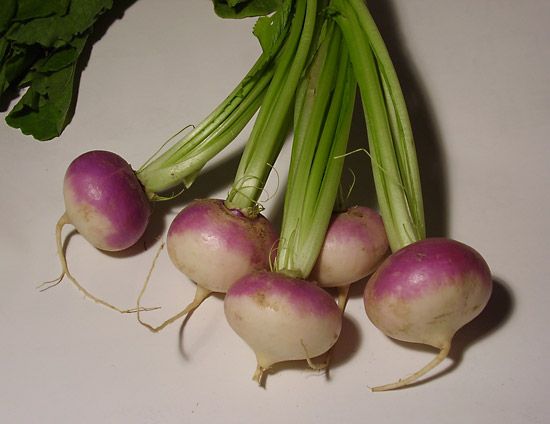
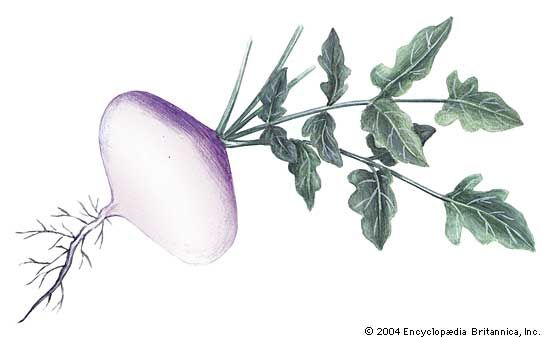
The turnip (Brassica rapa, variety rapa) is a hardy biennial plant in the mustard family believed to have originated in middle and eastern Asia. While the term “turnip” is sometimes applied to the rutabaga, they are distinct species.123
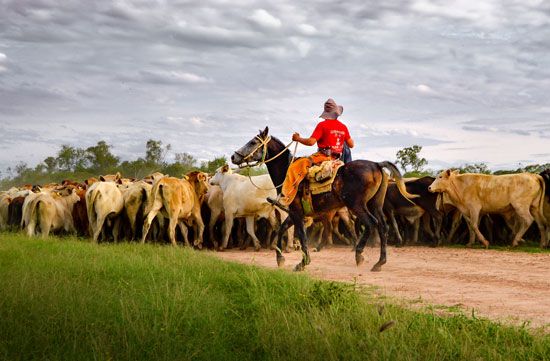
Historically, the turnip became a cornerstone of agricultural advancement in 18th-century England. It was a vital component of the Norfolk four-course system, a crop rotation method that eliminated the need for fallow years. In this system, turnips were grown in the second year and served as essential winter fodder for cattle and sheep, supporting the development of improved livestock breeds.4
The word “turnip” is first attested in Middle English around 1500, with its name likely derived from a combination of “turn” (referring to its rounded shape) and “neep” (a root vegetable). Today, it remains a widely cultivated crop in temperate zones for both human consumption and livestock feed.31
How are turnips grown and what are their ideal growing conditions?
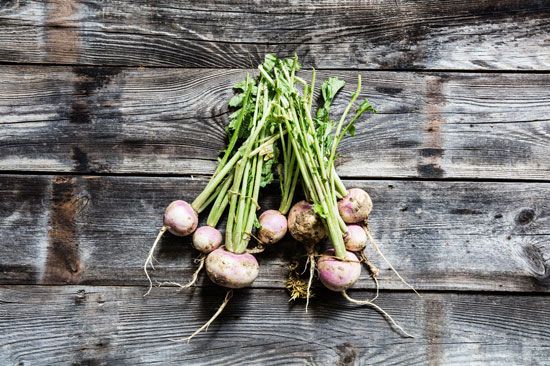
The turnip (Brassica rapa, variety rapa) is a hardy cool-season crop that does not require a long growing season to reach maturity. Because it is a biennial plant, it develops rapidly, allowing for successful cultivation in mild climates when sown during early spring or late summer to avoid the extremes of summer heat or late fall freezes.1
To achieve optimal growth, turnips require soil with an ample supply of nutrients and consistent moisture. While specific fertilizer needs can vary based on soil composition, the application of farmyard manure or compost is generally beneficial for providing necessary growth elements. Proper watering is essential; deep, thorough irrigation—rather than light surface sprinkling—encourages deep root penetration, which helps the plants survive dry conditions.6
Gardeners should also be mindful of potential threats, such as the turnip aphid, which can damage brassica crops. Maintaining healthy soil and monitoring for pests are key components of successful turnip cultivation.7
How do turnips differ from other root vegetables like radishes or rutabagas?
While turnips, rutabagas, and radishes all belong to the mustard family, they are distinct plants with unique characteristics and cultivation requirements.
Turnips vs. Rutabagas
Although often confused, turnips (Brassica rapa) and rutabagas (Brassica napus) are different species. Rutabagas likely originated as a cross between turnips and wild cabbage.
- Growth Cycle: Turnips are fast-growing and do not require a long season, whereas rutabagas grow slowly and need a long, cool growing season.
- Physical Traits: Turnip leaves are grass-green and covered in rough hairs, while rutabaga leaves are smooth and glaucous (waxy). Rutabaga roots also feature a distinct “neck” with visible leaf scars.
Turnips vs. Radishes
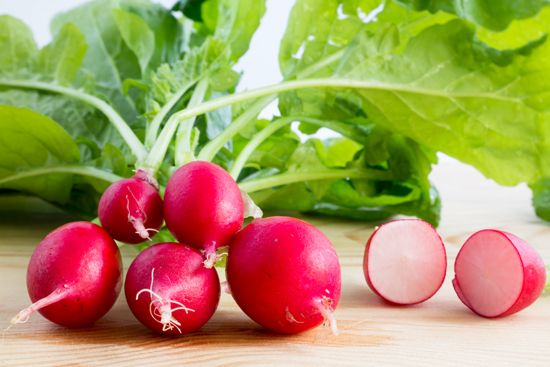
Radishes (Raphanus sativus) differ significantly in their life cycle and culinary profile.
- Life Cycle: Radishes are typically grown as annuals and harvested before they flower, while turnips are biennials.
- Flavor and Use: Radishes are known for a crunchy texture and a mildly peppery flavor, often eaten raw. Turnips have a milder taste and are frequently cooked in stews or mashed.
What are some common varieties of turnips grown around the world?
Turnips are grown globally for both their edible roots and their tender greens. While many varieties exist, they are generally categorized by their primary use or regional origin.
- Shogoin Turnip: This variety is of Japanese origin and is cultivated primarily for its long, strap-shaped leaves, which are commonly used as a potherb in cooking.1
- Root-focused Varieties: Many cultivars are specifically bred for their fleshy roots, which develop from the thickening of the primary root and the base of the stem. These are often harvested young to be eaten raw in salads or pickled, while more mature roots are typically cooked, mashed, or added to stews.12
- Fodder Turnips: In addition to human consumption, certain hardy varieties are cultivated as a fodder crop to provide nutrition for cattle.12
Because the turnip is a biennial plant that thrives in the temperate zone, its cultivation is widespread across various climates, provided the plants are sown to avoid extreme heat or freezing temperatures.12
Sources
- Turnip — Encyclopædia Britannica
- agricultural revolution — Encyclopædia Britannica
- brassica — Encyclopædia Britannica
- turnip — Merriam-Webster
- list of economically important members of the family Brassicaceae — Encyclopædia Britannica
- Norfolk four-course system — Encyclopædia Britannica
- turnip aphid — Merriam-Webster
- gardening - Feeding: fertilizing and watering — Encyclopædia Britannica
- Curly top — Encyclopædia Britannica
- Rutabaga — Encyclopædia Britannica
- Radish — Encyclopædia Britannica
- shogoin turnip — Merriam-Webster
Published on · 3 min read