Uluru/Ayers Rock
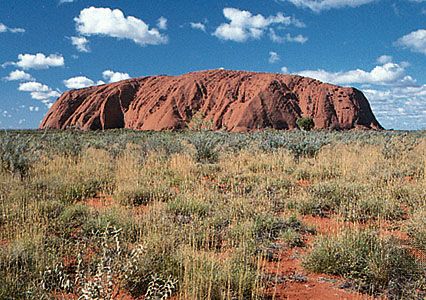
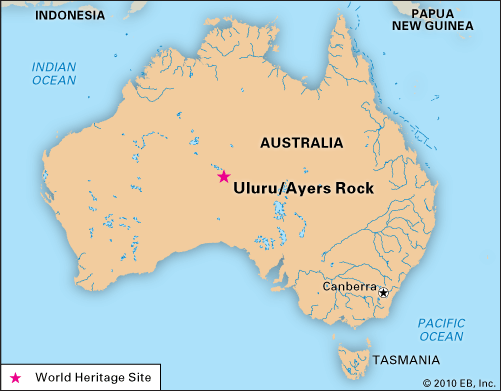
Uluru, also known as Ayers Rock, is a giant monolith located in the southwestern region of the Northern Territory in central Australia.
What is Uluru/Ayers Rock, and where is it located in Australia?
Uluru, also known as Ayers Rock, is a giant monolith located in the southwestern region of the Northern Territory in central Australia.12
Rising 1,142 feet (348 metres) above the surrounding desert plain, this massive formation is composed of arkosic sandstone and is renowned for its ability to change color depending on the position of the Sun. It is situated within the Uluru–Kata Tjuta National Park, a UNESCO World Heritage site recognized for both its natural beauty and its profound cultural significance to Australian Aboriginal peoples, who have long revered the site. In 1985, official ownership of the rock was returned to the local Aboriginal people, who continue to manage the area in partnership with the federal government.1
What is the cultural importance of Uluru to the Indigenous Anangu people?
For the Indigenous Anangu people, Uluru is a site of profound spiritual and cultural significance, serving as a physical manifestation of the Dreaming—the foundational era of creation in Australian Aboriginal belief systems.14
The cultural importance of the monolith is rooted in several key aspects:
- Spiritual Connection: The landscape is viewed as a living record of the creative acts of ancestral beings. Many of the shallow caves at the base of the rock are considered sacred, containing ancient carvings and paintings that link the Anangu to their mythic past.14
- Totemic Significance: Through totemic belief, the Anangu maintain life-sustaining ties to the site. These beliefs connect individuals and groups to specific places and spiritual powers, reinforcing their identity and their responsibility to uphold the law of the Dreaming.4
- Stewardship and Management: The Anangu are the traditional owners of the land. In 1985, official ownership was returned to them, and they now manage the Uluru–Kata Tjuta National Park in partnership with the federal government. This arrangement reflects their ongoing role as custodians of the site.15
- Cultural Respect: The Anangu have long requested that visitors refrain from climbing the rock, as it is a place of deep cultural and religious importance that demands respect rather than recreational exploitation.1
What are some of the unique flora and fauna found in the Uluru-Kata Tjuta National Park?
Despite the arid climate of the Uluru–Kata Tjuta National Park, the region supports a diverse array of flora and fauna adapted to desert conditions.7
Flora
The park is home to approximately 400 plant species, including:
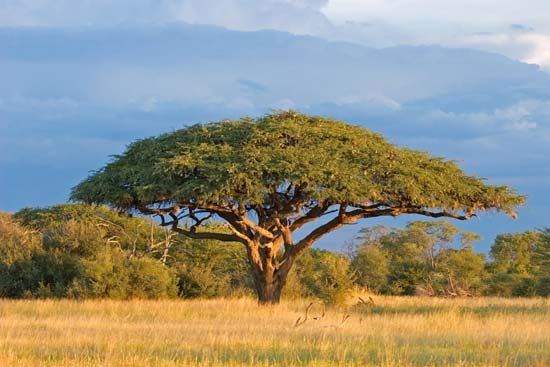
- Trees: Mulga trees (a type of acacia), desert oaks, desert poplars, and various eucalyptus species, most notably the centralian bloodwood (Corymbia opaca).7
- Shrubs and Wildflowers: The landscape features shrubs such as Grevillea species and a wide variety of wildflowers, including foxtails and myrtles.7
Fauna
The park’s wildlife is highly adapted to the hot, dry environment and includes:
- Mammals: Native species include red kangaroos, various rodents, small marsupials, and the rare rufus hare-wallaby (Lagorchestus hirsutus).7
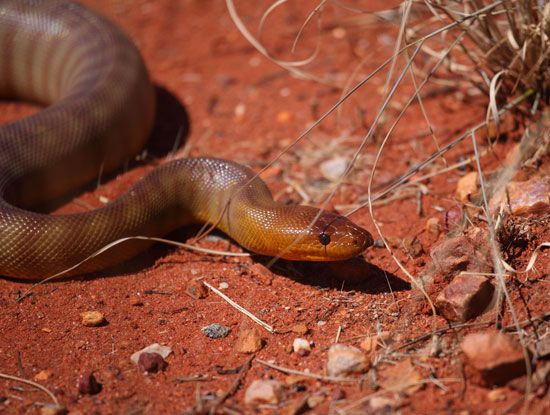
- Reptiles and Amphibians: The area hosts numerous lizards, such as geckos and skinks, as well as the iconic thorny devil (Moloch horridus). Several highly poisonous snake species, including the death adder, are also present.7
- Birds: There are approximately 175 bird species in the park, with notable examples including budgerigars, falcons, buzzards, and honeyeaters.7
How does the climate of the area affect Uluru and the surrounding ecosystem?
The climate of the Uluru–Kata Tjuta National Park is characterized as hot and dry, which significantly shapes both the physical structure of the monolith and the surrounding ecosystem.1
Impact on the Monolith
The region experiences considerable diurnal temperature variation, with daytime highs often exceeding 105 °F (40 °C) in summer and nighttime temperatures frequently dropping below freezing in winter. These extreme fluctuations contribute to the weathering of the arkosic sandstone. While the rock is a massive structure, its lower slopes have become fluted over time due to the erosion of weaker layers. Furthermore, the top of the monolith is scored with gullies and basins; during infrequent but intense rainstorms, these features channel water to produce giant cataracts, further shaping the rock’s surface.1
Impact on the Ecosystem
Despite the harsh, arid conditions and frequent droughts, the area supports approximately 400 plant species and a diverse range of wildlife. Flora, such as mulga trees and centralian bloodwoods, have adapted to the variable precipitation, which averages only about 12 inches annually. Similarly, the local fauna—including red kangaroos, reptiles, and various birds—have evolved specific survival strategies to thrive in this desert environment.1
Sources
- Uluru/Ayers Rock — Encyclopædia Britannica
- Kakadu National Park — Encyclopædia Britannica
- Uluru — Merriam-Webster
- Australian Aboriginal peoples - Aesthetics — Encyclopædia Britannica
- Australian Aboriginal peoples - Religion — Encyclopædia Britannica
- Northern Territory - Sports and recreation — Encyclopædia Britannica
- South Australia - Plant and animal life — Encyclopædia Britannica
- Australia - Animal life — Encyclopædia Britannica
- Northern Territory - Climate — Encyclopædia Britannica
- weathering — Encyclopædia Britannica
Published on · 4 min read