Varroa Mite
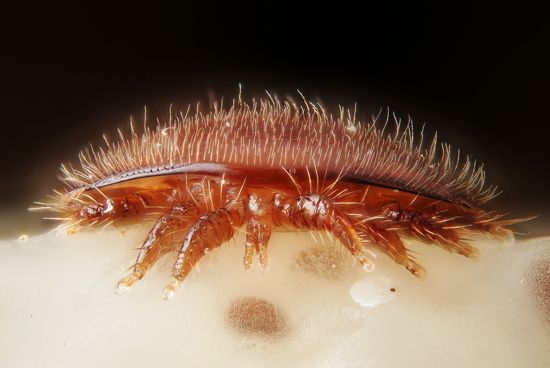
The varroa mite (Varroa destructor) is a parasitic mite that serves as a serious pest to the western honeybee (Apis mellifera). Native to Asia, it has become…
What is varroa mite?
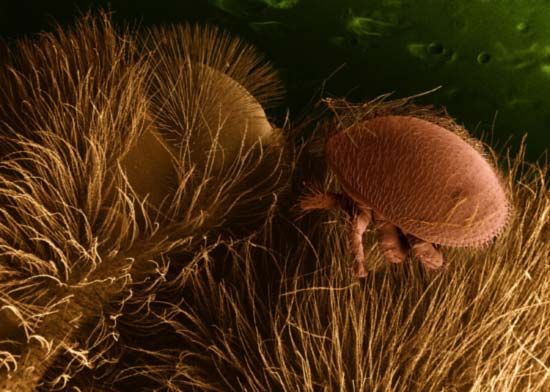
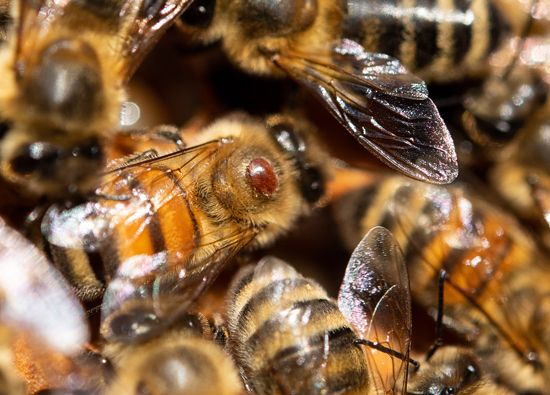
The varroa mite (Varroa destructor) is a parasitic mite that serves as a serious pest to the western honeybee (Apis mellifera). Native to Asia, it has become an invasive species worldwide, posing a major threat to both managed and wild honeybee populations.12
These ectoparasites attach to the outside of a bee’s body to feed on its hemolymph. They are significant because they transmit harmful viruses, such as the deformed wing virus, and are considered a primary factor in colony collapse disorder, where adult worker bees suddenly die. If left untreated, a varroa mite infestation will typically destroy a honeybee colony within three years.321
Because eradication is impossible, beekeepers use integrated pest management to keep mite populations below damaging levels. Strategies include using mite-resistant bee stocks, fumigation, and physical barriers like sticky bottom boards.12
How do eastern honeybees naturally defend themselves against Varroa mites?
The eastern honeybee (Apis cerana) has coevolved with the varroa mite over a long period, resulting in several effective natural defense mechanisms that prevent the parasite from devastating their colonies as it does with western honeybees.
These defenses include:
- Grooming behavior: Adult worker bees frequently groom one another, which allows them to detect, pick off, and kill mites that are in their phoretic (traveling) stage on the bees’ bodies.3
- Brood removal: If mites manage to infest worker (female) brood, the adult bees identify the infested pupae and carry them outside the colony. This behavior effectively limits the spread of the parasite within the hive.3
- Reproductive limitation: In eastern honeybee colonies, varroa mites tend to reproduce primarily on drone (male) brood. Because drone brood makes up less than 5 percent of the colony’s total population, the mites’ reproductive success is naturally constrained, preventing the massive infestations seen in other species.3
What is colony collapse disorder and what are its other potential causes?
Colony collapse disorder (CCD) is a mysterious phenomenon affecting western honeybee (Apis mellifera) colonies, first reported in the United States in 2006. It is characterized by the sudden disappearance of adult worker bees from the hive, leaving behind the queen, immature bees (brood), and food stores like honey and pollen. Affected bees appear to lose their ability to navigate, failing to return to the hive after foraging.5678
While the exact cause remains unknown, researchers suspect that CCD results from a combination of multiple stressors rather than a single factor. Potential contributing causes include:597
- Pathogens and Parasites: Hives affected by CCD often show high levels of viruses, microsporidians (such as Nosema species), and the invasive varroa mite, which weakens bees and transmits diseases. The phorid fly has also been identified as an emerging threat associated with hive abandonment.97
- Chemical Exposure: Pesticides, particularly neonicotinoids, are suspected of impairing bee immune function and navigation. Contamination of beeswax or food stores with chemicals is also a concern.97
- Environmental Stress: Factors such as poor nutrition, overcrowding, and the stress of transporting colonies long distances for pollination services can compromise bee health, making them more susceptible to disease.107
How do neonicotinoid pesticides impact the health of honeybee colonies?
Neonicotinoids are a class of synthetic systemic insecticides that significantly impact the health of honeybee colonies. Because these chemicals are water-soluble and systemic, they are transported throughout a plant’s body, contaminating nectar and pollen even if the pesticide was applied to seeds or soil rather than the flowers themselves.1112
The impact on honeybee health includes:
- Behavioral Impairment: Exposure is associated with atypical behaviors, such as a decreased ability to navigate and locate food sources, which can lead to bees failing to return to the hive.11
- Immune Suppression: Neonicotinoids can weaken the immune system of bees, making them more susceptible to diseases and parasites, such as varroa mites.11
- Colony Collapse Disorder (CCD): While a definitive causal link is still being studied, these chemicals are strongly suspected of causing or contributing to colony collapse disorder, a phenomenon where adult bees suddenly abandon their hives.131112
Because these chemicals are highly persistent in the environment, they pose a continuous threat to foraging pollinators.11
Sources
- varroa mite: Top Questions — Encyclopædia Britannica
- varroa mite — Merriam-Webster
- varroa mite — Encyclopædia Britannica
- Hymenoptera - General features — Encyclopædia Britannica
- colony collapse disorder — Encyclopædia Britannica
- western honeybee - Pests and diseases — Encyclopædia Britannica
- colony collapse disorder - Suspected causes — Encyclopædia Britannica
- colony collapse disorder - Interventions for honeybee health — Encyclopædia Britannica
- honeybee — Encyclopædia Britannica
- colony collapse disorder — Merriam-Webster
- Beekeeping - Colony collapse disorder — Encyclopædia Britannica
- Neonicotinoid — Encyclopædia Britannica
- Neonicotinoid: Top Questions — Encyclopædia Britannica
Published on · 3 min read