Velvet Worm
There are approximately 70 known species of velvet worms, which belong to the phylum Onychophora.
How many species of velvet worms are known to exist, and where are they distributed globally?
There are approximately 70 known species of velvet worms, which belong to the phylum Onychophora.1
These ancient, terrestrial invertebrates are found in damp, dark habitats, primarily within rainforests. Because they are unable to control water loss, they are restricted to moist environments such as leaf litter, under stones, inside fallen logs, or within soil crevices. While they are generally associated with warm regions and the Southern Hemisphere, specific groups like the genus Peripatus are distributed across the West Indies, Central America, and the northern parts of South America.123
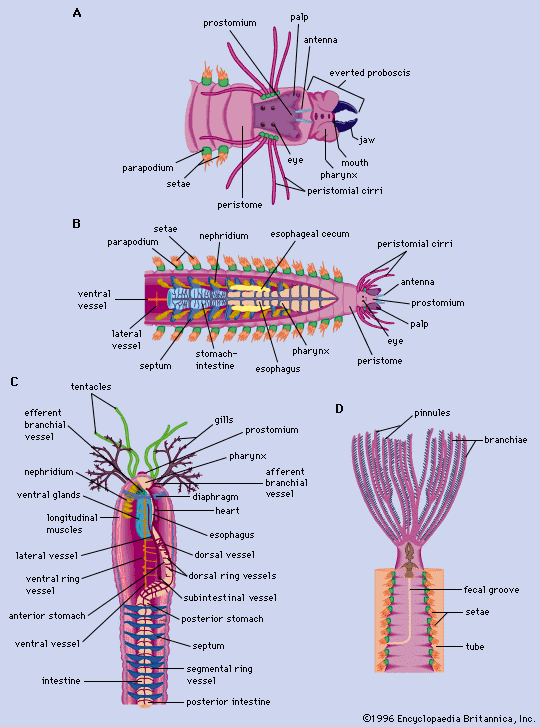
The phylum is divided into two families: Peripatidae and Peripatopsidae. These organisms are of particular scientific interest because they exhibit morphological characteristics intermediate between annelid worms and arthropods.123
In what types of habitats are velvet worms typically found?
Velvet worms are strictly terrestrial invertebrates that require high-humidity environments because they are unable to control water loss and cannot survive in dry conditions. They are primarily found in rainforests, where they seek out dark, damp microhabitats to remain concealed and protected from light.1
Specific habitats where these animals reside include:
- Leaf litter: They often dwell within the layers of decaying organic matter on the forest floor.1
- Subterranean and surface shelters: They are frequently found under stones or beneath fallen logs.1
- Wood and soil galleries: They inhabit the interior galleries of decaying logs, termite nests, and crevices within the soil, sometimes burrowing to depths of more than one meter.1
Their lack of a rigid skeleton and their flexible cuticle allow them to squeeze through narrow passages to reach these sheltered, humid environments.1
What is the taxonomic classification of velvet worms within the animal kingdom?
Velvet worms are classified within the phylum Onychophora. This group consists of approximately 70 species of ancient, terrestrial invertebrates that are divided into two families: Peripatidae and Peripatopsidae.12
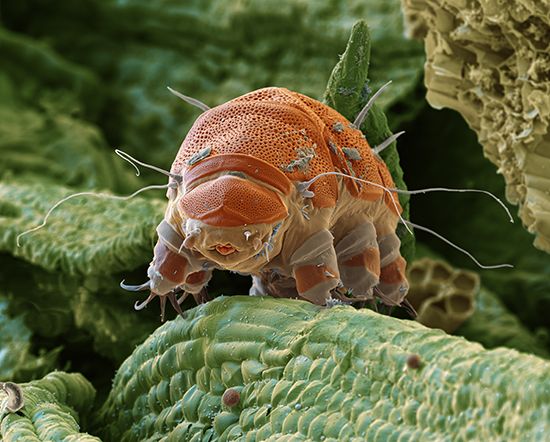
In terms of their evolutionary placement, onychophorans are considered to possess morphological characteristics intermediate between annelid worms and arthropods. They are also grouped with other primitive, ancient taxa—specifically pentastomids (tongue worms) and tardigrades (water bears)—to form a broader category of organisms known as oncopods.12
While historically there has been some scientific debate regarding their precise position in the animal kingdom, they are currently recognized as an independent phylum.123
What are the key characteristics that define velvet worms?
Velvet worms (phylum Onychophora) are ancient, terrestrial invertebrates defined by several distinct physical and behavioral characteristics:
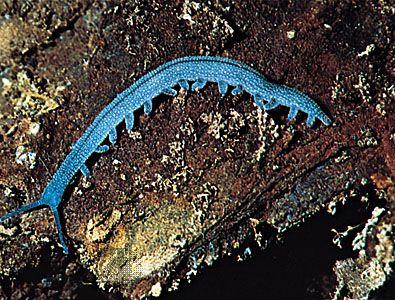
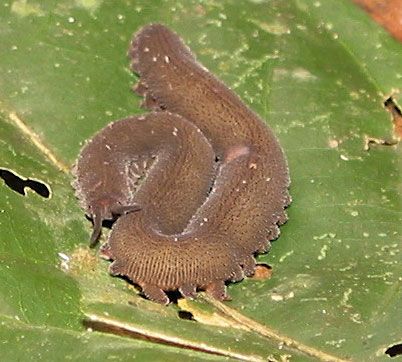
- Body Structure: They possess an elongated, wormlike body covered in a dry, velvety cuticle that is highly convoluted. Lacking a skeleton, they are remarkably flexible, allowing them to squeeze through narrow crevices in their environment.1
- Appendages: They feature numerous pairs of short, thick, unjointed legs, with the number of trunk segments varying by species.12
- Predatory Mechanism: Velvet worms are carnivores that hunt by ejecting a quick-hardening, protein-based slime from oral papillae near their mouths to immobilize prey. They then use their jaws to inject digestive saliva and consume the liquefied insides of their victims.1
- Sensory and Physiological Traits: They are nocturnal and light-sensitive, relying on tactile spines to detect air currents. Their respiratory system consists of numerous pits leading to internal tracheae, and they possess primitive nervous systems.1
- Evolutionary Significance: They are considered a unique evolutionary link between annelid worms and arthropods, with a fossil record extending back 520 million years to the Cambrian Period.12
Sources
- velvet worm — Encyclopædia Britannica
- velvet worm — Merriam-Webster
- Onychophora — Merriam-Webster
Published on · 3 min read