Venus Flytrap
A common misconception about the Venus flytrap is that it relies on insects for its primary energy source. In reality, like most plants, it is photosynthetic…
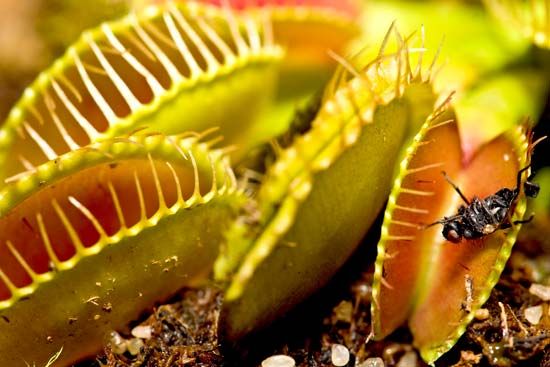
What are some common misconceptions about Venus flytraps?
A common misconception about the Venus flytrap is that it relies on insects for its primary energy source. In reality, like most plants, it is photosynthetic and produces its own sugars using sunlight, carbon dioxide, and water.12
The plant uses its carnivorous habit not for energy, but to obtain nitrogen and other essential nutrients that are scarce in the poor, damp soils where it naturally grows. By capturing and digesting small animals, the Venus flytrap is able to thrive in challenging environments like bogs and wetlands that would be inhospitable to many other species.12
Additionally, while the plant is often viewed as a fearsome predator, its “snap trap” mechanism is a highly specialized adaptation for survival rather than a general feeding behavior. Each individual leaf trap is limited in its lifespan, typically dying after capturing only three or four insects.1
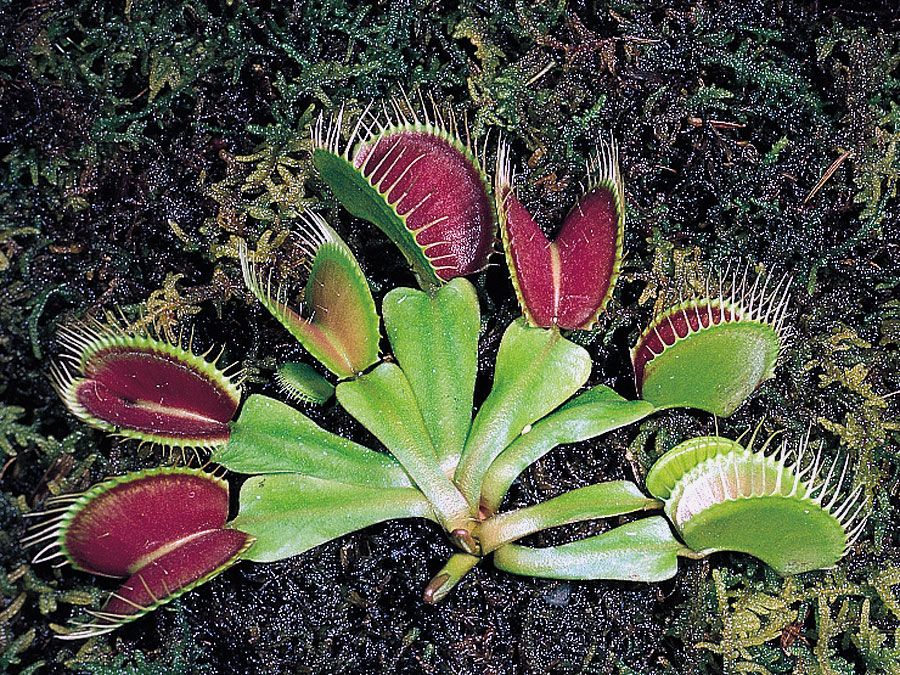
What are the unique characteristics of the Venus flytrap that make it a carnivorous plant?
The Venus flytrap (Dionaea muscipula) is a unique carnivorous plant that has evolved specialized mechanisms to survive in nutrient-poor soils. While it is photosynthetic and produces its own energy from sunlight, it captures insects to obtain essential nitrogen and proteins that are otherwise unavailable in its native bog habitats.12
The Snap Trap Mechanism
The plant’s most distinctive feature is its rapid “snap trap,” which functions through the following characteristics:
- Hinged Lobes: The leaves consist of two circular lobes hinged along the midline, featuring spiny teeth along their margins to enclose prey.1
- Sensitive Triggers: Each lobe contains three sensitive hairs. When an insect touches these triggers, the lobes snap shut in approximately half a second.1
- Digestion: Once the trap is closed, glands on the leaf surface secrete a digestive sap. The process takes about 10 days, after which the leaf reopens.1
Each trap is finite, typically dying after capturing only three or four insects.1
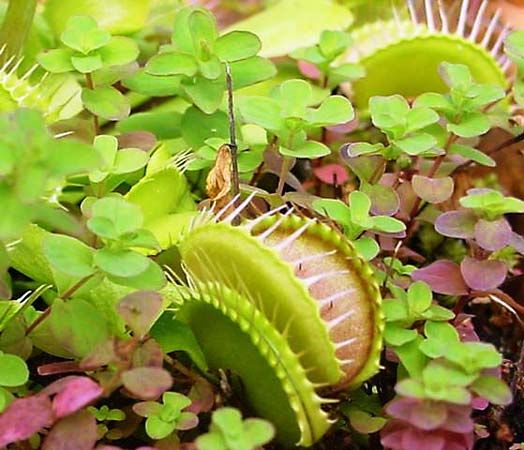
Can Venus flytraps survive without catching insects?
Yes, Venus flytraps can survive without catching insects. It is a common misconception that these plants rely on prey for their primary energy source; like nearly all other plants, they are photosynthetic and manufacture their own sugars using sunlight, carbon dioxide, and water.21
The Venus flytrap uses its carnivorous habit specifically to obtain nitrogen and other essential nutrients that are typically scarce in the poor, damp soils of its native bog habitats. While the plant does not require insects to produce energy, this adaptation allows it to thrive in nutrient-depleted environments where other plants might struggle to survive.21
We could dive deeper into how other carnivorous plants have evolved different trapping mechanisms to secure nutrients in similar environments.
How big do Venus flytraps usually grow?
The Venus flytrap (Dionaea muscipula) is a relatively small perennial plant that grows from a bulblike rootstock. Its physical dimensions are generally as follows:
Sources
- Venus flytrap — Encyclopædia Britannica
- Do Carnivorous Plants Eat Their Prey? — Encyclopædia Britannica
Published on · 3 min read
