Virginia Creeper
Virginia creeper (Parthenocissus quinquefolia) is a woody vine belonging to the grape family (Vitaceae). Native to eastern North America, it is frequently…
What is Virginia creeper?
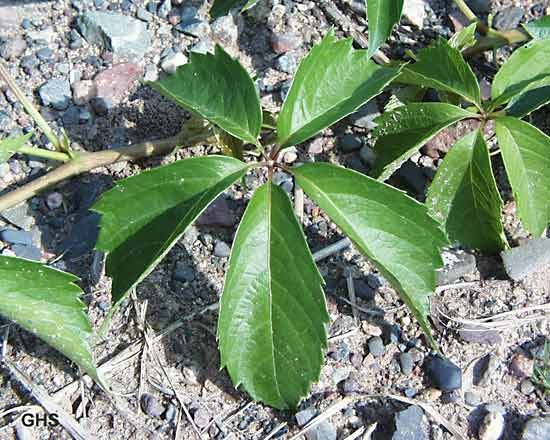
Virginia creeper (Parthenocissus quinquefolia) is a woody vine belonging to the grape family (Vitaceae). Native to eastern North America, it is frequently cultivated to cover walls, fences, and trees due to its vigorous growth.12
The plant is deciduous and characterized by palmately compound leaves consisting of five toothed leaflets that turn vibrant shades of yellow to red-purple in the autumn. It climbs using specialized disk-tipped tendrils and produces small, inconspicuous greenish flowers followed by dark purple or black berries that serve as a food source for birds.12
While it is sometimes mistaken for poison ivy, the two species are unrelated. Also known as woodbine, this plant has been recognized in North America since at least the early 18th century.12
How can you tell the difference between Virginia creeper and poison ivy?
To distinguish between Virginia creeper and poison ivy, the most reliable indicator is the number of leaflets on each leaf.
- Virginia creeper: Features palmately compound leaves that consist of five toothed leaflets.1
- Poison ivy: Typically characterized by leaves that consist of three leaflets.1
While both are common climbing vines in North America, they are unrelated species. Virginia creeper climbs using specialized disk-tipped tendrils, whereas poison ivy is known for its ability to cause contact dermatitis in humans due to the presence of urushiol oil. Always exercise caution when identifying plants in the wild to avoid accidental exposure to toxic species.1
What role do birds play in the life cycle of Virginia creeper?
Birds play a vital role in the life cycle of Virginia creeper by acting as the primary agents for seed dispersal.
The plant produces small, dark purple to black berries that are highly attractive to various bird species. As birds consume these fruits, they ingest the seeds contained within. Because the seeds are often resistant to digestion, they are later deposited in new locations through the birds’ droppings. This process, known as zoochory, allows the vine to spread and colonize new areas far from the parent plant, ensuring the continued propagation of the species across its native range in North America.1
Why is Virginia creeper often used as an ornamental plant on buildings?
Virginia creeper is frequently utilized as an ornamental plant for buildings and fences primarily due to its aesthetic appeal and its efficient growth habit. As a woody vine, it is valued for its ability to provide dense coverage over walls and structures.1
Several key characteristics make it a popular choice for landscaping:
- Climbing Mechanism: The plant utilizes specialized disk-tipped tendrils that allow it to adhere securely to surfaces, making it an effective covering for walls and trunks of large trees.1
- Seasonal Color: It is a deciduous plant that offers visual interest through its foliage, which transitions into vibrant shades ranging from yellow to red-purple during the autumn months.1
- Cultivated Varieties: Gardeners can select from various cultivated forms that have been specifically developed to produce smaller leaves and shorter tendrils, allowing for a more controlled and dense aesthetic appearance.1
Sources
- Virginia creeper — Encyclopædia Britannica
- Virginia creeper — Merriam-Webster
Published on · 2 min read